Among my people, the Haya of north-western Tanzania, in the Kagera region, there is an old saying: “A herd without calves has no future.”
It is a simple truth learned from generations of pastoral life. However strong and healthy a herd may appear today, without calves there will eventually be nothing to replace the ageing cattle.
In other words, this simple rural observation carries a profound message. The strength of the herd is not measured only by the number of mature cattle standing in the cowshed today. Its future depends on the calves that will replace them tomorrow.
It’s my opinion that Sweden should think seriously about that old African wisdom from Bukoba.
In the September 2026 general election, just over 8 million people were eligible to vote for the Riksdag (Parliament). Sweden’s Election Authority recorded 8,046,725 eligible voters when the electoral roll was established, including 483,182 first-time voters.
At first sight, that number is surprising in a country of only about 10.6 million people. But it tells us something bigger than an electoral story. Sweden is a country with many adults and comparatively few children. And that should matter enormously when Sweden talks about immigration.
Where are tomorrow’s Swedes?
Statistics Sweden projects a demographic future that should concern policymakers regardless of political ideology.
Today, about 22 per cent of Sweden’s population is below the age of 20. By 2070, that proportion is expected to fall to around 20 per cent. Meanwhile, the proportion aged 80 and above is projected to rise from about 6 per cent in 2025 to 11 per cent by 2070. There will also be years in which more people die than are born. Sweden is therefore growing older.
The problem is not that old people live too long. Longer life is one of the triumphs of a successful society. The question is much simpler: Who replaces them?
Who becomes tomorrow’s nurse? Who drives the bus? Who builds the houses? Who cares for the elderly? Who runs the restaurant, teaches in the school, develops the next technology, starts the next company and pays the taxes that finance Sweden’s famous welfare state?
This is where Sweden’s increasingly hostile immigration debate collides with economic reality.
The immigrants are already working
Immigration is not merely a cultural or political issue in Sweden. It is increasingly a demographic and economic question. The numbers are difficult to ignore.
According to Statistics Sweden, there were about 1.52 million foreign-born people in Sweden’s labour force in 2025, of whom approximately 1.27 million were employed. Even more strikingly, labour-force participation among foreign-born people aged 15–74 was 79.2 per cent, compared with 74.5 per cent among Swedish-born people.
That does not mean immigration has solved Sweden’s labour problems. Far from it. Foreign-born people still have a significantly lower employment rate and much higher unemployment than Swedish-born people. Among those aged 20–65, unemployment among foreign-born people stood at around 15 per cent in late 2025.
That is an integration failure Sweden should confront. But there is an enormous difference between saying “we must integrate immigrants better” and saying “immigrants are the problem.”
One seeks to make Sweden stronger. The other risks throwing away human capital Sweden increasingly needs.
The Sweden Democrats’ contradiction
The Sweden Democrats (SD) have successfully pushed Swedish politics towards increasingly restrictive immigration policies. During the outgoing Tidö era, their influence reached far beyond their formal position outside government.
The term “Tido era” comes from the Tidö Agreement (Tidöavtalet), the political agreement reached after Sweden’s 2022 general election among four parties: the Moderates, Christian Democrats, Liberals and Sweden Democrats. The first three formed the currently outgoing Ulf Kristersson’s government, while the Sweden Democrats initially remained outside the cabinet but provided parliamentary support and negotiated policy through the agreement. The government itself continues to refer to these parties collectively as the “Tidö Parties.”
In the 2026 election campaign, the Sweden Democrats – viewed by many as racist – went considerably further, campaigning on proposals including expanded repatriation of immigrants and an end to multiculturalism. Yet Swedish voters reduced the party’s support to about 17.6 per cent, its first electoral decline of this kind.
In the 2022 general election, the Sweden Democrats received 20.54 per cent of the national vote, winning 73 of the 349 seats in the Parliament. That result made them Sweden’s second-largest party, behind the Social Democrats, with 30.33 per cent, but ahead of the Moderates, with 19.10 per cent.
The election also marked a turning point in Swedish politics. Although Sweden Democrats did not formally join the government, its parliamentary strength gave it substantial influence through the Tidö Agreement, particularly over migration, integration and criminal-justice policy. Over the following four years, this more restrictive political direction became closely associated with the party.
For many immigrants, and for Swedes who favour a more open and multicultural society, that influence has contributed to an increasingly negative perception of SD. Debates over immigration have often become debates about identity, belonging and what kind of country Sweden should be. Against that background, Sweden Democrats’ decline from 20.54 per cent in 2022 to around 17 per cent in the 2026 election is politically significant: after four years in which the party exercised greater influence than ever before, its share of the national vote has fallen rather than grown.
Of course, there is a legitimate democratic debate to be had about immigration. Sweden has experienced serious problems involving failed integration, segregation, organised crime, unemployment and pressure on some public services. Pretending otherwise would weaken the case for immigration rather than strengthen it.
A responsible government must know who enters the country. It must demand respect for Swedish law. It should expect newcomers to learn Swedish, work where possible and participate in society. Criminality should never be excused in the name of multiculturalism.
But none of that requires Sweden to become hostile to immigrants. And economically, hostility may prove self-defeating. You cannot complain that the cowshed has too few calves while simultaneously chasing away healthy calves arriving at its door.
An African mirror
The contrast with Africa is fascinating. Tanzania and many other African countries face almost the opposite demographic problem. Their populations are extremely young. Millions of children are moving towards working age, creating enormous pressure for schools, universities, jobs and housing.
Africa asks: Where will we find enough jobs for our young people? Sweden increasingly has to ask: Where will we find enough young people for our jobs?
One continent struggles with an abundance of youth. Parts of Europe struggle with its scarcity. That should encourage imagination rather than fear.
Managed intelligently, migration can connect those two realities. Not unlimited immigration, uncontrolled borders, or migration without integration, but deliberate immigration based on Sweden’s economic, demographic and humanitarian needs.
Magdalena Andersson has a choice
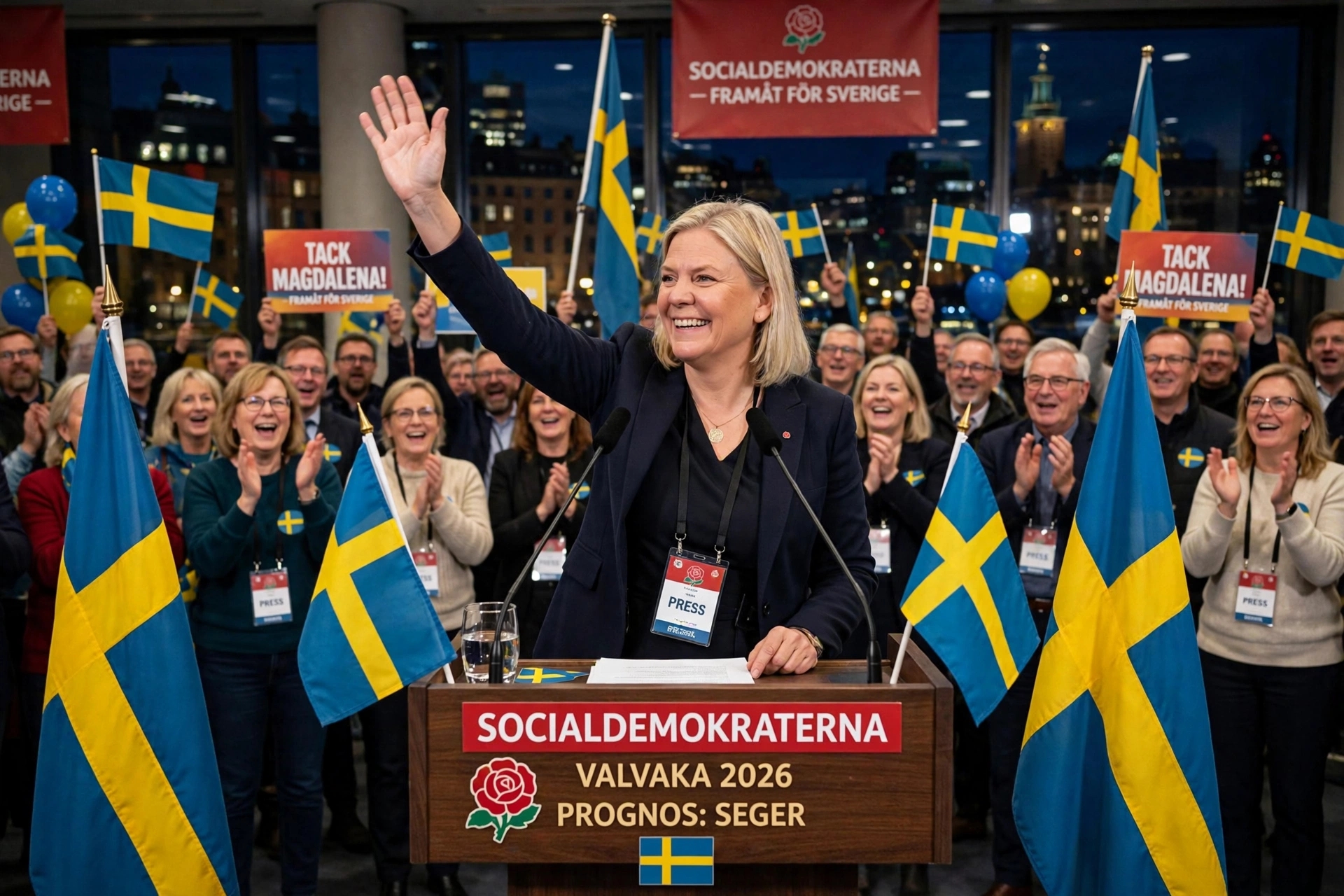
The election has now given Magdalena Andersson – the leader of Social Democrats – and the centre-left an opportunity to form a new government, although negotiations are still under way and the final political arrangement is not yet settled. With most votes counted, the centre-left held a narrow parliamentary advantage.
Andersson should resist one temptation: assuming that the best way to defeat the Sweden Democrats is to start thinking and talking like them.
She has supported tighter migration rules and stronger integration while rejecting racism and division. At the same time, she has argued that Sweden should remain open to foreign workers when they are genuinely needed, including assistant nurses.
The choice does not have to be between uncontrolled immigration and closing the door. Sweden can control immigration according to its needs while rebuilding confidence in a multicultural society.
There was once a powerful international image of Sweden as an open, tolerant and humanitarian society: wealthy without arrogance, socially cohesive without demanding that everybody have the same origins, and confident enough to welcome people escaping wars, dictatorships and poverty.
That reputation was part of Sweden’s soft power. It should not be surrendered cheaply.
Build the herd, don’t empty the cowshed
The next Swedish government should therefore treat successful immigrants not as temporary guests but as an investment in Sweden’s future.
Make Swedish-language learning faster and more effective. Recognise foreign qualifications more quickly. Move people from welfare into work. Make it easier for immigrants to fill labour shortages. Fight discrimination in recruitment. Demand integration – but also create realistic pathways into Swedish society. Above all, distinguish between immigration failure and immigrants themselves.
A badly designed immigration system can be repaired. A failed integration policy can be changed. Criminals can be prosecuted. Borders can be controlled. But demographics cannot be negotiated with. Children who were never born cannot suddenly become 25-year-old nurses, engineers or taxpayers when Sweden needs them twenty-five years from now.
Statistics Sweden’s long-term projection is particularly revealing: despite Sweden’s ageing population and periods when deaths are expected to exceed births, the population is still projected to grow to about 11.8 million by 2070. A major reason is positive net migration, which in the longer term is projected at around 30,000 people annually.
That tells Sweden something important. The immigrant arriving today may be tomorrow’s doctor caring for an elderly Swedish Democrat. The refugee’s child may become an engineer designing Swedish technology. The foreign-born cleaner may already be paying taxes towards someone’s pension. And the immigrant entrepreneur may employ children whose grandparents once wondered whether people like him or her belonged here. This is not charity. It is economics.
My Haya ancestors did not study demographic projections. They did not have Statistics Sweden. They understood something more elementary from observing cattle: A cowshed without calves eventually becomes empty.
Sweden still has calves. But fewer are being born. And when calves arrive from another herd, rejecting them simply because they were born elsewhere does not solve the farmer’s problem. It may only empty the cowshed faster.