Three Presidents, One Mega-Project and the People Trapped on Their Own Land
For more than a decade, Tanzania has carried one of Africa’s biggest port dreams.
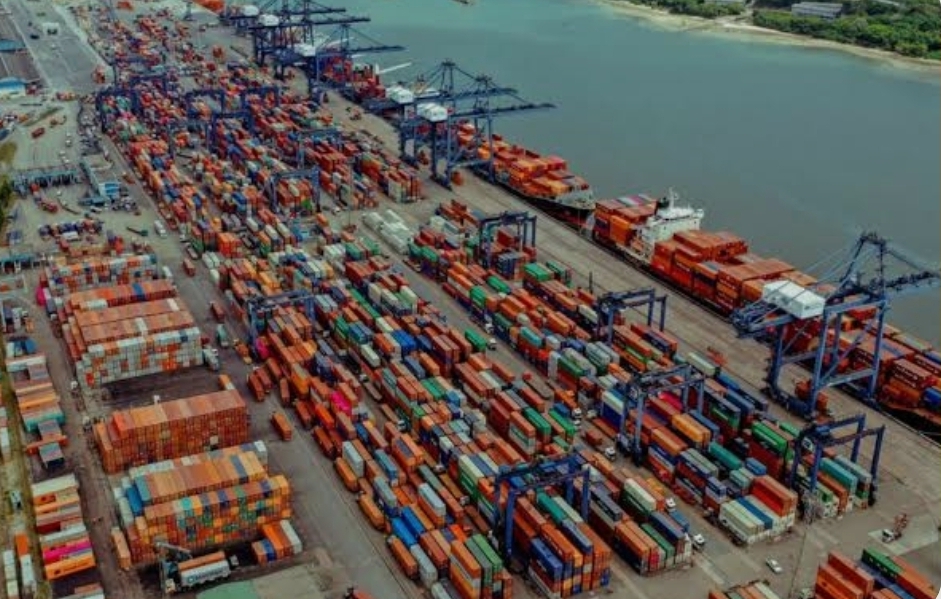
At Mbegani, Bagamoyo, about 75 kilometres north of Dar es Salaam, the country planned a huge modern port, an industrial city, a logistics centre, roads, railway connections, residential areas and hundreds of factories.
The original project was widely presented as a roughly US$10 billion undertaking, backed by China Merchants Holdings and Oman’s State General Reserve Fund. When President Jakaya Kikwete attended its groundbreaking in October 2015, the first phase was expected to take about three years. The larger development, including roads, railways and the economic zone, was expected to take approximately ten years.
More than ten years later, Bagamoyo is still largely a promise. But Bagamoyo is not simply the story of a port that has taken too long to build.
It is the story of three presidents. Jakaya Kikwete conceived and championed it. John Magufuli stopped it and challenged its terms. Samia Suluhu Hassan revived it, but under a changing investment model and a much broader strategy of turning Tanzania into a regional logistics hub.
Each president had a different economic philosophy. Each made decisions that changed Bagamoyo’s direction. And through all three presidencies, one problem has refused to disappear: land.
People surrendered property for a national dream. Some were compensated. Others waited. Land was valued, frozen or earmarked for development. Government plans acknowledged billions of shillings in outstanding compensation.
Presidents changed. Investors changed. Deadlines changed. The people remained. That makes Bagamoyo more than an infrastructure story. It is an accountability story. And it raises a simple question: When government reserves people’s land for a strategic investment that takes ten, fifteen or twenty years to materialise, who pays for the waiting?
In Bagamoyo, part of that cost has been carried by ordinary Tanzanians.
Kikwete: The dream
The Bagamoyo story belongs first to President Jakaya Kikwete.
His administration wanted Tanzania to think beyond the congested Port of Dar es Salaam and imagine something much bigger: a new deep-water port surrounded by an industrial and commercial city. The idea had been developing earlier, but it accelerated during Kikwete’s second term.
In September 2012, Tanzania and China Merchants entered into a memorandum of understanding over Bagamoyo. A framework agreement followed during Chinese President Xi Jinping’s visit to Tanzania in March 2013. An implementation agreement came in 2014, and Oman’s State General Reserve Fund subsequently joined the arrangement.
Kikwete saw something larger than ships and containers. When promoting the project to China, he spoke of turning Bagamoyo into something resembling “the Shenzhen in Africa“ – a logistics and manufacturing centre capable of helping drive Tanzania’s industrialisation.
That comparison was significant. Shenzhen had grown from a relatively modest Chinese city into one of the world’s great manufacturing, technology and logistics centres.
Bagamoyo was therefore supposed to become not merely another Tanzanian port, but an economic ecosystem. Factories would manufacture. The port would export. Railways and roads would carry goods inland. Warehouses would store them. Foreign and Tanzanian investors would establish industries. Jobs would follow.
The government eventually envisaged a 9,800-hectare Special Economic Zone incorporating the port, logistics facilities, a portside industrial zone, science and technology facilities, residential areas and supporting infrastructure. Government planning documents projected 270,000 direct industrial jobs and hundreds of industries if the zone reached maturity.
On 16 October 2015, only days before Tanzania’s general election and near the end of Kikwete’s presidency, he formally launched the project. Bagamoyo appeared ready to move from dream to construction.
But even on the day Kikwete was launching his flagship project, the land problem was already visible. Reports from the groundbreaking say Kikwete ordered the replacement of a government valuer following persistent complaints involving more than 2,000 affected residents in Zinga, Mlingotini and Pande. It was an early warning.
The mega-project had not even been built, yet some of the people expected to make way for it were already complaining about how their property was being handled.
Then Tanzania elected another president. And Bagamoyo entered an entirely different political era.
Magufuli: Stop
John Magufuli inherited Bagamoyo. But he did not inherit Kikwete’s enthusiasm for the agreement.
Magufuli’s infrastructure philosophy was different. His government placed enormous emphasis on projects over which Tanzania exercised greater control: the Standard Gauge Railway, roads, electricity projects, Air Tanzania, expansion of existing ports and the movement of government operations to Dodoma.
Bagamoyo increasingly became a question not of how quickly Tanzania could build the port, but on whose terms it would be built. The project stalled. By 2019 the dispute had become public.
The Magufuli government said some conditions sought by the investor were unacceptable. Among the disputed issues were the duration of the concession, tax treatment, government control and Tanzania’s ability to develop competing ports.
The government offered a 33-year lease instead of the 99-year arrangement reportedly sought by the investor and rejected extensive tax exemptions. Magufuli regarded some of the proposed conditions as contrary to Tanzania’s national interest.
Whether every term attributed publicly to the original negotiations was contained exactly as later described became part of the political controversy. But the fundamental disagreement was real: Tanzania and the investors could not agree on the commercial and sovereign conditions under which Bagamoyo would operate. Academic research into the negotiations similarly records disagreements over taxation, control, guarantees and the concession period.
There was a legitimate question behind Magufuli’s resistance. What is the value of attracting US$10 billion if the price is surrendering too much economic control?
That is also investment accountability. Governments are not required to accept every foreign investment simply because it is large. Sometimes saying no protects national interests.
But Magufuli’s decision created another problem. The government could stop negotiations. The people whose land had already been caught inside the project could not simply stop their lives. The port was suspended. The land problem was not.
The forgotten investors
This is where Bagamoyo forces Tanzania to reconsider what the word investor means.
China Merchants was an investor. Oman’s sovereign investment fund was an investor. Future factory owners are investors.
But what about the Tanzanian family surrendering five acres for the project? That family is also contributing capital. Its capital is land.
If the government takes or restricts that land today and pays for it many years later, the family has effectively financed part of the project’s waiting period.
That contribution rarely appears in investment statistics. Yet, it is real.
Government’s own figures
The evidence is contained in government documents. Tanzania’s implementation plan for its Second Five-Year Development Plan recorded compensation for 800 hectares reserved for port development and another 2,640 hectares for other development, at an estimated cost of Sh26.64 billion.
But acquisition of another 3,258 hectares was still being completed. More significantly, the same government document acknowledged approximately Sh51.3 billion in outstanding compensation.
Government planners established targets for resolving the problem. Compensation, acquisition and relocation connected to the Bagamoyo SEZ were supposed to be completed.
But the project itself had become trapped between two presidential philosophies. Kikwete had wanted to accelerate it. Magufuli wanted to renegotiate it. And then, in March 2021, Magufuli died.
Bagamoyo entered its third presidency.
Samia: Revive – but differently
President Samia Suluhu Hassan inherited both sides of the Bagamoyo problem.
She inherited Kikwete’s unfinished dream. And she inherited Magufuli’s objections to the original deal.
Her broader economic approach was noticeably more open to international investment and diplomatic economic engagement.
Bagamoyo returned to the national conversation. Negotiations and studies resumed. Tanzania explored different possibilities for attracting investment into the project rather than simply returning unquestioningly to the original agreement. Research on the project noted that negotiations resumed under Samia while some of the conditions rejected during Magufuli’s presidency were unlikely simply to return.
By 2022, Samia was promoting Tanzania internationally as a potential transport and logistics hub and courting additional international interest in Bagamoyo and the country’s wider ports sector.
A new feasibility study was subsequently commissioned. Eventually the project evolved into a broader concept: Bagamoyo Eco Maritime City – BEMC.
The language matters. Bagamoyo is again being imagined not merely as a harbour, but as a port-industrial-city complex.
And this time Tanzania has the experience of the previous decade from which to learn.
Three presidents, three questions
The three presidencies therefore leave Tanzania with three different accountability questions.
Kikwete’s question is: Was Tanzania too ambitious, too quickly, without first securing all the land, compensation and contractual foundations required for such a huge development?
Magufuli’s question is: Was stopping an unfavourable agreement necessary to protect Tanzania, and if so, what responsibility did government retain towards citizens already affected by a project it had suspended?
Samia’s question is: Can Tanzania revive Bagamoyo without repeating the mistakes of the first attempt – particularly unresolved land rights, unclear obligations and an investment structure that later becomes politically unacceptable?
These are not questions about which president was right. Each confronted a different problem.
Together, however, their decisions explain why Bagamoyo cannot be understood simply as a delayed construction project. It is a case study in the consequences of policy discontinuity across presidencies.
Meanwhile, Tanzania did not stop building ports
There is another important development. While Bagamoyo waited, Tanzania invested heavily elsewhere.
Dar es Salaam was expanded and modernised. Tanga was upgraded. Mtwara was expanded.
The Standard Gauge Railway began transforming the relationship between the coast and Tanzania’s interior. Dry ports and logistics facilities developed.
That changes the economic calculation that existed when Kikwete launched Bagamoyo.
Dar es Salaam: the giant Bagamoyo was supposed to relieve
Dar es Salaam remains Tanzania’s principal port.
TPA says it handles about 95 percent of Tanzania’s international trade and serves Zambia, the Democratic Republic of Congo, Rwanda, Burundi, Malawi, Uganda and Zimbabwe.
The port has around 2,600 metres of quay, 12 berths, oil facilities and depths reaching about 14.5 metres at several berths.
This is not the Dar es Salaam Port of 2012. Investment has increased its ability to accommodate larger ships and move more cargo.
That creates a legitimate question for Bagamoyo: What exactly should the new port do that an expanded Dar es Salaam cannot?
The answer cannot merely be “handle cargo.” It needs a distinct economic function.
Tanga: the northern opportunity
Tanga adds another dimension. TPA lists a depth of approximately 13 metres, two berths, about 450 metres of berth length and rated capacity of around 3 million tonnes.
Its location gives it strategic importance for northern Tanzania and regional trade.
It also hosts infrastructure connected to petroleum and the emerging East African crude oil export corridor.
Tanga therefore has its own economic geography.
Mtwara: the sleeping industrial giant
Mtwara offers another opportunity. TPA records two berths totalling approximately 685 metres, with depths between about 9.5 and 13 metres and extensive cargo storage facilities.
Its strategic importance lies in southern Tanzania. Gas. Minerals. Agriculture. Potential fertiliser and petrochemical industries. Trade with neighbouring countries.
Mtwara could itself become an industrial port if Tanzania succeeds in linking the harbour to production and transport infrastructure.
That brings us back to Bagamoyo.
Does Tanzania need Bagamoyo?
Yes – potentially. But not simply because bigger is better.
The economic case for Bagamoyo today is different from the one Tanzania made in 2013.
Dar es Salaam is stronger. Tanga is stronger. Mtwara has expanded. The SGR is becoming operational.
Regional competition is changing. Kenya has Mombasa and Lamu. Mozambique has major ports serving southern and central African corridors.
The DRC, Zambia, Rwanda, Burundi, Malawi and Uganda all represent cargo markets for which several countries are competing.
Tanzania therefore needs to think of its ports not as isolated construction projects, but as one national logistics system.
Dar es Salaam can remain the principal commercial gateway. Tanga can specialise around the northern corridor, petroleum and appropriate bulk cargo.
Mtwara can anchor southern industrial, energy and mineral development. And Bagamoyo can justify its enormous cost if it becomes something fundamentally different: a purpose-built deep-sea industrial city.
That means the port should generate new industries and new cargo rather than merely take existing business from Dar es Salaam.
Otherwise Tanzania risks spending billions moving containers from one Tanzanian harbour to another.
The danger of presidential projects
There is another lesson hidden inside Bagamoyo. African mega-projects sometimes become too closely associated with individual presidents.
One president launches them. Another questions them. A third revives them. That is dangerous.
Infrastructure costing billions of dollars and taking decades to complete must belong to national policy, not presidential preference.
A port should survive a change of president because its economic justification has been independently established.
Contracts should withstand political scrutiny. Land acquisition should be completed transparently. Financing should be sustainable.
And citizens’ rights should not depend upon whether the next president likes the previous president’s project.
Bagamoyo demonstrates what happens when these elements become disconnected.
The people cannot wait for State House
A farmer in Zinga should not need to understand the difference between Kikwete’s industrialisation strategy, Magufuli’s economic nationalism and Samia’s investment diplomacy.
Government is government. The citizen dealt with the Republic of Tanzania. Not with an individual president.
That distinction is fundamental. When administrations change, state obligations do not disappear.
If the Kikwete government valued someone’s land, the Tanzanian state assumed an obligation. If Magufuli suspended the investment, the obligation did not automatically disappear. If Samia revives the project, the affected citizen should not have to begin the struggle again.
Presidents come and go.The state continues.
What does it mean to own land you cannot freely use?
Consider what happens when government identifies a farm for a strategic project. The owner is told development is coming. Compensation is promised. Then nothing happens.
Can the owner confidently build a permanent house? Plant crops that mature after ten years? Sell the property? Borrow against it? Transfer it to children? At what price?
Uncertainty itself destroys economic value. That is why compensation is not merely an administrative procedure. Compensation is part of the investment.
And time has a price
There is an even harder question. Suppose land was valued ten years ago at Sh20 million.
If the owner receives Sh20 million today, has the government actually paid him fairly?
Not necessarily. Inflation has occurred. Land prices may have increased. Building materials cost more.
Alternative property may have become more expensive. And the owner lost years during which the money could have been invested.
Therefore Bagamoyo’s compensation account cannot be closed simply by asking: Who has been paid? The government must also answer: When were they paid, according to which valuation, and did the payment genuinely restore what they lost?
Samia now has an opportunity the others did not
The third phase of Bagamoyo provides Tanzania with an unusual opportunity. Kikwete created the vision. Magufuli exposed weaknesses in its contractual foundations. Samia can incorporate both lessons.
Tanzania does not have to choose between Kikwete and Magufuli. It can retain Kikwete’s ambition while retaining Magufuli’s insistence that investment terms protect national interests.
But there should be a third principle: protect the citizen. Without that, Bagamoyo will repeat its oldest mistake.
Before Tanzania celebrates billions of dollars in new Bagamoyo investment, government should publish a complete account of the land. How many hectares were originally acquired or reserved? How many people were affected? How many were valued? How many were compensated? How many remain unpaid? How much money remains outstanding? How many old valuations have been reassessed? Which land is still frozen? Which land is no longer required?
IIf the government no longer needs particular property, why has it not been formally released? Where compensation has been delayed for years, how is inflation being calculated?
What compensation exists for lost use and lost economic opportunity? And what happened to the government’s own previous deadlines?
These are not questions against Bagamoyo. They are questions necessary to make Bagamoyo credible.
What is really at stake
Tanzania possesses something many African countries would envy.
An Indian Ocean coastline. A rapidly improving railway system. Ports at Dar es Salaam, Tanga and Mtwara. Access through the Great Lakes.
And a geographical position capable of connecting the ocean to some of Africa’s most important landlocked economies. Dar es Salaam already serves the DRC, Zambia, Rwanda, Burundi, Malawi, Uganda and Zimbabwe.
The economic prize is therefore much larger than Tanzanian imports and exports. It is the possibility of making Tanzania the preferred maritime gateway into a huge part of Africa.
Bagamoyo could strengthen that position enormously. But only if Tanzania learns from Bagamoyo itself. Kikwete taught the country to dream big. Magufuli demonstrated that the size of an investment cannot substitute for acceptable terms. Samia now has the responsibility of proving that Tanzania can combine ambition, sovereignty and investor confidence.
There is one test remaining. The people.
For more than a decade they have lived underneath master plans, presidential decisions, negotiations, suspensions and revivals.
Their land helped make the Bagamoyo dream possible before a single large container ship entered the proposed harbour. That contribution deserves to appear on the national balance sheet.
Because ultimately Bagamoyo is not only a test of whether Tanzania can build a great port. It is a test of how Tanzania develops.
A country should be able to attract billions of dollars without impoverishing the citizen who surrendered the first acre. It should be able to change presidents without abandoning state obligations.
It should be able to reject a bad investment agreement without leaving ordinary people to carry the cost. And it should be able to revive a national dream without repeating its old mistakes.
Kikwete dreamed it. Magufuli challenged it. Samia has revived it. Now Tanzania must finish what all three presidencies left unresolved: make Bagamoyo work for the country – beginning with the people who paid its first price.