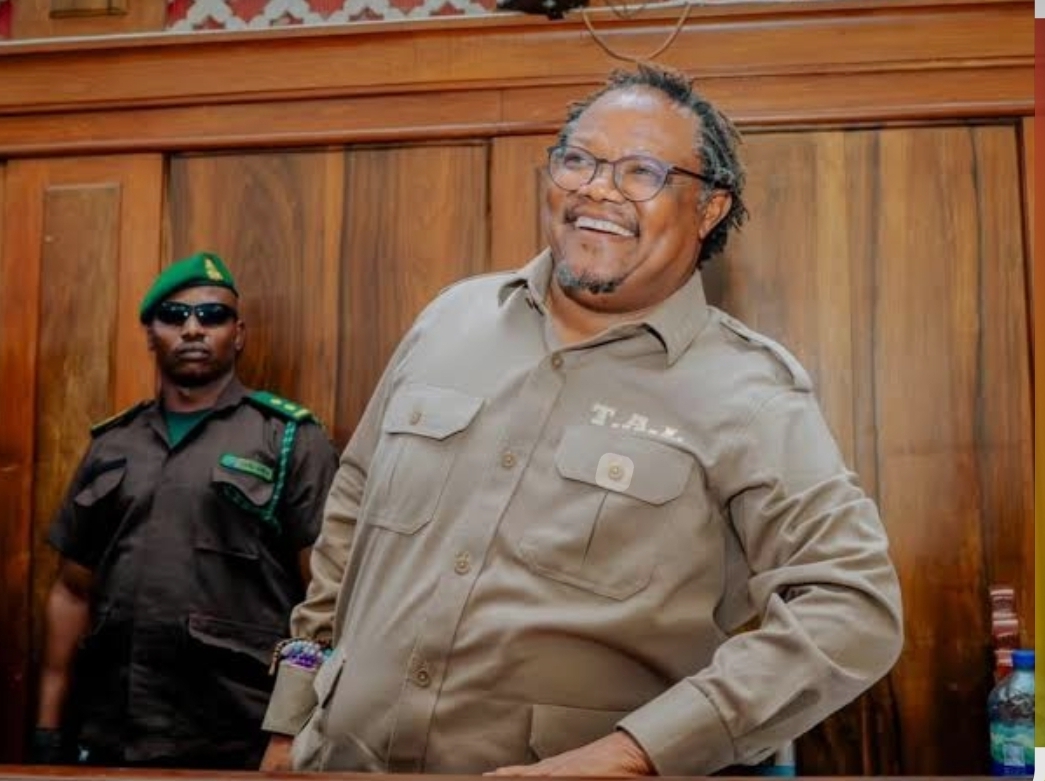
Tanzania’s High Court has ruled that opposition leader Tundu Lissu has a case to answer on a charge of treason, moving one of the country’s most consequential political trials from the prosecution case to a defence that could put the meaning of a “threat to government” itself on trial.
After more than a year in custody and testimony from 17 prosecution witnesses, Tundu Lissu has been told he has a case to answer. His response is to ask Tanzania’s highest political and security officials to help him answer it.
Within minutes of Friday’s ruling, the CHADEMA national chairman announced that he would testify as his first defence witness and asked the court to call President Samia Suluhu Hassan, former Vice President Philip Mpango, former Prime Minister Kassim Majaliwa and four senior security officials.
Then another battle began. The prosecution objected to the seven government and security witnesses. What followed was an extraordinary exchange over presidential immunity, national-security secrecy, the powers of the court and, most fundamentally, the relevance of Tanzania’s political and security leadership to a case in which Lissu is accused of threatening the government.
By the time the court took a break, the three-judge bench had separated Lissu’s proposed witnesses into two groups.
The prosecution had no objection to four CHADEMA witnesses – Secretary-General John Mnyika, Deputy Secretary-General Amani Golugwa, Vice-Chairman John Heche and information official Brenda Rupia.
But the judges reserved their decision on the seven government and security figures. They include the President.
From “No Reforms, No Election” to Treason
The case grew out of the political confrontation preceding Tanzania’s 2025 General Election. Lissu, a lawyer, former presidential candidate and one of Tanzania’s most prominent opposition politicians, was leading CHADEMA’s demand for fundamental electoral reforms.
The party adopted the slogan “No Reforms, No Election,” arguing that Tanzania should not proceed with the election without changes it considered necessary for a credible and competitive political process.
The treason charge arose principally from statements Lissu allegedly made at a CHADEMA meeting in Dar es Salaam on April 3, 2025. Prosecutors say his statements about resistance, rebellion and stopping or disrupting the election demonstrated an intention to threaten the government.
Days later, Lissu was arrested after addressing a political rally in Ruvuma Region. On April 10, 2025, he was brought before the Kisutu Resident Magistrate’s Court and charged with treason. He has remained in custody since.
At the centre of the case is a question that has followed the proceedings ever since: Did Lissu’s language amount to confrontational political mobilisation against an electoral system he considered unfair, or did it cross the legal threshold into treason?
The prosecution says it did. Lissu says it did not.
Tanzania Has Been Here Before – But Not Quite Like This
Treason trials are rare in Tanzania, but they are not unprecedented. The country’s history provides several important comparisons. On the Mainland, one of the most famous began under President Julius Nyerere in 1970.
It involved some extraordinary names from Tanzania’s independence generation. Among them was Bibi Titi Mohamed, once one of Nyerere’s closest political allies and one of the most important women in TANU’s independence mobilisation.
There was also former Labour Minister Michael Kamaliza, military officers and others. Former cabinet minister Oscar Kambona, who had fallen out with Nyerere and gone into exile in London, was accused of masterminding the plot.
The allegation was not merely that the defendants had delivered inflammatory political speeches. The prosecution alleged a conspiracy to overthrow Nyerere’s government, involving secret meetings, communications with Kambona and military connections.
The trial captivated the country. Four defendants, including Bibi Titi, were eventually convicted of treason and sentenced to life imprisonment. Two others received 10-year sentences for misprision of treason, while one defendant was acquitted. Appeals subsequently succeeded for some defendants. Bibi Titi’s conviction remained, but Nyerere later pardoned her and she was released in 1972.
That case involved people who had once occupied the inner circles of the ruling establishment.
But Tanzania remained a one-party state. There was no national opposition party whose leader was challenging the incumbent government for political power through competitive multiparty elections.
The 1983 Coup Plot
Another major Mainland treason case followed an alleged plot against Nyerere in 1982–83. This time, the allegations were much more conventionally associated with the historical meaning of a coup.
Twenty-nine people initially appeared in court accused of conspiring to overthrow the government by force and kill the President. They included numerous military officers, civilians and people with connections to the political establishment.
The case became complicated, including escapes from custody and fresh proceedings.
In the subsequent trial, 19 people – 14 military officers and five civilians – were prosecuted over the alleged plot. By the end of 1985, ten had been acquitted and nine convicted and sentenced to life imprisonment.
Again, the distinction with Lissu’s case is striking. The earlier prosecution concerned an alleged clandestine plot involving military personnel, recruitment and plans to overthrow the government.
Lissu’s case originated publicly – from political statements made during an opposition campaign demanding electoral reforms.
That does not determine whether the current charge is legally sustainable. That is for the court. But historically, the circumstances are different.
Zanzibar: When Treason Entered Opposition Politics
Perhaps the closest political comparison comes from Zanzibar. After the assassination of Zanzibar’s first President, Abeid Amani Karume, in April 1972, authorities conducted a massive investigation into an alleged conspiracy.
Dozens of people were subsequently convicted in a major treason trial. Historical accounts record that more than 40 defendants received death sentences, although the sentences were later commuted.
But another Zanzibar case, more than two decades later, provides a more direct comparison with contemporary opposition politics.
Following the disputed 1995 Zanzibar election and continuing confrontation between the ruling CCM and the Civic United Front, authorities arrested 18 CUF officials and supporters, including elected representatives.
They were accused of conspiring to overthrow the Zanzibar government. The arrests began in late 1997. The defendants remained in custody for years as proceedings moved slowly through the courts.
The case became politically explosive. Amnesty International described the defendants as prisoners of conscience and questioned whether they could receive a fair trial. Even some CCM Union MPs eventually called for the prosecution to end, arguing that it was damaging the country’s reputation.
The trial never produced convictions. In November 2000, after Amani Abeid Karume became President of Zanzibar, the State entered a nolle prosequi – formally abandoning the prosecution.
The High Court released all 18 defendants. They had spent roughly two and a half to three years behind bars without being convicted of treason.
That case is an important historical warning against assuming that being charged with treason – or even being required to answer a treason case – predicts its eventual outcome.
Why Lissu’s Case Is Different
None of those precedents perfectly matches what is happening today.
Bibi Titi was an enormously important political figure, but Tanzania was then a one-party state and she was a former ruling-party leader accused in an alleged conspiracy involving military officers.
The 1983 defendants faced allegations of an actual clandestine coup plot involving soldiers and plans to overthrow Nyerere.
The Zanzibar case brought treason directly into multiparty opposition politics and involved senior CUF figures, including elected representatives.
But Lissu’s case adds another dimension. He is the sitting national chairman of CHADEMA, the country’s main opposition party, a former presidential candidate and one of the most recognisable political challengers to the government.
And the alleged treason emerged from an openly declared political campaign over the rules governing an election. That gives the trial meaning beyond Lissu himself. Its outcome could help define where Tanzania’s courts draw the line between radical opposition speech, civil resistance, incitement and treason.
Seventeen Witnesses Later
The prosecution has sought to establish a connection between Lissu’s words, his intentions and subsequent activities allegedly undertaken in furtherance of his message.
Some witnesses testified about his statements. Others gave evidence about alleged mobilisation surrounding the “No Reforms, No Election” campaign.
Lissu, conducting much of his own defence, repeatedly challenged witnesses over whether their evidence established the ingredients necessary to transform political statements into treason.
The prosecution eventually closed its case after calling 17 of the 30 witnesses it had originally listed. Lissu then asked the High Court to acquit him without requiring him to present a defence.
On Friday, 21 August 2026, the three judges Justices Dunstan Ndunguru, James Karayemaha and Ferdinand Kiwonde – rejected that application.
Court: Lissu Must Answer
The judges ruled that the prosecution had produced sufficient evidence to establish a case requiring an answer.
But that distinction is important. The judges have not convicted Lissu. At this stage, they were not required to make final findings on the credibility of prosecution witnesses or the ultimate weight of their evidence.
They decided only that the prosecution had crossed the threshold necessary for Lissu to be placed on his defence.
Lissu immediately said he would testify. And when he eventually stood as defence witness number one, he began not with the alleged words of treason, but with himself.
Addressing the judges, Lissu described himself as the leader of a political party formally registered under Tanzanian law. He told the court that both at the time of the events in question and now, he held the position of national chairman of CHADEMA.
Then he supplied a detail that may become important to the architecture of his defence.
He said he had become CHADEMA chairman on January 22, 2025. In other words, by the time of the events that led to his arrest and prosecution, he had occupied the party’s highest office for only a matter of weeks.
He told the court that he had been chairman for approximately five or six weeks before his arrest and prosecution – and indicated that he would later explain why that short period mattered.
That opening is significant because a treason trial is ultimately concerned not only with what words were spoken, but with what they meant, what the accused intended and what, if anything, was being organised around them.
Lissu appears to be constructing his defence from that political context outward: who he was, what institution he led, what campaign that institution was pursuing, how recently he had assumed its leadership and what his words meant within that struggle.
That matters because the State’s case and Lissu’s defence may ultimately offer two competing descriptions of the same events. The prosecution sees conduct capable of threatening the government.
Lissu is beginning with the proposition that he was acting as the recently elected chairman of a legally registered opposition party engaged in an openly declared campaign for electoral reform. The judges will eventually have to determine where political context ends and criminal intention begins.
But Lissu does not intend to tell that story alone. He has asked the court to summon President Samia Suluhu Hassan, former Vice President Philip Mpango, former Prime Minister Kassim Majaliwa, Inspector General of Police Camillus Wambura, Chief of Defence Forces General Jacob John Mkunda, Director of Criminal Investigations Ramadhani Kingai, and the Director-General of the Tanzania Intelligence and Security Service.
His reasoning is simple but potentially consequential. He is accused of threatening the government. Samia heads that government. The police, military and intelligence officials occupy senior positions in the institutions responsible for protecting the country and assessing threats to national security. Lissu, therefore, wants them to explain what they knew about the alleged threat.
The prosecution immediately objected.
State: Don’t Summon Them
Lead government lawyer Nassoro Katuga made clear that the prosecution was not opposing Lissu’s right to defend himself. Nor did it ultimately oppose the four CHADEMA witnesses. The fight was over the seven government and security figures.
The State’s first argument was procedural. It argued that Lissu had failed to formally identify the disputed witnesses at the appropriate earlier stage. Lissu disputed that history. He said he had attempted to name his witnesses during committal proceedings at Kisutu, but the magistrate declined to record them, telling him that they could be dealt with before the High Court.
He further argued that he later named them before the High Court itself and that the court had indicated the issue could be addressed when his defence began.
That time, he said, had now arrived. The judges will have to resolve that dispute against the court record.
Who Is Relevant to a Treason Case?
The prosecution’s second argument went deeper. A court, Katuga argued, cannot issue witness summonses blindly. It must be satisfied that the proposed evidence is relevant and material.
Government witnesses, including police officers, had already testified about the alleged events. Calling senior officials could simply reopen matters already addressed during the prosecution case.
Lissu’s answer went directly to the accusation against him. If the prosecution says he intended to threaten the government, he asked, how can the people responsible for leading and protecting that government be irrelevant?
That argument connects the present trial with Tanzania’s earlier treason cases. The 1970 and 1980s prosecutions involved allegations of conspiracies, military officers, clandestine organisation and plots against the government.
In such cases, the nature of the alleged threat was comparatively tangible: overthrow the government, assassinate its leadership or seize power.
Lissu appears to be asking the State to demonstrate the equivalent threat in his case. What, precisely, transformed his political campaign into a threat of comparable legal gravity?
What Did Tanzania’s Security Establishment Know?
This may become the central question of his defence. If Lissu’s conduct amounted to treason, what did Tanzania’s national-security institutions know about it?
Was the alleged threat formally assessed? What information reached the country’s senior security officials? What actions did they take?
The prosecution argues that whether individual officials actually “felt threatened” is immaterial to proving the offence.
Lissu frames the issue differently. He says he wants evidence from officials who, because of their positions, should know whether the State faced the threat alleged in the charge.
That is why he wants the President, former Vice President and former Prime Minister. And that is why he wants the police, military and intelligence chiefs.
Can the President Be Called?
President Samia presents a separate constitutional problem. The prosecution questioned the purpose of issuing a court process that cannot ultimately be enforced against a sitting President in the ordinary manner.
Lissu accepted that the President enjoys special legal protection, but argued that this does not mean the court should simply pretend she cannot possess relevant evidence.
He pointed to provisions of the Presidential Affairs Act governing legal process involving the President. The law does indeed protect a sitting President from being compelled personally to attend court in the ordinary manner, while also providing a mechanism by which the President may be notified where an application has been made for her appearance.
The dispute is, therefore, subtler than whether “Samia can be summoned.”
The question is what the High Court can lawfully do when a criminal defendant maintains that the sitting President possesses material evidence necessary for his defence.
State Secrets and the Intelligence Chief
Government lawyer Job Mrema raised another objection concerning the Director-General of TISS. He invoked statutory protection of intelligence information, arguing that the intelligence chief operates under confidentiality obligations and that compelling disclosure could create a conflict with the law.
Lissu responded that secrecy and testimony are two different things. The law can protect particular intelligence sources and classified information, he argued, without making intelligence officials incapable of appearing before a court.
He referred to previous Tanzanian treason proceedings in which intelligence personnel gave evidence. The historical comparison is particularly relevant here.
Earlier treason trials inevitably involved national-security evidence. The Zanzibar CUF prosecution itself contained material the prosecution wanted treated confidentially because of national-security concerns.
The existence of sensitive evidence, therefore, is hardly unique to Lissu’s case. The question is how the court protects that information while preserving the accused person’s right to present a defence.
Four CHADEMA Witnesses Cleared
After lengthy arguments, Justice Ndunguru announced that the prosecution had no objection to witnesses numbered eight to eleven.
They are John Mnyika, Amani Golugwa, John Heche and Brenda Rupia. Their evidence could establish something quite different from the security officials’ testimony.
They can potentially explain the political context: who organised the April 3 meeting, its purpose, who attended it, why media were invited and what Lissu’s statements meant within CHADEMA’s “No Reforms, No Election” campaign.
The court reserved its decision on the seven government and security witnesses. So, the biggest question arising from Lissu’s witness list remains unanswered.
More Than Another Treason Trial
History therefore provides perspective, but not an exact precedent. The Bibi Titi trial tested Nyerere’s government against alleged conspirators who emerged partly from within the independence establishment.
The 1983 case tested it against an alleged military-linked coup conspiracy. The Zanzibar CUF prosecution showed how a treason charge could become entangled with a bitter struggle between a ruling party and an organised opposition.
Lissu’s trial carries elements of all three histories, but belongs to a different political moment. The accused is not an obscure conspirator. He is not a soldier accused of planning to seize a barracks or assassinate a President. He is the leader of Tanzania’s main opposition party, and the conduct at the centre of the prosecution arose from an openly declared campaign over electoral reform.
His own first words from the witness stand sharpen that distinction further. He asks the court to begin with the fact that he was the newly elected chairman of a legally registered political party – a position he had occupied for only weeks before the events that eventually put him in prison.
The prosecution will have the opportunity to challenge that account and its significance. But the distinction at the heart of the case is becoming clearer.
That does not make Lissu innocent. Nor does today’s ruling make him guilty. It makes the eventual judicial distinction extraordinarily important.
How far can an opposition leader go in calling for resistance against an electoral system before political mobilisation becomes criminal? And at what point does criminal political conduct become treason?
Those questions matter beyond Tundu Lissu. They matter to future opposition parties, activists, governments, prosecutors and courts because whatever final judgment emerges could influence how the boundaries of political dissent are understood in Tanzania. That is what makes today’s proceedings historically different.
After 17 prosecution witnesses and more than a year behind bars, Lissu has been ordered to answer the State’s accusation of treason. He has begun that answer with his own political identity and the circumstances in which he assumed CHADEMA’s leadership.
But his wider strategy is even more remarkable: ask the leaders of the government he allegedly threatened, and the officials responsible for protecting it, to help establish what that threat actually was.
The High Court has allowed his four opposition witnesses to proceed. Whether it will allow him to take his defence into the highest offices of the Tanzanian State is now the next question.