Before the LNG billions arrive, who will make sure Tanzanians actually benefit?
Tanzania has been sitting on an extraordinary quantity of natural gas for decades. Now it is contemplating an investment so large that, if realised, it could alter the structure of the national economy.
The proposed liquefied natural gas project in Lindi is currently valued at about $42 billion. That is not simply another foreign investment. It is a project whose value is enormous relative to Tanzania’s economy and whose consequences could stretch across several generations.
Yet the most important question is not whether Tanzania has gas. It does. Nor is it whether international companies are interested. They are.
The real question is much simpler: What will ordinary Tanzanians get from it? And there is a question that must come before even that one: What has Tanzania learned from the gas investments it already has?
The story began more than 50 years ago
Tanzania’s gas story did not begin with LNG.
Natural gas was discovered at Songo Songo in Lindi in 1974 and at Mnazi Bay in Mtwara in 1982. But commercialisation took decades. Songo Songo began commercial production in 2004 and Mnazi Bay followed in 2006.
The discoveries eventually helped Tanzania reduce its dependence on expensive petroleum products for electricity generation.
Then came something much bigger. Deep-sea exploration that began in earnest in the 2000s produced major offshore discoveries from around 2010. Tanzania today has about 57.5 trillion cubic feet of gas initially in place: roughly 10.4 Tcf from onshore discoveries and another 47.13 Tcf offshore.
It is principally that offshore gas that the proposed LNG project seeks to monetise.
Equinor operates offshore Block 2, where it says 15 exploration wells produced nine discoveries containing more than 20 Tcf of gas in place. ExxonMobil is its partner. Blocks 1 and 4 are led by Shell, with MedcoEnergi and Pavilion Energy among the partners. Tanzania participates through TPDC.
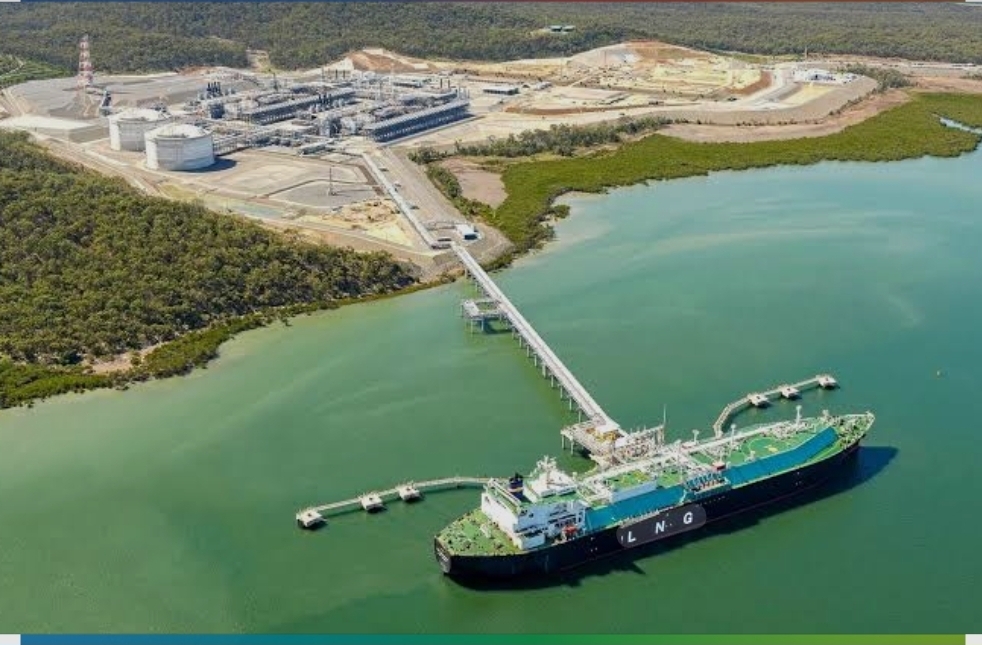
The gas would travel from offshore fields to an LNG plant in Lindi, where it would be processed, cooled into liquid form and exported by ship.
This is where an old natural resource story becomes an enormous investment story.
From $30 billion to $42 billion
When President Samia Suluhu Hassan witnessed the signing of a preliminary Host Government Agreement in June 2022, the government described LNG as a $30 billion project.
Officials projected 10,000 jobs during the four-to-six-year construction period, but only about 500 permanent jobs after construction. President Samia specifically instructed negotiators to protect Tanzania’s interests and said Lindi and Mtwara should be the first beneficiaries.
Subsequent estimates have put the investment at about $42 billion. That number understandably attracts attention.
But investment value is not government revenue. It is not money being divided among Tanzanians. Much of the $42 billion would finance offshore production facilities, pipelines, liquefaction infrastructure, engineering, imported machinery, construction and other costs required to make the gas commercially exportable.
The accountability question therefore cannot be: How big is the investment? It must be: How much value will remain in Tanzania?
We have been here before
The history of Mtwara should make Tanzania particularly careful.
In 2013, opposition to transporting gas from Mtwara to Dar es Salaam contributed to demonstrations that turned violent. At the centre of the anger was a perception among sections of the local population that a resource beneath their region was being taken elsewhere while they remained poor. Contemporary reporting also pointed to failures in consultation, communication and management of public expectations.
The government nevertheless proceeded with a major gas infrastructure programme. A roughly 551-kilometre Mtwara-Dar es Salaam pipeline began operating in 2015. Processing infrastructure was developed at Madimba and Songo Songo.
Gas now supplies electricity generation, industries, some households and compressed natural gas operations. This is a real national benefit, and any fair assessment must acknowledge it.
President Jakaya Kikwete argued at the inauguration of the new gas infrastructure in 2015 that greater use of domestic gas would reduce dependence on expensive imported fuel and improve electricity generation. By June that year, Tanzania’s discovered gas was already estimated at more than 55 Tcf.
But the Mtwara experience established an enduring accountability lesson:
A resource can generate national economic value without convincing the people living above it that they have benefited. LNG cannot afford to repeat that mistake.
What happened in Lindi before the plant was even built?
This is already more than a theoretical question.
Land has been identified around Likong’o in Lindi for the LNG development. Government planning documents have put the LNG site at approximately 2,072 hectares – more than 5,100 acres.
Years ago, Parliament was already asking about compensation.
In 2019, the government told Parliament that Sh56 billion had been allocated for compensation involving residents affected by the proposed LNG development and that payments would begin by December that year.
But land acquisition has produced a more complicated story.
A peer-reviewed study published in 2026, based on 69 interviews conducted between 2016 and 2023, found uncertainty surrounding compensation and resettlement, contested land rights and shortcomings in grievance mechanisms. It also found that government acquisition extended beyond the immediate LNG site into areas intended for industrial and housing development.
That produces our first accountability test. If citizens surrender land today because the state promises development tomorrow, who carries the cost when tomorrow takes 10 or 15 years to arrive?
The agreement that matters
The most important document in the LNG story may not be an engineering plan. It is the Host Government Agreement (HGA). It will help determine the legal, fiscal and commercial relationship between Tanzania and the investors.
And negotiations have been difficult. The government and companies announced significant progress in 2023. But the project subsequently stalled after Tanzania sought changes to financial terms. In February 2025, Energy Minister Dotto Biteko confirmed that negotiations included tax incentives needed to make the project commercially viable.
By January 2026, Planning and Investment Minister Kitila Mkumbo said commercial discussions had essentially been concluded and that remaining negotiations concerned the legal framework. The government then expected an agreement before June 2026 and suggested production could begin roughly eight years later.
The repeated deadlines themselves deserve scrutiny.
The HGA has been described as approaching completion several times since 2022. As of the latest reliable public reporting that Sauti Kubwa found, however, the final framework had still been the subject of negotiation rather than a completed investment ready for construction.
That distinction matters. $42 billion is still a prospective investment, not $42 billion already invested in Tanzania.
What is Tanzania giving away to get it?
Every megaproject involves negotiation. Investors need predictability. They are committing billions before earning their first dollar from LNG. Tanzania also competes with LNG projects elsewhere for international capital.
Tax incentives therefore are not automatically evidence of a bad deal. But they are not automatically a good deal either.
The public-interest question is whether the value Tanzania gives away through tax concessions, fiscal stability provisions or other guarantees is justified by what the country receives in return.
This is especially important because Tanzania itself enacted the Natural Wealth and Resources (Permanent Sovereignty) Act in 2017, declaring that natural resources must be managed for the benefit and welfare of Tanzanians.
The principle is powerful. LNG will test whether it works in practice.
How much will investors recover before Tanzania begins receiving substantial returns? What taxes will they pay? Which taxes will be reduced or waived? What share of production belongs to Tanzania? What financial obligations will TPDC assume? How will costs claimed by investors be audited?
Which disputes can be taken to arbitration? What happens if Tanzania changes its tax laws twenty years from now?
And perhaps most importantly: How much of the final agreement will Tanzanians be allowed to see?
These questions do not imply wrongdoing. They are precisely the questions accountability requires when a government negotiates over a national resource worth billions of dollars.
Jobs: another number that needs explanation
Large investment figures often produce large employment expectations.
The government itself offered a useful warning in 2022: approximately 10,000 jobs were expected during construction, compared with only around 500 permanent jobs after completion.
That difference is critical. An LNG plant is capital-intensive, not permanently labour-intensive. Therefore, Tanzania should not measure success merely by temporary construction employment.
The stronger test is whether Tanzanians become engineers, technicians, contractors, suppliers, managers and eventually owners of businesses serving the gas industry.
How many contracts will Tanzanian companies receive? How much procurement will occur locally? How many specialised positions will initially require expatriates? What programmes are preparing Tanzanians to replace them?
Those numbers should eventually be published and independently verified. Otherwise, “local content” risks becoming another attractive phrase whose success cannot be measured.

Minister of State, President’s Office, Planning and Investment
And what will Lindi get?
This question should be asked before construction starts, not afterwards. President Samia herself said in 2022 that although LNG was a national project, people in Lindi and Mtwara should benefit first.
That promise creates a measurable standard. Ten or fifteen years after LNG begins, will residents of Lindi point to better schools, hospitals, roads, water, businesses and household incomes?
Will local young people possess the skills required by the industry? Will businesses created during construction survive when construction workers leave? Will communities displaced by the development be economically better off than before?
If the answer eventually becomes no, Tanzania could have a $42 billion project surrounded by communities still asking what the gas did for them.
That would constitute an economic success on paper and a development failure on the ground.
The danger of counting money before it arrives
There is another reason for caution. Global LNG markets change.
Projects compete for buyers and finance. Construction costs change. Gas prices fluctuate. The energy transition creates long-term uncertainty about fossil-fuel demand.
The EITI itself notes that Tanzania’s future natural-gas revenues face risks from lower gas prices and delays in financing commercial gas agreements.
Tanzania should therefore avoid building public expenditure expectations around revenue that does not yet exist.
The project must first reach a Final Investment Decision. Then financing must be secured. Then it must be constructed. Then LNG must be produced and sold.
Only after costs, contractual obligations and fiscal arrangements are applied will the true size of Tanzania’s benefit become clear. This could take years.
But neglecting LNG also has a price
Accountability does not mean arguing that Tanzania should leave its gas underground. There is a cost to endless delay too.
Tanzania has spent decades discovering and preparing these resources. Investors have spent substantial sums exploring them. Land has been acquired. Citizens have waited. Government institutions have negotiated repeatedly.
Meanwhile, competing LNG projects are being developed elsewhere. The offshore discoveries alone amount to about 47.13 Tcf of gas initially in place.
If commercially viable resources remain undeveloped indefinitely, Tanzania loses potential taxes, foreign exchange, jobs, infrastructure, business opportunities and the possibility of using gas to support industrialisation.
The real choice, therefore, is not simply LNG versus no LNG.
It is between developing the resource well, developing it badly, or allowing indecision to destroy its value.
The bigger opportunity is not LNG
There is an even more important question. Must Tanzania merely export gas?
Gas can support electricity generation. It can supply industries. It can replace some imported fuels. It can potentially support fertiliser and petrochemical industries and provide energy for manufacturing.
Interestingly, this idea is not new. EWURA’s historical record shows that as far back as 1982, Tanzania commissioned studies into using Songo Songo gas for methanol and fertiliser production. A fertiliser company was contemplated, although the project failed after changes in global fertiliser economics.
More than four decades later, the question remains.
Will Tanzania simply become an exporter of another raw natural resource? Or will gas become an input into a broader industrial economy?
The second outcome could be far more transformative.
Who will watch the money?
Tanzania at least possesses an accountability mechanism that many countries lacked when their resource booms began.
It joined the Extractive Industries Transparency Initiative in 2009, and TEITI exists specifically to disclose payments by extractive companies and revenues received by government. Tanzania has published successive reports covering mining, oil and gas revenues.
The latest EITI reporting framework includes company payments, government receipts, employment, local content and environmental and social information.
LNG should push that transparency much further.
Citizens should eventually be able to follow the money from the gas field to the government account to the national budget to public service.
How much gas was sold? At what price? How much did companies deduct as recoverable costs?
How much did TPDC receive? How much went to the Treasury? What was paid in taxes? What went to local authorities? What was spent in Lindi and Mtwara?
Without such a chain of disclosure, billions can enter government accounts while citizens remain unable to connect natural wealth with their own lives.
The $42 billion question
Tanzania has waited half a century since its first major gas discovery.
That history should make the country ambitious. It should also make it cautious. Songo Songo demonstrated that gas can produce electricity and support industry.
Mtwara demonstrated that national projects can create local resentment when expectations, participation and benefits are poorly managed.
Lindi is demonstrating that communities can carry the consequences of a megaproject long before investors make their final investment decision. And the prolonged HGA negotiations demonstrate something else: the size of an investment means little if the country does not secure the right terms.
So, Tanzania should welcome $42 billion. But it should interrogate every billion. The question is not whether Shell, Equinor, ExxonMobil and their partners will make money. They are commercial companies. They must make a return or they will not invest.
The accountability question concerns the other shareholder in this story – the Tanzanian citizen.
What does she receive? Cheap and reliable energy? Better public services? Industrialisation? Employment? Tanzanian companies capable of competing internationally? Revenue saved and invested for future generations? Or simply another impressive export terminal carrying Tanzanian natural wealth towards ships on the Indian Ocean?
Tanzania does not need to choose between investment and accountability. For an investment this large, accountability is what can make the investment worthwhile.
Before the first LNG tanker leaves Lindi, therefore, Tanzanians deserve clear answers to three questions: What are we giving? What are we getting? And who will make sure we actually get it?
Those questions may ultimately matter more than the $42 billion headline.