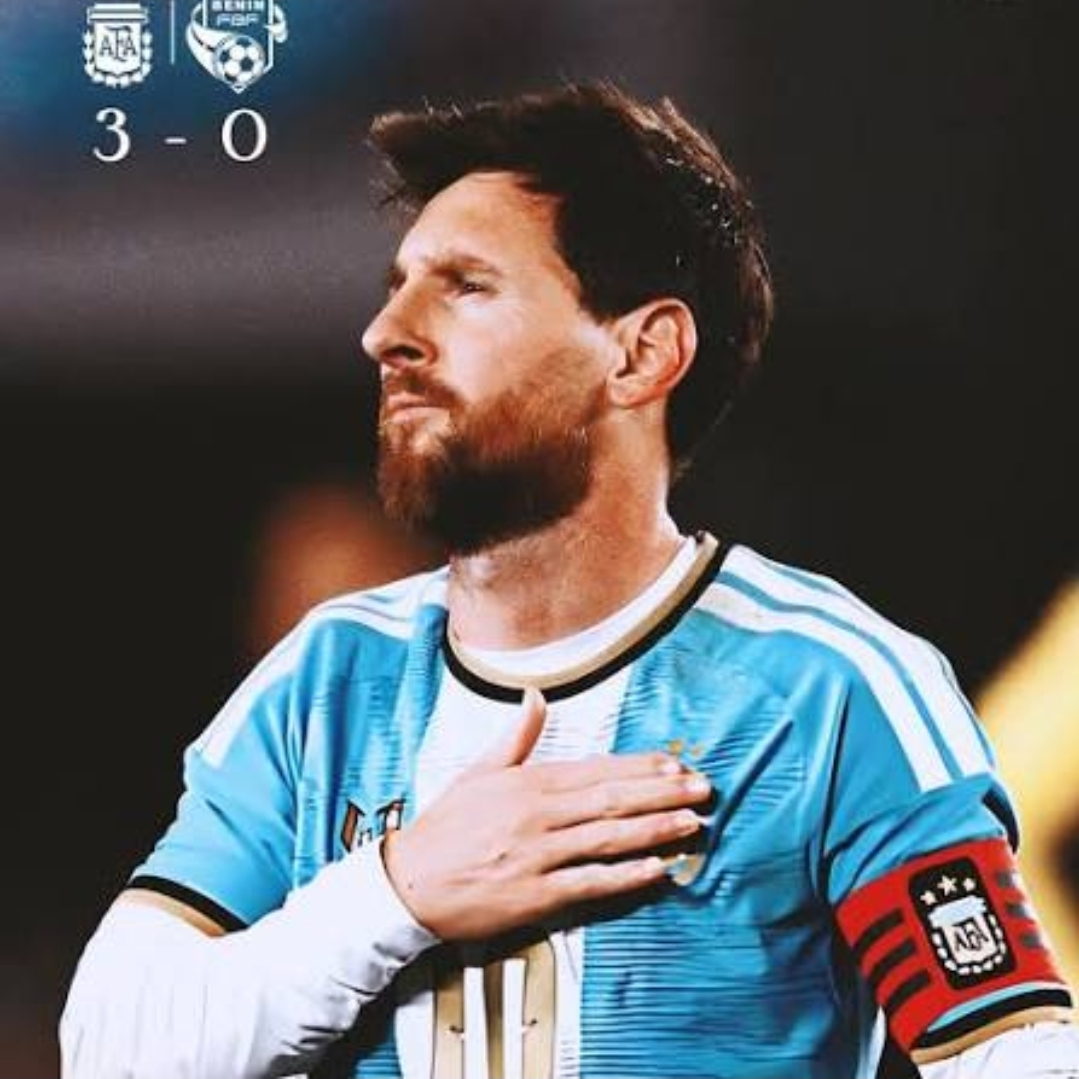
As I watched Lionel Messi play his final match for Argentina last night, my thoughts kept travelling backwards – to Diego Maradona. Perhaps I was watching one era ending while remembering another that, for Argentina, never really ended.
I consider myself fortunate. I belong to a generation that saw both men play in their own time. I did not discover Maradona through YouTube documentaries, nor Messi through archived highlights and statistics. I distantly watched their careers unfold.
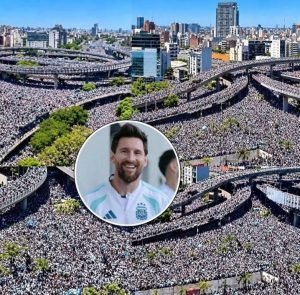
And last night, as Messi bade farewell before more than 80,000 people at the Monumental in Buenos Aires, scoring his 126th international goal in Argentina’s 3–0 victory over Benin, the comparison became irresistible. He leaves after 21 years and 208 appearances – the most capped and highest-scoring Argentine international in history.
One Argentina. Two football gods. Two paths. Two personalities. Two generations. Maradona was fire. Messi was water. Maradona confronted; Messi absorbed. Diego seemed to enter every battle determined that everybody would know he had arrived. Messi could destroy an opponent almost silently.
If footballers were global politicians – not ideologically, but in temperament – I would compare Maradona to former British Prime Minister Winston Churchill and Messi to former South African President Nelson Mandela. Churchill evokes thunder, combat and defiance; Mandela evokes endurance, restraint and reconciliation. Maradona’s personality belonged naturally to the first vocabulary. Messi’s long journey towards acceptance by Argentina reminds me more of the second.
And perhaps that explains my own preference. Of these two football gods, I fall for Messi. Not because Maradona was less gifted, or because statistics can settle an argument about genius. Temperament draws me towards Messi. Given my own reflective and contemplative character, I naturally feel closer to the Mandela personality than to the Churchill one. I admire the man who absorbs the noise, survives the rejection and answers, eventually, through endurance.
Generations matter too. Older Argentines spoke about Maradona with the reverence with which an older political generation spoke about Churchill: you had to have been there. Today’s generation speaks about Messi similarly. Statistics cannot settle that argument because memory has no calculator.
Maradona’s Argentina career lasted from 1977 to 1994: 91 appearances and 34 goals. He gave Argentina Mexico 1986 and carried them back to the World Cup final in 1990. But genius travelled alongside turbulence. Drugs, suspensions, controversy and the positive test that abruptly ended his 1994 World Cup became inseparable from his story. His football life included retirement and return before he finally stopped playing in 1997.
Messi’s drama was quieter. For years, Argentina itself seemed uncertain about him. Barcelona adored him before his homeland completely did. The lost 2014 World Cup final and the 2015 and 2016 Copa América finals intensified the criticism. After the 2016 defeat to Chile, a devastated Messi announced his international retirement.
Then he returned. And that return changed everything. Copa América 2021 finally arrived. Then the 2022 Finalissima, the World Cup in Qatar, another Copa América in 2024, and another World Cup final in 2026. The boy once accused of belonging more to Barcelona than Argentina ended his journey almost inseparable from Argentina itself.
Even their retirements tell their stories differently. Maradona’s exits belonged to a career of interruption, controversy, comeback and reinvention. Messi retired from Argentina once in despair, returned, and a decade later departed on his own terms – 39 years old, celebrated rather than questioned.
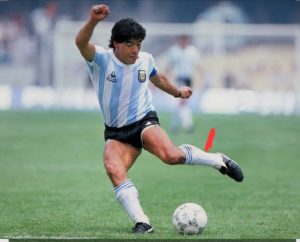
And eventually Argentina immortalised them both. When Maradona died in 2020, Argentina declared three days of national mourning. Buenos Aires illuminated its monuments in the national colours; the Obelisk carried the message “GRACIAS D1EGO.” His image lives in murals and statues, including a five-metre bronze figure erected at the Estadio Madre de Ciudades, while roads and public spaces bear his name. Argentina did not simply remember Maradona. It turned Diego into a national memory.
Messi has been immortalised differently – and, significantly, while still alive. There are statues and enormous murals. In Rosario, a 69-metre mural rises near the National Flag Memorial. Buenos Aires has a Messi statue in its Paseo de la Gloria. In Patagonia, a colossal 26-metre steel monument depicts him with the World Cup. And the Argentine Football Association has placed his name permanently inside the institutional home of the national team: its Ezeiza residential and sporting complex bears the name Lionel Andrés Messi.
Then, only hours before yesterday’s farewell, came something different. The University of Buenos Aires conferred upon him its highest honorary distinction: Doctor Honoris Causa. The university did not honour merely the footballer who scored goals. It cited perseverance, humility, ethical conduct and commitment to representing Argentina. Its Vice-Rector, Emiliano Benjamín Yacobitti, described Messi as a figure who had transcended football to become part of Argentina’s culture and national identity.
That distinction fascinates me because it completes the journey. The young Messi was once questioned for being insufficiently Argentine. The retiring Messi is now being formally presented by one of Argentina’s greatest universities as an embodiment of Argentine values. What a journey.
Perhaps that is also the greatest difference between the two gods. Maradona conquered Argentina before conquering the world. Messi conquered the world before completely conquering Argentina.
Maradona was loved because Argentines immediately recognised themselves in him – the street fighter, the rebel, the wounded genius, the man prepared to shout at the world. Messi travelled a much longer emotional road home. Argentina questioned him, compared him, wounded him, lost him briefly, welcomed him back and eventually embraced him.
Their monuments therefore tell two different stories. Maradona became immortal partly through memory after death. Messi has lived long enough to watch Argentina immortalise him.
Last night, however, statues, doctorates, goals and numbers suddenly seemed secondary. Messi cried. Argentina cried. And watching him, I thought again of Diego.
The older generation had its thunder. The newer generation had its long sunrise. And I was fortunate enough to see both. One Argentina. Two gods. Two paths. Two characters. Two generations. Same No. 10. Same altar.
-
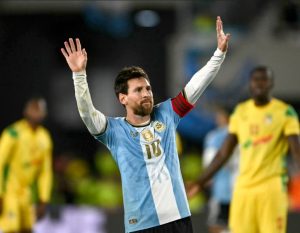
Lionel Messi waves to the supporters after Argentina’s match against Benin, a poignant farewell gesture at the end of his international journey.