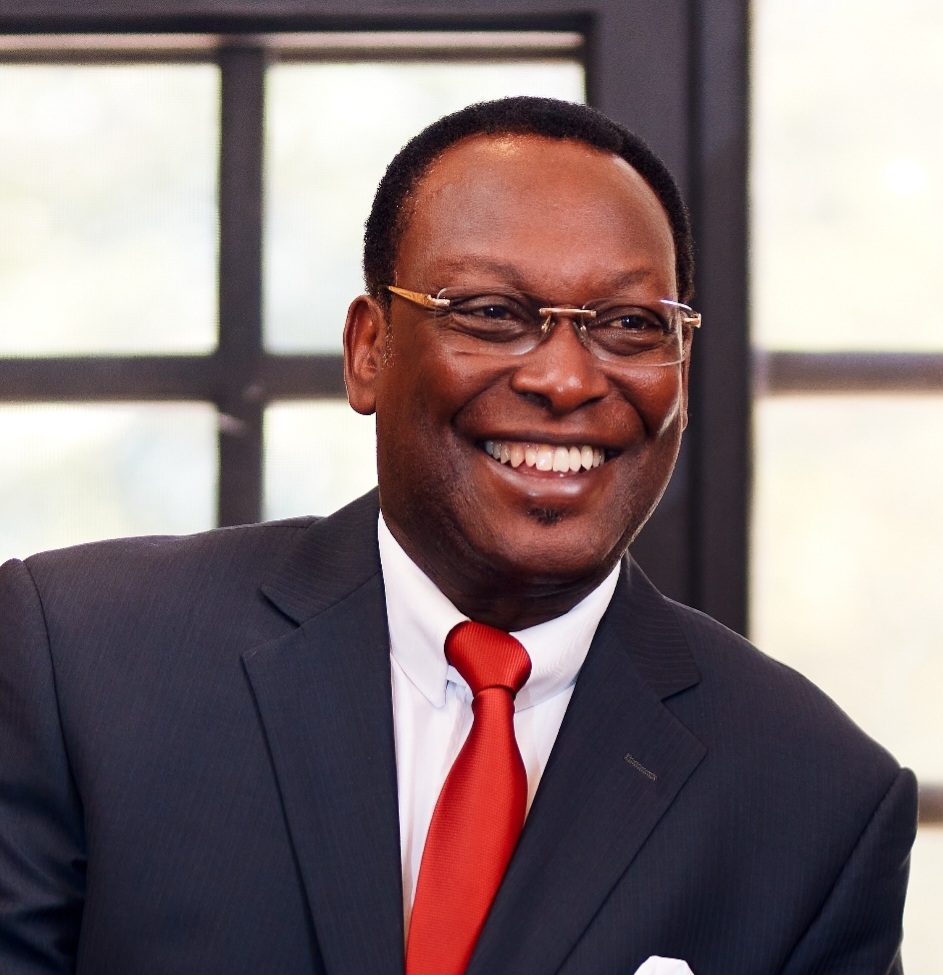
For about two years, Freeman Aikaeli Mbowe has been subjected to an extraordinary campaign of character assassination from some members, leaders, supporters and sympathisers of the very party he spent three decades helping to build.
Criticism is legitimate in politics. Mbowe is not above it. But what I have watched increasingly resembles something more systematic: a relentless attempt to demolish his reputation, negatively reinterpret almost everything he does, and pressure everyone else into accepting the same verdict.
Even when Mbowe keeps quiet, the attacks continue. But his silence is not new. For more than two decades, he has often absorbed criticism without answering every accusation. Even when the Magufuli government disrupted his businesses and froze his personal bank accounts, he did not embark on a public campaign seeking sympathy. He spoke about those experiences more openly only after John Magufuli’s death, while recalling what opposition politicians had endured under that government.
This is why the present campaign worries me. Mbowe spent much of his political life using his resources, networks and leadership position to build CHADEMA and the people within it: recruiting, financing, mentoring, promoting, protecting and giving political space to personalities who eventually became powerful enough to challenge him. Some did exactly that.
He lost the chairmanship democratically in January 2025, accepted the result and stepped aside. If he had been malicious, he would have rigged the election. His leadership organised and conducted the most transparent, free, fair, and credible election ever in Tanzanian politics.
One might have imagined that, after roughly 30 years devoted to CHADEMA, his successors would consolidate what they inherited while allowing him to return to his family and businesses.
Instead, the battle against Mbowe seems to have continued after Mbowe lost the chairmanship and kept quiet to give the new leadership space to consolidate their plans.
Surprisingly, those of us who refuse to join the chorus risk becoming targets ourselves. There appears, among some members and activists, an unusual intolerance of dissenting interpretations while simultaneously claiming the democratic label. I do not buy much of the propaganda about Mbowe. If saying so invites attacks against me too, that may merely demonstrate the problem I am describing. So, allow me to play devil’s advocate.
Reputation is not legacy
For more than three decades, Mbowe helped build the political movement that eventually became Tanzania’s strongest opposition force. He gave it money, structure, visibility, leaders and much of his adult life. He endured arrests, prosecution and prison, confronted presidents and negotiated with them. Finally, after 21 years as national chairman, he lost an internal election by just 31 votes – 513 to Tundu Lissu’s 482 – and walked away.
Yet, some of the fiercest attacks against him today come not from CCM, which he opposed for decades, but from within the movement he helped build.
His wealth is questioned. His businesses are questioned. His meetings with government leaders are questioned. When he attends national events, he is accused of moving closer to the government. When he stays away from opposition events, his absence becomes evidence against him.
In August 2026, Mbowe attended the government-hosted inauguration of the Julius Nyerere Hydropower Project and praised its completion while arguing that the electricity should stimulate industries, social services and rural development. On 10 September, he visited President Samia Suluhu Hassan at Kizimkazi to console her following the death of her husband, Maalim Hafidh Ameir Hassan.
His critics immediately asked another question: Why can Mbowe attend government functions and visit the President but not appear in court in solidarity with his successor, Tundu Lissu, who faces a treason case?
It is a legitimate question. But it cannot be answered intelligently by pretending history began yesterday.
After Lissu’s arrest in April 2025, Mbowe visited him in prison. Instead of that gesture being universally interpreted as solidarity, extraordinary insinuations appeared on social media questioning Mbowe’s motives, including completely unsubstantiated suggestions involving poison.
Consider the trap. If Mbowe visits Lissu, his motives are questioned. If he does not visit, his absence is condemned. If he attends court, someone will interpret it politically. If he stays away, he has abandoned his former colleague.
Once a political community decides that somebody is guilty, every action becomes evidence. That is character assassination, not political analysis.
More importantly, reputation and legacy are different things. Reputation describes how someone is viewed at a particular moment. Legacy asks what that person built, changed, influenced and left behind.
A politician can become unpopular. Twenty or thirty years of history do not consequently disappear.
Why I write about Mbowe
Some friends have asked why I appear willing to speak positively about Mbowe when some people he recruited, supported and mentored now speak so harshly against him.
It is a fair question. Of course, I do not write as a completely detached observer.
Mbowe’s family owned Free Media Limited, where I worked for about 11 years, including as Sunday Editor, Deputy Managing Editor and Managing Editor. Mbowe and I were at one point classmates in the PPE programme at the University of Hull. From the 2010 presidential election, I also worked privately as a media adviser to CHADEMA and later in other capacities that allowed me to observe aspects of its internal operations.
That history does not make my judgement infallible. Nor does it oblige me to defend Mbowe. But it gives me an advantage that many don’t have.
Indeed, I think 21 years as CHADEMA chairman was not a short period as chairman. Had Mbowe voluntarily handed power to a successor while still overwhelmingly popular and powerful, that might have become one of his greatest political legacies.
But criticism should not require historical amnesia. My argument is neither that Mbowe is a saint nor that his critics are always wrong. It is that we should separate five things: the man, the record, the reputation, the legacy and propaganda.
The businessman who entered politics
Mbowe did not enter politics as a professional revolutionary. He came from business.
His father, Aikaeli Mbowe, was a prominent businessman who had supported the independence movement and knew Julius Nyerere. Freeman himself worked at the Bank of Tanzania before becoming more deeply involved in family businesses. When multiparty politics returned in 1992, he became one of CHADEMA’s founding members.
This matters because Mbowe has never regarded wealth creation or private enterprise as morally incompatible with politics.
CHADEMA itself emerged partly from the intellectual and economic thinking represented by Edwin Mtei and others who offered an alternative to Tanzania’s long state-centred socialist tradition. Mbowe broadly belonged to that market-oriented outlook: entrepreneurship, private initiative, individual responsibility and economic independence.
And he carried that philosophy into politics. A political party needs ideas, but ideas need transport. They need offices, organisers, lawyers, accommodation, communication, technology and people capable of surviving economically while doing politics.
Mbowe understood this early. During Benjamin Mkapa’s presidency, CHADEMA remained small. In 2000 it won only four parliamentary seats and obtained one special seats MP. Yet Mbowe helped organise, coordinate and finance an operation through which four of its MPs travelled across regions, holding rallies and campaigning particularly against the unpopular kodi ya maendeleo – the development levy.
The levy was abolished in 2003 amid wider local-government tax reforms.
The political lesson was important: five MPs could be numerically insignificant inside Parliament but politically loud outside it. Identify an issue people understand, mobilise around it, finance sustained movement and take politics directly to citizens. That became a prototype for CHADEMA under Mbowe.
From five MPs to a national force
When Mbowe became national chairman in 2004, he expanded that method.
His 2005 presidential campaign famously used a helicopter to reach communities across the country. Mbowe received only 5.88 percent of the presidential vote, but CHADEMA emerged with greater visibility, eleven MPs and 103 councillors. The helicopter was not merely transport. It was branding.
Mbowe seemed to understand politics partly like an entrepreneur introducing a product: immediate profit may be small, but establishing the brand and creating a market can constitute the real investment.
The returns came later. In 2010, CHADEMA presidential candidate Dr Willibrod Slaa received about 27 percent of the presidential vote. Five years later, Edward Lowassa, standing through the UKAWA arrangement in which CHADEMA was the dominant force, received nearly 40 percent—more than six million votes.
No serious person should credit Mbowe alone. Slaa was an exceptional communicator. Lissu became a formidable political and legal personality. Lowassa arrived with his own networks. Activists, MPs, organisers, financiers and millions of ordinary supporters built the movement.
But political energy requires an organisational vehicle. CHADEMA became that vehicle under Mbowe.
Perhaps one of his strongest abilities was accommodating powerful personalities. Lissu provides the clearest example. The two men are temperamentally almost opposites. Lissu is combative, legalistic, outspoken and confrontational. Mbowe is restrained, transactional and inclined towards negotiation.
Yet Mbowe gave Lissu enormous political space, played an important role in efforts to save his life after the 2017 shooting, handpicked him as vice chairman in 2019 and gave him room to become one of CHADEMA’s most powerful figures.
The man who eventually defeated Mbowe for the chairmanship had spent years growing politically inside the organisation Mbowe led.
That requires a degree of political self-confidence – and emotional intelligence – that should not be casually dismissed.
Negotiating with your adversary
Another Mbowe characteristic is now routinely interpreted as evidence against him: his willingness to speak to those in power. But this, too, is not new.
Under Jakaya Kikwete, Mbowe negotiated with the government while simultaneously confronting it over electoral reform, political rights and constitutional questions. When dialogue appeared useful, he participated. When he believed agreements were not being implemented, he returned to public confrontation.
His method was essentially: talk, negotiate, extract what you can – and fight when negotiation fails. To Mbowe, dialogue and struggle have never been opposites.
That may partly be the businessman in him. Business teaches that today’s adversary may still be tomorrow’s negotiating partner. You negotiate with regulators, competitors, banks, suppliers and governments without having to love them. Politics can operate similarly. Meeting a President does not automatically mean joining the President. Praising one government achievement does not require endorsing the government. Negotiation does not necessarily mean surrender.
This distinction became particularly important after Magufuli.
Prison, Samia and the photograph
Magufuli’s presidency transformed opposition politics. Rallies were restricted. Opposition politicians faced arrests and prosecution. Lissu survived the 2017 assassination attempt. By 2020, CHADEMA had lost most of the elected positions on which much of its political infrastructure depended.
Mbowe himself was arrested in July 2021 on terrorism-related charges and spent more than seven months in detention.
Some religious leaders – bishops and sheikhs – subsequently helped establish communication between him and President Samia Suluhu Hassan. According to accounts from people familiar with the process, Mbowe was repeatedly urged while still detained to meet Samia immediately after his release.
He initially resisted. More than once, according to those accounts, he argued that he should meet CHADEMA first. Eventually, he trusted the religious mediators.
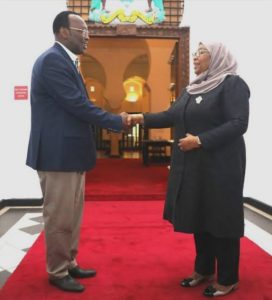
When prosecutors withdrew the case on 4 March 2022, Mbowe left detention. Within hours, photographs showed him meeting Samia at State House.
The photograph became politically explosive. What it did not show was his earlier reluctance, the religious mediation or the discussions preceding his release. Government supporters could portray the photograph as Samia’s magnanimity; Mbowe’s critics could portray it as evidence of a secret deal.
The same picture served two opposing political narratives.
What followed is more useful than speculation. Dialogue between CHADEMA and CCM became formalised. Political rallies eventually returned. Exiled opposition figures returned. Political and electoral reforms entered sustained discussion.
Not everything CHADEMA wanted was achieved. Constitutional reform remained unresolved, electoral changes were insufficient and trust eventually collapsed.
It is legitimate to ask whether Mbowe trusted Samia too much or whether CHADEMA gained enough from the dialogue.
But those questions are fundamentally different from accusing him of betrayal.
Samia did not invent the negotiating Mbowe. That Mbowe had existed for decades.
When old strengths became new crimes
Something more interesting then happened. Mbowe’s old characteristics acquired new meanings. Twenty years of organisational survival became “he has overstayed”
Negotiation became “he has been bought.” Economic independence became “where is his money coming from?” Pragmatism became “compromise.” Restraint became “weakness.”
One political observer has described this as a quinta columna – a Fifth Column – within the opposition movement, arguing that internal actors deliberately weakened Mbowe while advancing narratives convenient to elements within CCM.
That is an opinion. But the reframing itself is visible. Long before CHADEMA delegates voted in January 2025, a political narrative had been built around what Mbowe supposedly represented.
Then came the election. Lissu defeated him 513 – 482. The difference: Thirty-one votes. CHADEMA did not overwhelmingly reject Freeman Mbowe. It was divided almost exactly in half.
Mbowe accepted defeat and left. He did not invalidate the election, establish a rival CHADEMA or mobilise supporters against his successor.
For a man who had controlled the party for 21 years, that exit itself deserves recognition.
The politics of wealth and sacrifice
There is also a deeper ideological tension behind attacks on Mbowe’s businesses.
CHADEMA emerged from a broadly market-oriented tradition associated with Mtei. Yet, parts of its contemporary activist culture appear increasingly suspicious of wealth, particularly when a successful opposition politician remains economically comfortable while colleagues suffer. That tension intensified under Magufuli.
Of course, when opposition politics costs people jobs, businesses, liberty and sometimes their physical safety, suffering can gradually become evidence of commitment. Someone who remains economically successful can become suspicious precisely because he has survived.
Two competing philosophies emerge. One says political leaders should build independent wealth so they cannot be controlled through salaries, state patronage or public office. The other says leaders must visibly share the sacrifices of their followers.
Both contain legitimate concerns. Wealth can compromise politics. But poverty does not automatically demonstrate integrity either.
A movement that romanticises poverty may eventually become dependent on rich patrons or public offices its members desperately need to survive. Mbowe’s instinct has consistently favoured economic independence.
So, when, after losing the chairmanship, he said he finally had time for his family and to make money, some of us did not find the statement scandalous.
For roughly 30 years, politics had consumed much of his prime adult life. Campaigns, travel, arrests, court cases, fundraising, negotiations, elections, internal crises and prison competed with his family.
Perhaps his family sees what political activists do not. Their father has finally come home.
Has Mbowe changed – or has CHADEMA?
This brings me to the question at the centre of this argument. What happened to Freeman Mbowe? Perhaps not very much.
The businessman is still there. The negotiator is still there. The organiser is still there. The man who can acknowledge something positive about a government he opposes is still there. The politician who distinguishes an adversary from an enemy is still there.
What changed substantially may be the politics around him. A generation shaped by repression, disputed elections, arrests and violence understandably developed a different conception of opposition politics. For some, confrontation demonstrates commitment. Distance from the government demonstrates integrity. Suffering demonstrates solidarity. Dialogue invites suspicion.
Mbowe belongs to another temperament. He believes in negotiation and pressure. He believes political independence requires economic independence. He can sit with an adversary without becoming his friend. He can refuse to answer an insult. And he apparently believes that losing CHADEMA’s chairmanship restored his right to become Freeman Mbowe the businessman, husband, father and private citizen.
One can disagree with him. What worries me is the apparent insistence that everyone must disagree with him – or be attacked.
Democracy cannot mean freedom to criticise Freeman Mbowe but intolerance towards anyone who challenges that criticism. If people who proclaim themselves democrats cannot accommodate a different interpretation of one politician, what precisely is the democracy they are defending?
The legacy that cannot be washed away
Whatever one thinks of Mbowe today, erasing him from Tanzania’s political history requires ignoring three decades of evidence..He was among CHADEMA’s early founders when multiparty politics returned in 1992 and later led the party for 21 years.
When CHADEMA first contested a general election in 1995, it won only four parliamentary seats and 41 council seats. By 2010, Slaa received 27.1 percent of the official presidential vote and CHADEMA secured 48 parliamentary seats. In 2015, through UKAWA, it became the vehicle for the strongest opposition presidential challenge of that period and secured 70 parliamentary seats.
Those numbers do not belong to Mbowe alone. But neither can Mbowe be removed from the organisation that produced them.
Under his leadership, CHADEMA developed national structures, recognisable branding, financing networks, political talent and mobilisation machinery capable of seriously challenging CCM.
As a human being, he made mistakes. His preference for private negotiation sometimes created legitimate transparency questions. His flexibility sometimes blurred the boundary between tactical compromise and principle.
History should record those weaknesses too. But history is not social media. A politician’s popularity belongs to the present. Legacy belongs to history.
The proper question is, therefore, not whether Freeman Mbowe is popular among CHADEMA activists in 2026. It is whether Tanzania’s opposition politics would look the same had Freeman Mbowe never entered it.
Could anyone honestly write the history of CHADEMA’s transformation from a small opposition party into a national political force while removing his name? No.
Take this analogy. If CHADEMA were the United States, Edwin Mtei might loosely resemble James Madison in the narrower sense of being an intellectual founding father, while Mbowe might be compared – again, strictly in the institution-building sense – to George Washington: not the sole founder, but the leader under whom the project acquired much of the organisational shape, national reach and durability inherited by later generations.
Analogies have limits. The underlying point does not. Many of those now questioning whether Mbowe is sufficiently CHADEMA entered politics, grew, were mentored, empowered or given space during his leadership. They have every right to reject his methods. A new generation has every right to construct its own politics and perhaps succeed where he failed.
But modern CHADEMA cannot honestly tell its own story without Freeman Mbowe. He did not merely occupy its chair. He helped build the chair on which his successors now sit.
And perhaps, from outside that chair, Mbowe presents CHADEMA with one final lesson it may not presently wish to hear: political disagreement need not become hatred; opposition need not require economic self-destruction; negotiation does not automatically mean surrender; and leaving political office does not deprive a man of the right to live the rest of his life.
One may dispute what Freeman Mbowe should do next. That is politics. One may dislike what Freeman Mbowe is today. That is opinion. One may even succeed in destroying his present reputation. But one cannot erase what he helped build. That is legacy.