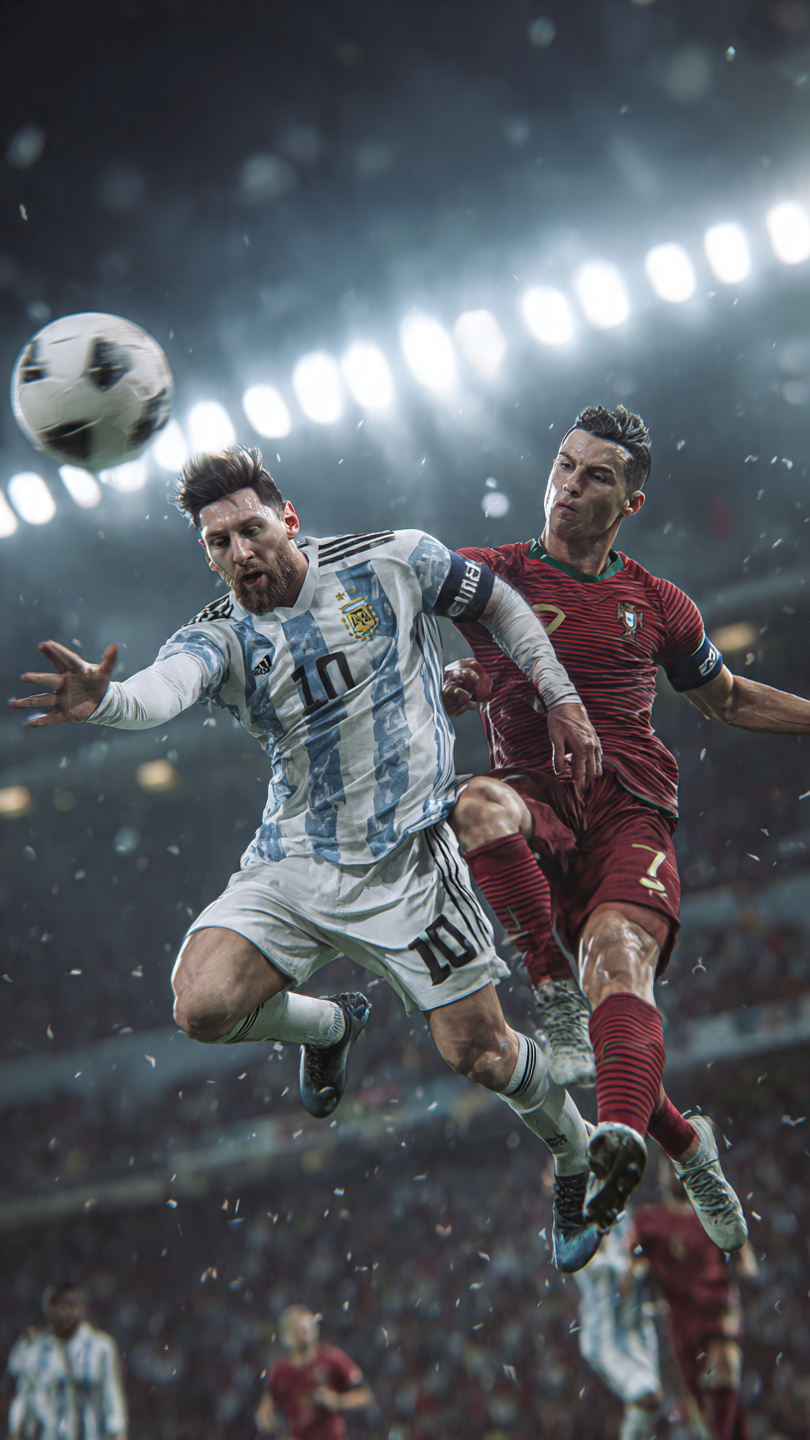
Right at the start of this year’s World Cup tournament, I am imagining a World Cup final between Messi and Ronaldo. And suddenly, every football memory from the last twenty years comes rushing back.
Not just Argentina versus Portugal. Not merely two nations separated by oceans and cultures. But the culmination of the greatest rivalry the game has ever known.
A rivalry that shaped an era, defined a generation, and transformed football into a global conversation that never seemed to end. Because long before they carried the hopes of Argentina and Portugal, Lionel Messi and Cristiano Ronaldo carried the hopes of Barcelona and Real Madrid.
And before that, they carried the ambitions of Manchester United and Barcelona. Their story has never been confined to one competition. It has unfolded across continents, leagues, Champions League nights, Ballon d’Or ceremonies, and countless Clasicos that felt bigger than cup finals.
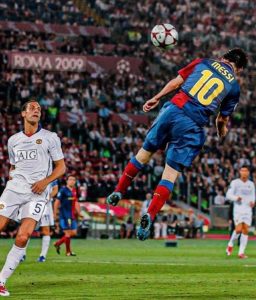
This imagined World Cup final would not begin on the day of kickoff. It began nearly two decades ago. I remember Rome, 2009. The Champions League final. Young Cristiano Ronaldo, already Europe’s brightest star, leading Manchester United. Young Lionel Messi, becoming something football had never quite seen before.
The world anticipated a duel. Instead, Messi rose above everyone – literally. His unforgettable header sealed Barcelona’s victory and announced the beginning of a new footballing order. The torch had not been passed. It had been seized.
Then came the years that changed everything. Cristiano crossed from Manchester to Madrid. Messi remained in Barcelona. And football was never the same again. El Clasico ceased being merely Spain’s biggest fixture. It became a global event. A monthly referendum on greatness. The world no longer watched Real Madrid against Barcelona.
The world watched Ronaldo against Messi. Every goal mattered. Every assist mattered. Every trophy mattered. Every facial expression mattered. Football became personal.
For nearly a decade, the Santiago Bernabéu and Camp Nou became the stage upon which two kings fought for supremacy. One weekend Ronaldo would score a stunning winner and silence Barcelona.
Then next, Messi would weave through defenders and leave Madrid broken.One season belonged to Cristiano. The next belonged to Leo.
There were humiliations and triumphs. Five-goal thrillers and tactical battles. Moments of genius and moments of heartbreak. And through it all, they pushed each other higher and higher.
History tells us Messi often emerged with the upper hand in those direct encounters. Barcelona generally enjoyed more success during the peak years of the rivalry. Messi scored more often in Clasicos. He produced moments that became football folklore.
The image of him holding his shirt aloft at the Bernabéu remains one of the sport’s defining photographs. And eventually, Messi accumulated more Ballon d’Or trophies, more assists, and what many believe is the most complete body of football ever assembled. When discussions about pure footballing genius arise, Messi usually stands at the summit.
Yet that is only half the story. Because Cristiano Ronaldo refused to accept any summit that he had not climbed himself. Every time Messi seemed untouchable, Ronaldo responded.
Every time critics declared the debate over, Ronaldo reopened it. He transformed Real Madrid into a Champions League dynasty. He became the competition’s ultimate predator. Knockout rounds became his kingdom. Finals became his theatre. Pressure became his fuel. While Messi dazzled with artistry, Ronaldo conquered with force of will. One appeared gifted by fate.
The other appeared determined to challenge fate itself. In the Champions League, Ronaldo ultimately claimed more titles. More goals. More knockout heroics. More nights that felt impossible until he made them real. His hat-tricks against elite opponents became routine.
His comebacks became legendary. His impact on Europe’s biggest competition remains unmatched. It was there that he built perhaps the strongest pillar of his legacy.
And so the years passed. The debate evolved. Messi seemed to possess the stronger claim to footballing perfection. Ronaldo seemed to possess the stronger claim to footballing immortality through relentless self-creation.
Neither truly defeated the other. Neither could. Because greatness on this scale cannot be measured by a single statistic or trophy. The rivalry itself became the victory.
Then came the final pieces of the puzzle. Messi won the Copa América. Then the World Cup. The one trophy critics had always used against him disappeared from the conversation forever.
For many, the debate ended there. The scales tipped decisively. The Argentine genius had completed football. He had climbed every mountain.
Yet imagine, just imagine, one final World Cup. One final journey. One final miracle. Argentina against Portugal. Messi against Ronaldo. The greatest rivalry in sports history arriving at the only stage it never conquered. The World Cup Final.
As kickoff approaches, memories flood every corner of the world. Fans remember the nights at Camp Nou. The tension at the Bernabéu. The Champions League battles.
The endless Ballon d’Or races. The goals. The records. The arguments. The friendships damaged and repaired by football debates. People remember where they were when Messi scored that goal.
When Ronaldo scored that one. When Barcelona humiliated Madrid. When Madrid conquered Europe again. Entire chapters of people’s lives are attached to those memories.
And that is why this final feels different. Because it is not merely a football match. It is a reunion with our younger selves. A reunion with an era that many believed would never end.
For twenty years, Messi and Ronaldo seemed eternal. Like mountains on the horizon. Always there. Always competing. Always giving us another reason to watch.
And now, perhaps for the final time, they stand opposite each other. Not as Barcelona and Real Madrid. Not as winners of Ballons d’Or. Not as statistical giants. But as two aging warriors carrying the weight of history.
One of them would leave with football’s greatest prize. The other would leave with heartbreak. But neither would leave diminished. Because history has already made its judgment.
Messi may have ultimately emerged with the stronger footballing legacy, the broader consensus, and perhaps the greatest collection of achievements the game has ever seen. Yet Ronaldo ensured that greatness was never handed to Messi uncontested. Every masterpiece needs a worthy rival. Every king needs another king. Without Ronaldo, Messi’s story would be incomplete. Without Messi, Ronaldo’s story would be unimaginable.
And as the referee prepares to blow the whistle, the world realizes something profound. This is no longer about determining who was greater.
That debate will continue forever. This is about gratitude. Gratitude that football gave us both. Gratitude that we lived through the greatest rivalry the sport has ever known. And gratitude that, in this imagined World Cup final between Messi and Ronaldo, history finally gave its two greatest protagonists one last stage upon which to say goodbye.
In their opening group matches at this World Cup, Messi and Ronaldo offered the world a striking contrast – one reminding us why many consider him football’s greatest artist, the other revealing the relentless determination of a man still refusing to surrender to time. Messi’s Argentina began their campaign with authority, dispatching Algeria 3-0 in a performance that bore all the hallmarks of the Argentine maestro.
While age may have reduced the frequency of his breathtaking runs, his influence remained unmistakable. He dictated the rhythm, found spaces invisible to others, and orchestrated attacks with the calm assurance of a man who has seen every possible scenario unfold on a football pitch. It was less a performance of physical dominance and more an exhibition of football intelligence – proof that genius evolves rather than fades.
Ronaldo’s Portugal, meanwhile, endured a more complicated evening, held to a 1-1 draw by DR Congo. The result reflected the changing realities of football and perhaps of Ronaldo’s career itself. No longer the explosive winger who terrorized defenders at Manchester United or the unstoppable force who conquered Europe with Real Madrid, he now carried a different burden – that of leadership, inspiration, and experience.
Yet even amid Portugal’s frustrations, Ronaldo’s competitive fire remained unmistakable. Every missed chance angered him, every lost ball demanded a response, every setback seemed to fuel his determination.
The contrast between the two icons was almost poetic: Messi appeared to flow effortlessly with the game, while Ronaldo continued to wrestle with it, challenging every obstacle through sheer will. One seemed guided by football’s natural rhythm; the other still sought to bend that rhythm to his command.
We are only seven days into the 39-day 2026 World Cup. Lionel Messi still looks strong, seemingly defying age, while Cristiano Ronaldo appears to be feeling the weight of time. Yet the dream remains, and the question lingers: will football fans finally witness that long-awaited final between these two legends?