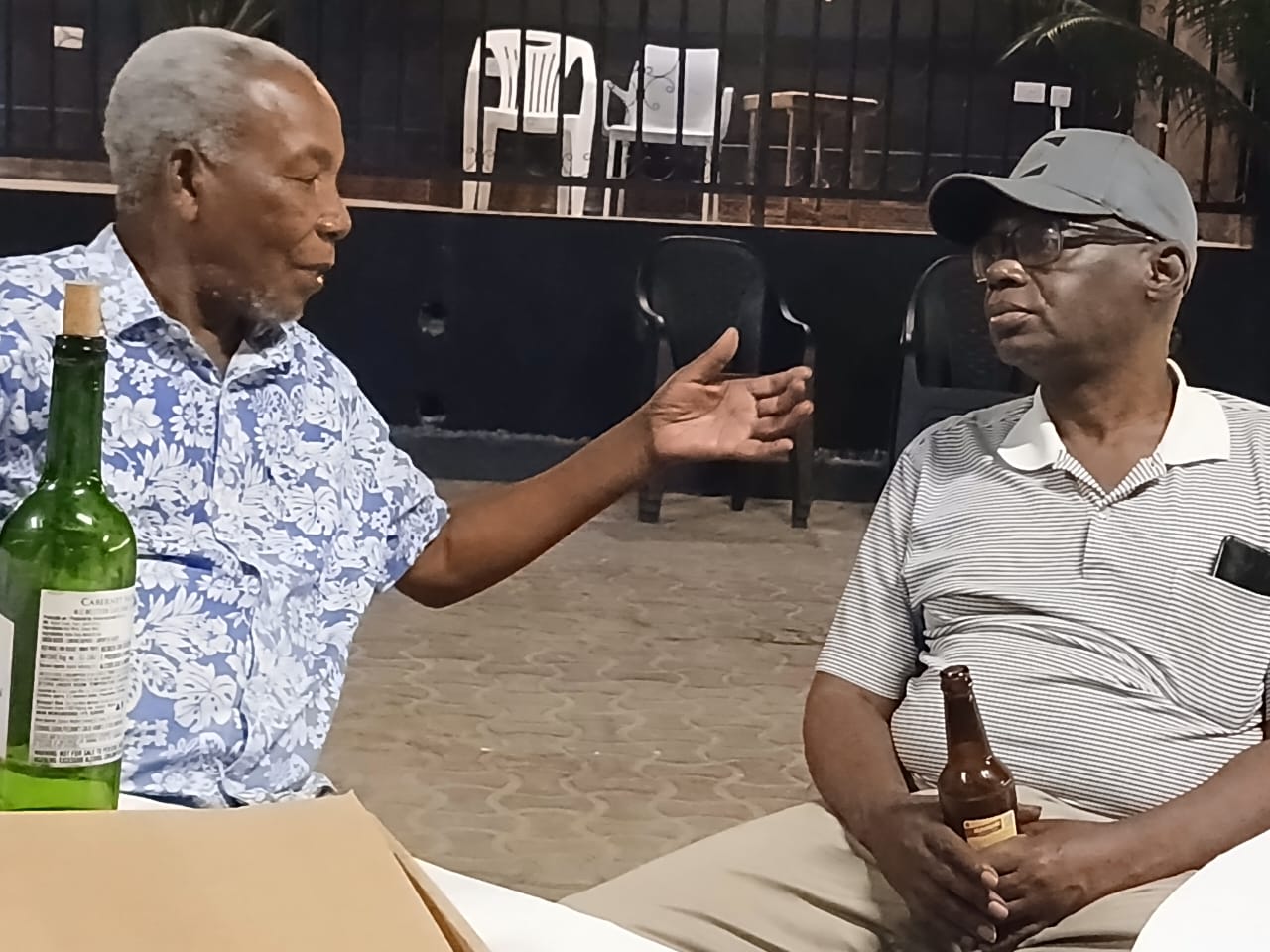
For one afternoon, it must have felt as though the old newsroom had assembled again.
There were no deadlines. No raw copy waiting impatiently for surgery. No reporter trembling beside an editor’s desk. No headline screaming to be rewritten. Instead, there were oldies playing softly, soup to open the appetite, nyama choma to settle it, laughter, memories and stories – lots of stories.
At Kantina, along Makongo Juu – Goba Road in Dar es Salaam, on Saturday, October 3, 2026, a group of Tanzanian journalists gathered to celebrate the 80th birthday of one of their professional mentors: veteran editor James Mpinga, affectionately known in the profession as King James.
For me, Mpinga occupies a particularly personal place in that history. He was my professional mentor at The African. Nearly 30 years ago, more than anybody else, he honed my journalistic writing and sharpened my nose for news. I have worked with many editors since, but I have never encountered a stricter editor, a better headline writer or a sharper English sub-editor than James Mpinga.
Those who gathered to honour him had their own versions of the same story.
They included Joseph Mwamunyange, Fumbuka Ng’wanakilala, Theophil Makunga, Bob Karashani, Thom Mosoba, Florian Kaijage, Dr Egbert Mkoko, Gloria Michael, Aboubakar Liongo, Usiah Nkomah, Naomi Achieng, Evarist Mwitumba, John Marwa and Chief Odemba. At the centre of it all sat the birthday man himself: King James at 80.
There was deliberately little ceremony or protocol. This was essentially a newsroom reunion around its old editor – a chance to remember Mpinga’s years in journalism, particularly newspapers, and what his demanding editorial hand had done to generations of journalists.
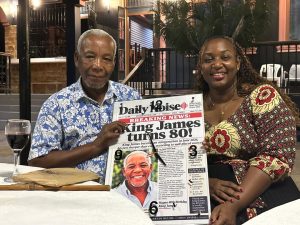
But before the witnesses turned to King James, they first provoked another veteran, Theophil Makunga, into opening an extraordinary file from 1984.
Makunga recalled being a journalism student at the Tanzania School of Journalism and a trainee at SHIHATA in Morogoro when Prime Minister Edward Moringe Sokoine died in a road accident. His two senior colleagues were away. Suddenly, the trainee was effectively running the office.
He remembered receiving the first information through Morogoro Regional Commissioner Chrisant Mzindakaya, following the story to the regional hospital and mortuary, witnessing the regional commissioner’s briefing to President Julius Nyerere, and later briefing SHIHATA Director Nkwabi Ng’wanakilala himself.
Ng’wanakilala’s response stayed with him: “Asante sana,“ repeated three times. But Makunga did not stop there. He went to Dakawa to see the accident scene, inspected the wrecked vehicle at the Ministry of Works offices and interviewed Sokoine’s injured bodyguards in hospital. In newsroom language, he was putting flesh on the bones of the story.
That anecdote set the tone perfectly. Journalism, in the world these veterans came from, was not about receiving information and rushing to publish it. You checked. You went there. You asked another question. You looked for the missing detail.
And then came the stories about King James.
Florian Kaijage, whose account preserved the afternoon’s memories from which this story was developed, recalled getting what he called the “joto la jiwe” while on practical training at The African in 1998. He had been assigned to cover the court proceedings involving suspects in the August 7 bombing of the United States Embassy.
Kaijage returned from court believing he had done his job. Mpinga, then deputy managing editor also dubbing as chief sub editor, had one question: “Were the accused persons represented?”
Kaijage stared blankly. He did not even understand what the editor meant. Veteran features editor Joe Masanilo quietly rescued him by explaining that Mpinga wanted to know whether the accused had lawyers. If he did not know, Masanilo told him, there was only one solution: go back to Kisutu and find out.
So back to court he went. That return journey became part of his journalism education. Years later, when Kaijage worked with Mpinga on The Guardian weekend editions, with Mpinga as Chief Sub-Editor, another lesson remained engraved in his mind: if a story cannot be understood from its first three paragraphs, continuing to read it is unlikely to rescue it.
Mpinga could apparently wage war even against an innocent conjunction. Kaijage remembered his lesson on sentence construction: when you find yourself thinking of adding another “and,” consider putting a full stop there instead and starting a new sentence. Simple. Precise. King James.
Joseph Mwamunyange remembered another encounter with the Mpinga treatment. A senior reporter had submitted a raw story that Mpinga could barely understand, so he handed it to Mwamunyange. When the editor returned and saw that Mwamunyange had straightened out the copy, he reacted with amused admiration: “Eh! Umeyaelewa hayo majongoo?” – roughly, So you actually understood those centipedes?
For Mwamunyange, the remark did something important: it gave him confidence. The demanding editor had trusted him with difficult copy, and he had delivered.
Bob Karashani reduced his own testimony to something almost impossible to quantify. He said Mpinga had taught him so much that he could hardly count the lessons. Sometimes the influence of an editor is measured not in one memorable instruction but in habits that become part of a journalist’s professional reflexes.
Then came another classic Mpinga moment. Karashani also recalled that while working for ThisDay, his colleague, Mbaraka Islam, interviewed former Prime Minister and Judge Joseph Warioba for a multi-part interview. After the first instalment appeared, Warioba complained that he had been misquoted and reportedly wanted the second part stopped.
Mpinga’s answer came through the headline: “WARIOBA WORD FOR WORD.” Publish exactly what the man said.
Evarist Mwitumba remembered Mpinga through headlines. During the sugar controversy that eventually cost Industry and Trade Minister Iddi Simba his position, Mpinga produced the kind of headline for which King James became famous: “How Iddi Simba Goofed.“
He also recalled his own encounter with presidential displeasure while at Daily News. During a tour of Mbeya, President Benjamin Mkapa summoned him and complained that he was unhappy to see his name repeatedly appearing in the newspaper’s main front-page headline.
Mwitumba said he remains troubled by the fear sometimes displayed by journalists even when they possess sufficient facts to support their reporting. From Mpinga, he said, he learnt both journalistic technique and the disciplined use of punctuation.
Usiah Nkomah never worked directly under Mpinga, but knew him and the newsroom culture he represented well. She remembered, from her time as News Editor at The Citizen, preparing the paper in 2005, going home and returning the following morning to discover that the lead story had changed. The new lead concerned claims linking Dr Salim Ahmed Salim to the leadership of Zanzibar’s Hizbu party decades earlier. Nkomah also recalled being summoned by then National Electoral Commission chairman Justice Lewis Makame over a cartoon – another reminder that newsroom decisions do not always remain inside the newsroom.
Gloria Michael also never worked under Mpinga. She reflected on the workplace from another angle. Newsrooms, she observed, come with all kinds of complications. What matters most is holding onto professional principles and demonstrating competence at the highest level. Offices will always have their politics; professionalism has to survive them.
Naomi Achieng, despite having spent only about eight years in the profession, never worked under Mpinga, but offered a similar lesson. Following established professional procedures can sometimes land a journalist in trouble, she said, but that is no reason to abandon them. The procedure must be defended without wavering.
Thom Mosoba spoke about arriving in Tanzania and joining The Citizen, and about the wider pressures that confront journalists and editors. His lesson was straightforward: a newsroom requires editorial courage – the courage to stand firm when pressure comes from forces outside it.
Aboubakar Liongo took the gathering back to his beginnings at Printpak, where he worked as a proofreader and read stories written by journalists such as Bob Karashani. Those stories fascinated him. He later joined Radio Tanzania Dar es Salaam (RTD) and was sent to study at TSJ by RTD Director Nkwabi Ng’wanakilala. His journey was another reminder that journalism has traditionally reproduced itself through generations watching, reading and learning from those ahead of them.
Towards the end, John Marwa thanked the veterans for including the younger generation and announced a gift of Sh300,000 for Mzee Mpinga. He said that, young as they were, they were trying to do their part in journalism, before introducing Chief Odemba, Head of Content at Jambo TV.
Odemba thanked the veterans for inviting him and explained the journalism his team was trying to practise at Jambo TV. The younger journalists received a striking piece of encouragement from the veterans: continue doing good journalism; even if only one journalist of integrity remained in the entire country, that one journalist would still matter. Marwa and Odemba eventually had to leave early to attend to work.
Fumbuka Ng’wanakilala and Dr Egbert Mkoko were also part of this gathering around Mpinga, sharing the afternoon with colleagues as memories moved from one newsroom and generation to another. Their individual remarks were not captured in Kaijage’s summary, but their presence belonged to the larger tribute: journalists coming back to honour one of the people who helped shape their profession.
And then there was James Mpinga himself. The man being discussed was sitting among the people whose careers carried pieces of his work. He briefly reflected on his own newsroom life, listening as former colleagues and younger journalists reconstructed a career through stories he had edited, headlines he had written, questions he had asked and standards he had insisted upon. Perhaps that was the finest birthday present.
Editors rarely receive monuments. Their fingerprints are usually invisible. They live inside somebody else’s clean sentence, a reporter’s instinct to ask one more question, a sub-editor’s refusal to tolerate a lazy paragraph, an editor’s courage to defend a factual story – or a young journalist’s decision to return to Kisutu because he forgot to ask whether the accused had lawyers.
That is how James Mpinga’s newsroom has survived him.
For those of us who passed through his hands, King James was never simply the man who corrected our English. He taught us to think like journalists. He made sloppy writing uncomfortable. He made incomplete reporting embarrassing. He taught us that a headline could be short without being dull, powerful without being dishonest, and that words deserved discipline. This story is, partly, a product of his mentorship.
Thirty years after I first experienced that discipline myself, I can still recognise his fingerprints in my own writing.
At 80, the strict editor looks young and can afford to smile. The rest of us can finally admit that some of those editorial bruises were worth it.
Happy 80th birthday, King James!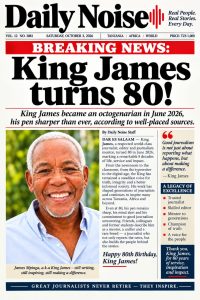
……………………………………………………..
NOTE: The original details and recollections on which this story is based were collected and filed in Kiswahili by journalist Florian Kaijage, who attended the gathering honouring James Mpinga on his 80th birthday. His account provided the primary material from which this story was developed and written in English.