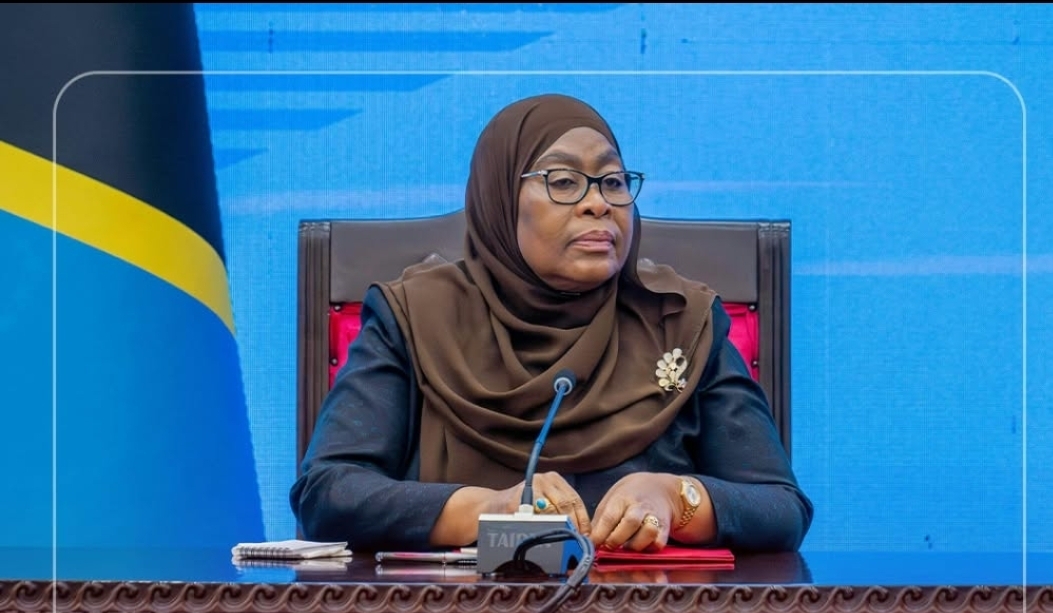
President Samia Suluhu Hassan’s meeting with political party leaders at State House in Dar es Salaam on 16 November 2026 has opened another chapter in Tanzania’s long struggle for constitutional reforms. But behind her announcement lies a political contest between CCM and CHADEMA, in which both parties appear determined to outsmart each other, often at the expense of the people they claim to represent.
Samia announced plans to establish a National Reconciliation Commission, inviting political parties to nominate two representatives each for consideration. Religious leaders and other stakeholders will also be consulted. She indicated that her government intends to amend the existing Constitution, whether extensively or in selected areas, rather than necessarily introduce an entirely new one. She also emphasised reconciliation and public participation.
CHADEMA did not attend. The party disputes Samia’s legitimacy following the controversial 2025 election. Its chairman, Tundu Lissu, is serving a four-year prison sentence for incitement after being acquitted of treason on 6 November 2026.
The political message behind Samia’s initiative appears clear. She wants to demonstrate that she can govern Tanzania, implement her election manifesto and introduce constitutional changes without submitting to CHADEMA’s pressure. She is challenging the idea that CHADEMA can determine the country’s political direction through boycotts, protests and refusal to recognise her presidency.
In effect, Samia is telling CHADEMA that its recognition is not necessary for her government to function. Her administration can make decisions, pass laws and introduce constitutional amendments that will eventually bind everyone, including those who dispute her legitimacy. This is also a way of asserting her political authority and seeking legitimacy through government action rather than opposition approval.
Will this strategy succeed? Politically, it might. But there is a serious problem. CCM has historically resisted constitutional changes that could substantially weaken its hold on power. It is therefore difficult to expect the ruling party to willingly introduce reforms that would create genuinely equal political competition, reduce presidential powers and make electoral defeat a realistic possibility.
The electoral legislation introduced in 2024 provides a warning. Although the government presented the changes as important reforms, they left major opposition concerns unresolved, particularly over the independence of electoral institutions and the fairness of political competition. CHADEMA considered them largely cosmetic and subsequently intensified its No Reforms, No Election campaign.
There is little reason to assume that CCM has suddenly developed the political willingness to surrender advantages it has protected for decades. Samia may introduce amendments, but will they be substantial enough to change the political system, or merely sufficient to demonstrate that her government is doing something?
Tanzania has been here before. President Jakaya Kikwete initiated the constitutional review process in 2011. The Warioba Commission produced a draft in 2013, but disagreements over its contents led opposition parties under UKAWA to withdraw from the Constituent Assembly in 2014. CCM continued the process and approved a Proposed Constitution, but the planned referendum never took place.
One explanation is that the proposed document had become politically controversial and faced an uncertain referendum. Another interpretation is that UKAWA’s withdrawal gave CCM an opportunity to reconsider concessions it had made and ultimately retain the existing constitutional arrangement. These interpretations are open to debate, but the outcome is undeniable: Tanzania spent substantial public resources and remained with the same Constitution.
There is also an uncomfortable question for the opposition. Was UKAWA’s withdrawal a strategic mistake?
Some analysts argue that the opposition should have accepted the limited progress achieved and continued fighting for further improvements. Even an imperfect Constitution might have provided a better starting point than the 1977 Constitution. Constitutional reform does not always happen in one decisive victory. Sometimes progress comes through successive amendments.
Others argue that accepting a compromised document would have legitimised a process that had abandoned important public demands. That concern was understandable. But twelve years later, Tanzania is still discussing many of the same constitutional problems. Neither CCM’s determination to protect its advantages nor the opposition’s refusal to accept an unsatisfactory outcome delivered the reforms citizens needed.

Now history may be repeating itself. Samia appears to have studied CHADEMA’s preference for abstention and may be turning it into a political advantage. If CHADEMA stays away, she can proceed with willing parties, present herself as a reformer and portray CHADEMA as unwilling to compromise. If the reforms fail, the government may even try to blame the opposition for refusing to participate.
This is where both parties repeatedly fall into each other’s traps. When CCM has an opportunity to introduce genuine reforms and prove its critics wrong, it often protects the existing system. When CHADEMA has an opportunity to participate, challenge CCM from within and expose the weaknesses of government proposals, it sometimes chooses abstention, leaving CCM with greater control over the process.
The consequences are rarely equal. CCM controls the government, commands a parliamentary majority and benefits from the advantages of incumbency. CHADEMA does not enjoy comparable institutional power. When CHADEMA boycotts an election or political process, CCM can often continue without it. Indeed, the ruling party may benefit from reduced competition.
The 2025 election demonstrated the limits of the boycott strategy. CHADEMA’s No Reforms, No Election campaign did not stop the election from taking place. The party remained outside the contest, while CCM retained control of the state. The election’s disputed legitimacy and subsequent political crisis remain serious issues, but the boycott did not achieve its stated objective of securing reforms before the vote.
Does CHADEMA recognise the possibility that Samia is preparing to use the same weakness against it again?
Public statements, social media campaigns and international criticism can damage a government’s reputation. They can expose injustice and keep democratic demands alive. But they do not automatically change laws, reduce presidential powers or prevent a government from proceeding with its political agenda.
CHADEMA needs to ask whether continued abstention is producing the results it expects. Could it engage with the reform process without recognising Samia’s presidency? Could it publicly present specific constitutional proposals, mobilise citizens around them and challenge CCM to accept or reject them? Could it make the government politically accountable for every reform it refuses to introduce?
Participation need not mean surrender. Equally, refusing to participate does not necessarily amount to effective resistance. What matters is whether a strategy advances the party’s objectives.
There is another important consideration. Suppose Samia’s government eventually introduces amendments addressing some of CHADEMA’s longstanding demands. Other political parties participate, Parliament approves the changes and the new provisions become law. CHADEMA will still have to operate within that constitutional framework, regardless of whether it recognises Samia’s presidency.
The party may benefit from reforms it did not help shape. It could also find itself explaining why it rejected a process that produced some of the changes it had demanded. Meanwhile, Samia could claim that she delivered constitutional reforms despite CHADEMA’s opposition.
But the opposite outcome is equally possible. CCM may use the proposed commission to create the appearance of progress while avoiding fundamental changes. The process could consume more public money, produce another disputed document and eventually collapse, just as the previous initiative did.
If that happens, Samia may complete her presidency having successfully managed the political pressure without fundamentally changing the constitutional system. The unresolved agenda would pass to her successors, perhaps for another decade or longer.
That would be a political victory for those who benefit from the existing system, but a defeat for Tanzanians who have waited years for meaningful constitutional change.
The central problem is that CCM and CHADEMA appear to measure political success differently from ordinary citizens. CCM wants to remain in power. CHADEMA wants to challenge that power and establish itself as a credible alternative. Both objectives are understandable in competitive politics. But when their rivalry becomes more important than institutional reform, the public interest suffers.
CCM cannot claim to be reforming the country while refusing changes that would make elections genuinely competitive. CHADEMA cannot assume that rejecting every government-led initiative will eventually force CCM to surrender. Each party needs a strategy that goes beyond frustrating its opponent.
Samia can proceed without CHADEMA. There is little CHADEMA can do, through abstention alone, to prevent her from initiating another constitutional process. But proceeding is not the same as succeeding, and passing amendments is not necessarily the same as achieving democratic reform.
The real test is whether the proposed changes will reduce the ruling party’s unfair advantages, strengthen independent institutions and give Tanzanians a genuine opportunity to choose and remove their leaders.
If CCM refuses to make those changes, Samia’s initiative may become another expensive political exercise. If CHADEMA remains outside without an effective alternative, it may once again surrender the initiative to the very party it seeks to challenge.
Both parties could end up claiming political victory while Tanzanians lose another opportunity for constitutional progress.
That is the danger facing the country today. Samia may outsmart CHADEMA, and CHADEMA may continue embarrassing Samia politically. But neither achievement will give Tanzania the democratic Constitution its citizens deserve.
Twelve years after the failure of the previous process, the question is no longer simply whether Samia can change the Constitution without CHADEMA. It is whether CCM and CHADEMA can stop playing political games long enough to deliver reforms that genuinely benefit wananchi.