Accountability must begin with those who created the crisis
As Tanzania reflects on the tragic events surrounding the October 2025 general elections, we must resist the temptation to reduce the national conversation to commemorating the dead, condemning violence and calling for peace.
These are important obligations, but they are not enough. A nation cannot heal from a tragedy of this magnitude without confronting the circumstances that produced it, identifying those responsible and demanding accountability.
The fundamental question is not simply how many people died, how many were injured or how much property was destroyed. It is why Tanzania reached a point where political differences could culminate in such devastating violence.
Who caused this tragedy? Was it the ruling party, the government, the security apparatus, the opposition, political activists or the demonstrators themselves?
My answer is that responsibility must be examined across all these actors. But it would be intellectually dishonest, politically misleading and morally indefensible to distribute that responsibility equally.
Some actors possessed extraordinary constitutional powers, controlled the instruments of state coercion and had the authority to prevent the crisis. Others operated under political restrictions, reacted to accumulated grievances or participated in events whose consequences they may not have anticipated. These distinctions matter.
The crisis did not begin in October 2025
The bloodshed associated with the 2025 elections cannot be understood in isolation from Tanzania’s political history over the preceding decade.
In my assessment, the foundations of this crisis were laid in 2016, when President John Magufuli’s administration began systematically restricting political freedoms and weakening the democratic space that Tanzanians had gradually developed since the reintroduction of multiparty politics in 1992.
What initially appeared to be a confrontational governing style evolved into a political environment increasingly characterised by fear, intolerance and the concentration of power.
Opposition rallies were restricted. Political critics faced arrests, intimidation and prosecution. Journalists and independent media organisations encountered growing pressure. Political activities that should have been protected under the Constitution became subjects of administrative permission and police intervention.
There were reported abductions, unexplained disappearances, attacks against critics and allegations of politically motivated violence.
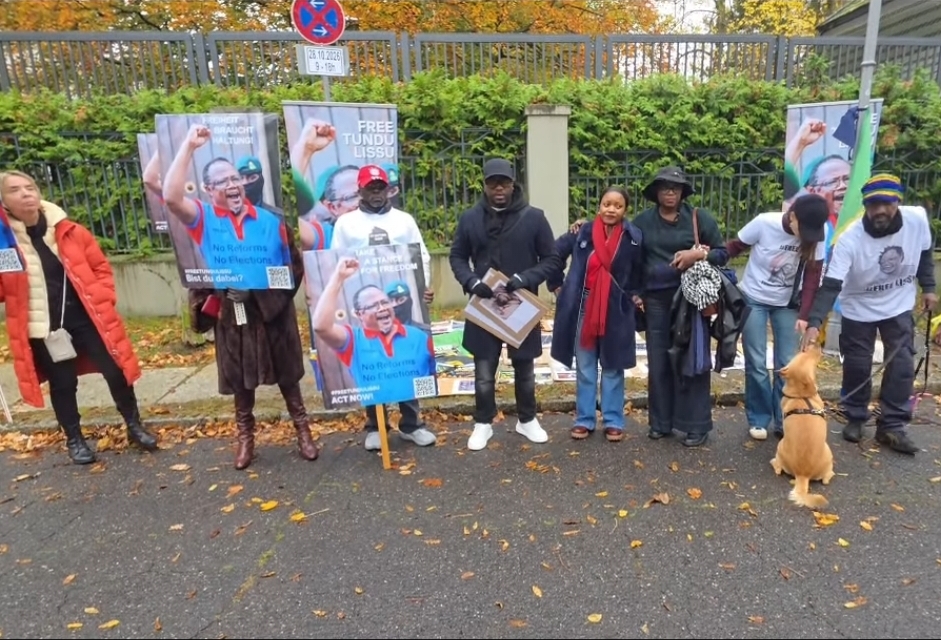
The attempted assassination of opposition politician Tundu Lissu in September 2017 became one of the most disturbing symbols of this period. Whatever disagreements existed over his politics, the attack raised fundamental questions about the safety of dissenting voices in Tanzania.
Over time, the political environment became increasingly hostile to those who challenged the government. Opposition politicians and their supporters complained of arbitrary arrests, repeated detention, harassment, interference with their businesses and restrictions affecting their financial activities. These complaints required independent investigation rather than political dismissal.
The disputed local government elections of 2019, the general elections of 2020 and the local government elections of 2024 further damaged confidence in the electoral system.
Each controversy added another layer of frustration. Each unanswered grievance weakened public trust. Each failure to provide credible remedies increased the likelihood that political dissatisfaction would eventually escape the boundaries of conventional politics.
By October 2025, Tanzania was not confronting a sudden political disagreement. It was confronting the accumulated consequences of years of unresolved grievances.
Two presidents, one unresolved political crisis
President Samia Suluhu Hassan inherited a deeply divided political environment when she assumed office in March 2021.
Her early presidency generated considerable optimism. The language of reconciliation, political dialogue and democratic opening suggested that Tanzania might finally move away from the confrontational politics of the preceding years. There were encouraging developments, including the lifting of restrictions on opposition political rallies.
Yet it failed because reconciliation cannot succeed through speeches and symbolic gestures alone. It requires institutional reforms, credible guarantees of political freedoms and a willingness to address past abuses.
The central weakness of the reconciliation process was its failure to produce a durable political settlement before the 2025 elections.
Opposition demands for substantial electoral reforms remained unresolved. Questions about the independence and credibility of electoral institutions persisted. Mutual suspicion between the government and its critics continued to grow.
The authorities appeared increasingly confident that political stability could be maintained through the existing institutional arrangements. That confidence proved dangerously misplaced.
Although Magufuli and Samia governed with different political styles, their administrations must both be examined in any serious investigation of the conditions that produced the 2025 crisis.
Magufuli’s administration helped establish the restrictive political environment. Samia’s administration had an opportunity to dismantle its most damaging features and build a more credible framework for political competition.
The question is whether that opportunity was adequately used. Leadership carries responsibility not only for the decisions a government makes but also for the foreseeable consequences of problems it knowingly leaves unresolved.
The ruling party cannot escape responsibility
For decades, Chama Cha Mapinduzi has occupied a uniquely powerful position in Tanzania’s political system.
Its influence extends beyond ordinary electoral competition. The party shapes national leadership, determines major political priorities and exercises considerable influence over the composition and direction of government. That position carries corresponding responsibility.
When political competition becomes excessively restrictive, when opposition grievances are repeatedly dismissed and when electoral institutions lose public credibility, the ruling party cannot simply present itself as an innocent observer.
CCM must answer difficult questions. Did its political strategies contribute to the growing hostility between the government and opposition supporters? Did party leaders adequately appreciate the dangers of excluding or marginalising significant sections of the electorate? Were demands for electoral reform seriously considered, or were they treated primarily as threats to the party’s continued dominance? Did the party mistake its control of state institutions for genuine public consent? These are not questions intended to condemn every CCM member or supporter. They concern the decisions and conduct of those exercising political authority.
A ruling party that has governed for decades cannot claim credit for national achievements while distancing itself from the consequences of serious institutional failures.
Power and accountability must travel together.
The state has a higher duty than every other actor
Perhaps the most important distinction in assigning responsibility concerns the role of the state. The government and its security institutions possess powers that ordinary citizens, opposition parties and political activists do not.
The police can arrest. Security agencies can investigate. The state can deploy armed personnel, restrict movement and exercise lawful coercive authority. These powers are entrusted to public institutions for the protection of citizens, not for the preservation of any political party’s dominance.
Consequently, the state bears a particularly heavy responsibility whenever political unrest results in deaths, injuries, disappearances or serious violations of human rights.
The first obligation of security agencies is to protect human life. Even where demonstrations become unlawful or violent, the use of force must remain necessary, proportionate and consistent with the law.
A demonstrator who destroys property may be criminally liable. A person who attacks another citizen may be prosecuted. But neither circumstance gives security personnel unrestricted authority to use lethal force.
The central question is whether state institutions responded to the 2025 unrest within the boundaries of their constitutional and legal responsibilities.
Were all uses of lethal force justified? Who authorised particular security operations? Were commanders adequately supervising their personnel? Were there opportunities to de-escalate confrontations before lives were lost? Were injured people able to obtain medical assistance without intimidation? What happened to those reported missing? Were deaths independently documented, and were families given truthful information? These questions require evidence, testimony and independent scrutiny.
It is insufficient for authorities merely to insist that security operations were necessary. They must demonstrate that their conduct complied with the law.
The opposition and activists must also answer questions
Holding the ruling party and the government primarily responsible for the political environment does not mean absolving opposition leaders, activists or demonstrators of their own responsibilities. Political rights come with obligations.
Opposition leaders have a legitimate right to mobilise supporters, challenge electoral decisions, organise peaceful demonstrations and demand constitutional reforms.
Activists have an equally legitimate right to expose injustice, criticise government policies and encourage lawful civic resistance. But those rights do not extend to inciting attacks against innocent people, promoting ethnic or political hatred, destroying property or encouraging indiscriminate violence.
If evidence establishes that particular opposition figures or activists deliberately encouraged violence, their conduct should be investigated and addressed through lawful procedures.
Similarly, individuals who committed criminal acts during the unrest must be held accountable, regardless of their political affiliations.
However, accountability must be individualised and based on evidence. A political party should not be collectively criminalised because some of its supporters committed offences. Nor should peaceful demonstrators be treated as violent criminals simply because violence occurred elsewhere.
There is also a crucial difference between political mobilisation and criminal incitement. Calling for demonstrations against a disputed election is not, by itself, an invitation to violence.
Demanding electoral reform is not a crime. Expressing anger towards the government is not equivalent to attacking the state.
These distinctions must be preserved if Tanzania is to remain a constitutional democracy.
Not all responsibility carries equal weight
This brings us to the central argument. While several actors may have contributed to the crisis, their responsibilities cannot reasonably be regarded as equal. The ruling party and government controlled the political environment in which the elections took place. They possessed the institutional authority to initiate reforms, facilitate dialogue and address longstanding grievances.
The security apparatus possessed the weapons, command structures and legal authority through which public order was enforced. Opposition leaders and activists possessed influence over their supporters but did not control the machinery of the state. Ordinary citizens possessed even less institutional power.
Therefore, responsibility must be assessed according to authority, conduct, foreseeability and the capacity to prevent harm. Those who had the greatest power to prevent the tragedy should face the most searching questions.
This does not establish anyone’s criminal guilt in advance. Criminal responsibility requires evidence of particular acts, omissions and the relevant legal standards. But political and institutional accountability extends beyond criminal convictions. A government may be politically responsible for creating dangerous conditions even where no particular official is convicted of ordering violence.
A ruling party may bear responsibility for policies that deepen public resentment even where those policies are not themselves criminal. And security commanders may be answerable for failures of supervision or prevention even where direct responsibility for particular deaths remains under investigation.
A serious national inquiry must recognise these different dimensions of accountability.
What did we learn from Justice Chande’s findings?
Tanzania has previously benefited from judicial examination of politically sensitive conflicts, including a special commission chaired by Justice Chande. Honestly, other than the President, probably no one knows exactly what Justice Chande found out because his report remains confidential. This creates another crisis.
But we know that he led an inquiry. The important lesson from such inquiries is that episodes of public violence should not be examined merely through their immediate manifestations. Their political, administrative and institutional origins also deserve scrutiny.
A confrontation may erupt on a particular day, but the conditions that make it possible can develop over many years. This is precisely why the 2025 tragedy requires a broader investigation.
A commission that focuses only on who demonstrated, who threw stones, who burned property or who fired weapons would produce an incomplete account. These matters are important, but they do not answer the larger question of how Tanzania arrived at that moment.
The inquiry must also investigate the political decisions, institutional failures, electoral disputes and breakdowns in dialogue that preceded the violence.
It should establish whether warnings were ignored, whether preventive measures were available and whether those exercising authority failed to act when intervention might have prevented bloodshed.
Only such an approach can distinguish the immediate triggers of violence from its deeper causes.
Justice must go beyond commemoration
Remembering those who died is a moral duty. But remembrance without accountability risks becoming a substitute for justice.
Families deserve more than public condolences, ceremonial speeches and promises that such events will never happen again. They deserve answers.
Where credible allegations of unlawful killings exist, independent investigations must establish the circumstances of each death. Where individuals remain missing, the authorities must make serious efforts to determine their whereabouts. Where unlawful detention, torture or other abuses are established, those responsible must face appropriate consequences. Where public or private property was unlawfully destroyed, responsibility should likewise be determined through fair legal processes.
Victims and their families should have access to effective remedies, including compensation where justified. Crucially, investigations must be independent, transparent and sufficiently credible to command public confidence.
A process controlled entirely by institutions whose conduct is under investigation will struggle to convince the public that justice has been done.
Tanzania needs a credible national accounting, not a politically convenient explanation.
Peace cannot be built on silence
There is a persistent temptation in our political culture to equate peace with the absence of public confrontation.
Under this understanding, a country is considered peaceful when demonstrations disappear, opposition voices become quieter and the authorities maintain visible control. But silence is not necessarily peace.
Citizens may remain silent because they are satisfied. They may also remain silent because they are frightened, exhausted or convinced that peaceful political participation cannot produce meaningful change. These are profoundly different situations.
A government that suppresses public grievances without addressing them may achieve temporary calm while allowing resentment to deepen beneath the surface. That is not sustainable stability.
Genuine peace requires public trust, constitutional safeguards, accountable institutions and credible opportunities for citizens to influence political decisions.
It requires an electoral system whose legitimacy does not depend on the ruling party’s assurances. It requires security institutions that serve the Constitution rather than partisan interests.
And it requires political leaders who recognise that criticism is not treason, opposition is not an enemy and public disagreement is not necessarily a threat to national security.
Tanzania cannot secure lasting peace by asking citizens to forget the events of 2025 while leaving their underlying causes untouched.
The danger of a one-sided national narrative
One of the greatest dangers following political violence is the creation of an official narrative that assigns blame selectively. If the entire tragedy is attributed to demonstrators and opposition activists, the country will have ignored the political decisions and institutional conduct that preceded the unrest.
Conversely, if every violent act committed by demonstrators is excused merely because they were protesting against injustice, the country will have abandoned the principle of individual responsibility. Neither approach serves justice.
A credible national account must be prepared to acknowledge uncomfortable truths wherever the evidence leads. It must be possible to conclude that a government pursued damaging political policies while also finding that particular opposition supporters committed serious offences. It must be possible to defend the constitutional right to protest while condemning attacks on innocent citizens.
And it must be possible to recognise the legitimate responsibilities of the police while demanding accountability for unlawful conduct by security personnel. These positions are not contradictory. They are the foundations of a principled approach to justice.
The purpose of an inquiry should not be to protect the reputation of the government, vindicate the opposition or satisfy the political expectations of activists. Its purpose should be to establish the truth.
A national reckoning is long overdue
The tragedy of October 2025 should compel Tanzania to reconsider the relationship between political power, public accountability and national stability..The country needs more than another appeal for reconciliation.
It needs an honest examination of the political decisions made since 2016, the electoral controversies that accumulated over subsequent years and the institutional failures that allowed grievances to escalate. Such an examination should lead to practical reforms.
Electoral institutions must be demonstrably independent and trusted by competing political actors. The rights of opposition parties, journalists, civil society organisations and ordinary citizens must be protected in practice, not merely recognised in constitutional language.
Security agencies must operate under effective civilian and judicial oversight. Public officials must understand that authority does not confer immunity from accountability.
And political leaders, whether in government or opposition, must accept that their words and decisions can carry serious consequences for human life. Above all, Tanzania must abandon the dangerous assumption that political dominance guarantees national stability.
A government may control Parliament, administrative institutions and the security apparatus while progressively losing the confidence of significant sections of the population.
When that happens, coercion becomes an increasingly tempting substitute for persuasion. History repeatedly demonstrates how dangerous that substitution can become.
Who will take responsibility?
As we commemorate those who lost their lives, the most meaningful tribute we can offer them is a commitment to establish the truth and prevent a recurrence.
We should not allow the debate to end with arguments over casualty figures or competing accusations between political camps.
The dead deserve dignity. The injured deserve justice. The missing deserve to be accounted for. Their families deserve answers. And the nation deserves to know why its political system failed so disastrously.
Let the ruling party explain its decisions. Let the government account for its policies and omissions. Let the security agencies answer questions about their operations. Let opposition leaders and activists explain their conduct where credible evidence raises concerns. Let individuals responsible for criminal acts, regardless of political affiliation, face the law.
But let us never confuse shared scrutiny with equal responsibility. Those who exercised the greatest authority, possessed the strongest instruments of power and had the clearest opportunities to prevent the crisis must carry the heaviest burden of explanation.
The violence of October 2025 was not simply an unfortunate episode that appeared from nowhere. It occurred against the background of a prolonged political crisis whose warning signs had been visible for years.
We ignored those warnings at an enormous human cost. If Tanzania responds by commemorating the victims without confronting the causes of their suffering, we will have learned very little.
The question is no longer merely who died in October 2025. It is who created the conditions in which Tanzanians came to die, who failed to prevent those deaths, and who will now be held accountable.
Until those questions receive credible answers, the tragedy will remain not only a painful chapter in our history but also a warning about our future.