When Aliko Dangote chose Kenya rather than Tanzania for his proposed East African oil refinery, it looked like a major investment opportunity had slipped through Tanzania’s hands. Now the story has changed.
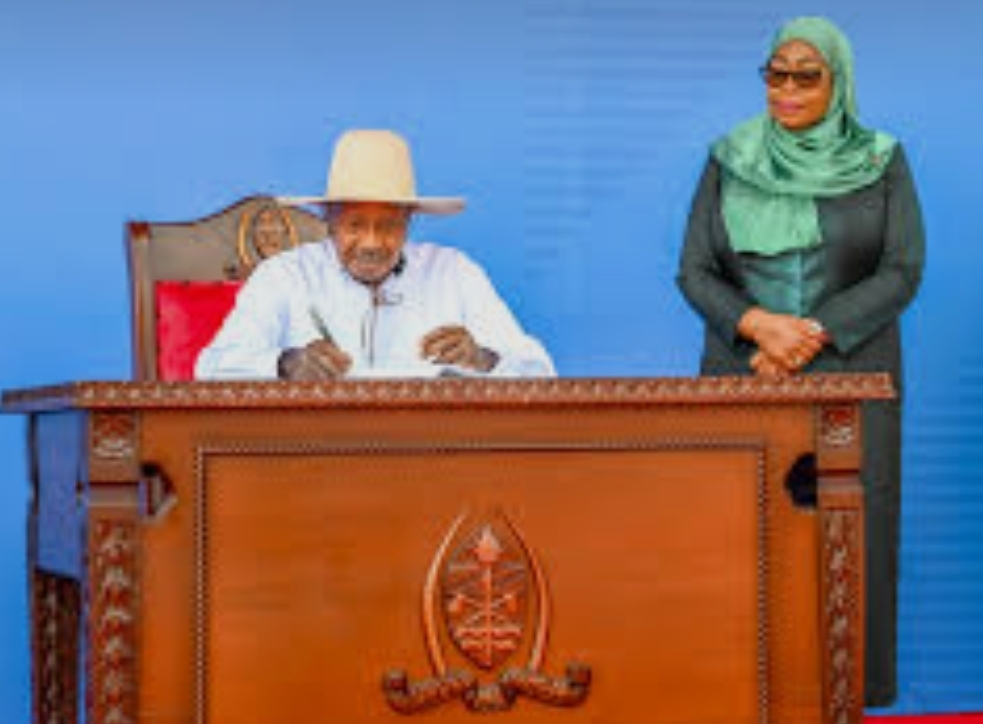
On August 6, 2026, Presidents Samia Suluhu Hassan and Yoweri Museveni witnessed the signing of a Memorandum of Understanding between Tanzania Petroleum Development Corporation (TPDC), Uganda National Oil Company (UNOC) and Vitol Bahrain E.C. to develop the Tanga Regional Energy Hub. Tanzania’s Energy Minister says the proposed development could attract investment exceeding $20 billion.
That is potentially bigger than the Dangote refinery Tanzania appeared to lose. But it does not make the accountability questions disappear. It makes them more important.
In April, Kenyan President William Ruto publicly proposed Tanga as the site of a regional refinery. Dangote said he was prepared to replicate his Nigerian refinery in East Africa with sufficient government support. At the time, the proposal involved a plant of around 650,000 barrels per day.
Within weeks, however, Dangote was leaning towards Kenya, citing its larger economy, higher petroleum consumption and Mombasa’s deeper port. By July, his company confirmed Lamu as the location for a refinery planned at approximately 700,000 barrels per day, costing as much as $17 billion. Site selection had been completed, soil testing was under way and engineering work had begun.
Tanzania appeared to have lost. Then came the Tanga agreement.
The new proposal goes beyond one refinery. It envisages Tanga as a regional centre for petroleum refining, storage, logistics and distribution, bringing Tanzania and Uganda together with Vitol, one of the world’s major energy trading companies. Strategically, this makes sense.
The 1,443-kilometre East African Crude Oil Pipeline already terminates near Tanga. Of that distance, 1,147 kilometres are inside Tanzania, and EACOP is designed to transport up to 246,000 barrels of crude per day from Uganda.
Tanzania therefore has something Kenya does not: the natural outlet for Uganda’s crude.
The new hub could ensure that Tanga does not merely export raw crude but participates in refining, storage, trading and other higher-value activities.
But there is one crucial word Tanzanians should remember: MoU. An MoU is not a refinery. It is not financing. It is not financial close. It is not construction. This is where accountability begins.
What exactly does the proposed $20 billion represent? How much is expected from Vitol? How much from TPDC and UNOC? What refinery capacity is planned? Where will the financing come from? What land has been allocated? What is the implementation timetable? When is the final investment decision expected?
And what happened to the Dangote negotiations? Was Dangote’s departure a failure to secure one investor, or did Tanzania deliberately move towards a different regional model involving Uganda and Vitol? The government should explain the transition.
There is also an instructive comparison. In Kenya, Dangote’s project has moved beyond political discussion: a site has been identified and technical work has begun. In Tanzania, the new energy hub remains at the MoU stage.
That distinction matters. Tanzania should therefore celebrate cautiously.
If the Tanga Regional Energy Hub reaches financing, construction and production, the country may eventually discover that losing Dangote was not the loss of Tanga at all. Tanzania may have exchanged one private refinery proposal for something broader and potentially more strategically important.
But until that happens, the accountability test remains simple: Do not measure investment success by the size of the announcement. Measure it by what gets built.