In the past 12 months, in my quest for a deeper understanding of leadership and solution-based politics, I have developed a growing interest in political developments beyond Africa. I am particularly interested in experiences from which our troubled continent can draw practical lessons.
One of my Serbian friends based in Sweden has contributed to this growing interest, particularly in the politics of his country. Last week, he happened to be in Serbia when a student-led movement won the country’s parliamentary elections.
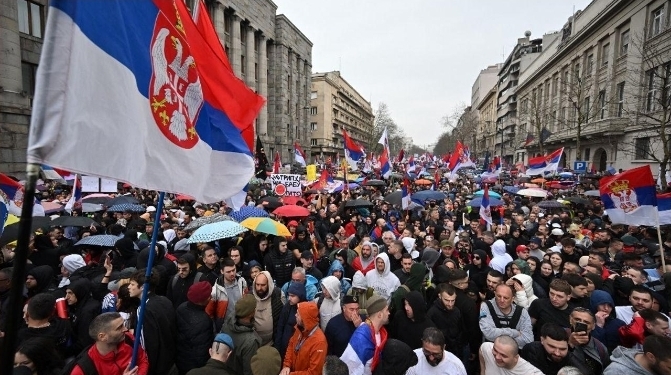
On 25 October 2026, Serbia witnessed a remarkable political transformation. The Student List, born out of nationwide protests against corruption and government misconduct, defeated the Serbian Progressive Party (SNS), which had dominated national politics under Aleksandar Vučić for 14 years.
Following repeat voting at 53 polling stations on 1 November, the Student List secured 53.01 per cent of the national vote and 140 seats in the 250-member National Assembly, comfortably exceeding the 126 seats required for a parliamentary majority. Vučić’s United Serbia alliance received 38.98 per cent and 103 seats, while minority parties shared the remaining seven seats.
The result was particularly significant because the students had built an electoral coalition around respected professionals rather than relying exclusively on established opposition politicians. They demonstrated that a protest movement could organise beyond public demonstrations, attract broad national support and translate dissatisfaction into parliamentary power. Vučić conceded defeat, bringing an end to his party’s parliamentary dominance and opening a new chapter in Serbian politics.

When my friend returned to our conversation, his excitement was unmistakable. What fascinated him most was not simply the defeat of an established government, but the extraordinary fact that students had organised themselves into a political force capable of achieving what established opposition politicians had struggled to accomplish: challenging a powerful ruling establishment and winning an election.
His excitement became mine. Our discussion inspired me to examine the Serbian experience more closely, particularly the lessons it might offer African countries struggling with political repression, weak opposition organisations and governments determined to remain in power.
But the students’ journey began with tragedy. In November 2024, a railway station canopy collapsed in Novi Sad, killing 16 people. Students demanded accountability, mobilised nationwide protests and developed plans for an electoral alternative involving respected professionals.
They understood something fundamental: protesting against bad government and preparing to govern are different responsibilities.
Africa needs both lessons. For instance, in Tanzania, CHADEMA has mobilised considerable public support against CCM’s decades-long dominance. Yet political repression, restrictive electoral arrangements and organisational challenges have prevented that popularity from becoming national power. Tundu Lissu’s treason prosecution illustrates the risks opposition leaders face.
Uganda presents another example. Robert Kyagulanyi, popularly known as Bobi Wine, has attracted substantial youth support, while his predecessor as the country’s leading opposition challenger, Kizza Besigye, faces treason proceedings. We similar cases in other countries where the opposition has similarly struggled against repression, disputed elections and internal divisions.
These experiences expose two distinct problems. Governments obstruct democratic competition while opposition movements struggle to overcome those obstacles. Repression is the government’s responsibility. Overcoming its political consequences requires exceptional opposition strategy.
Opposition parties must invest beyond rallies, personalities and social media popularity. They need grassroots organisation, competent candidates, credible policies, electoral intelligence and disciplined leadership. Political intelligence is particularly important. Authoritarian establishments may exploit divisions, infiltrate organisations, provoke confrontations or manipulate electoral procedures. Opposition leaders must anticipate these tactics without abandoning democratic principles.
However, no amount of organisational excellence guarantees victory where elections are fundamentally manipulated.
In Bangladesh, students helped overthrow Sheikh Hasina in 2024, yet the student-founded National Citizen Party secured only six parliamentary seats in 2026. Revolutionary popularity did not automatically produce electoral success.
For brutal regimes across Africa, the message is equally important: intimidation cannot substitute for genuine public consent. Sustainable stability requires accountable government and credible elections.
My Serbian friend’s excitement, therefore, carries a deeper lesson. Students demonstrated how public dissatisfaction could become a disciplined movement seeking political power. Whether such a movement can win elections and govern successfully remains another test.
African governments must stop confusing political dominance with legitimacy. Opposition movements must stop confusing popularity with electoral readiness.
Ultimately, politics should neither preserve power indefinitely nor merely replace its holders. Its purpose is to build institutions capable of solving people’s problems.
That is the lesson Africa urgently needs.