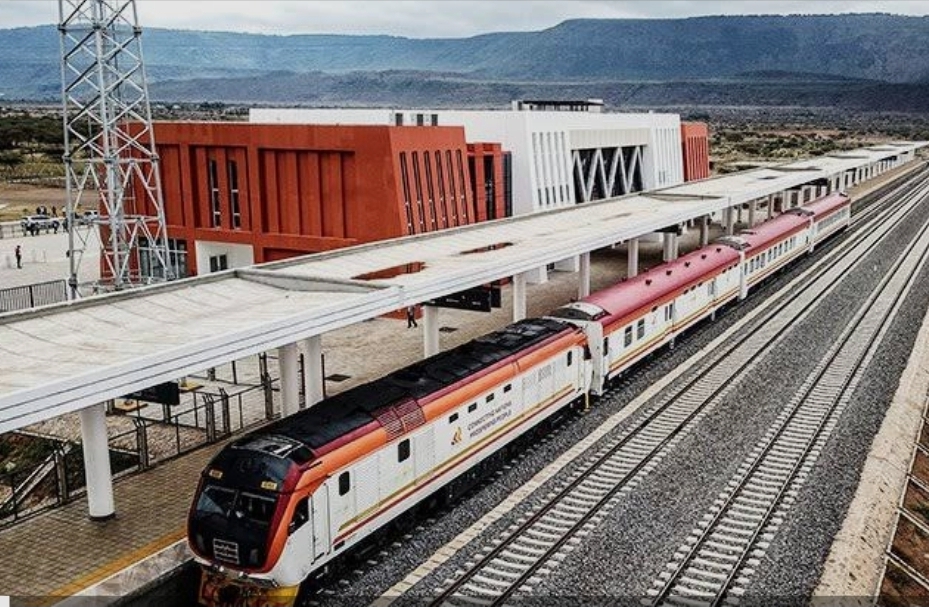
When President Samia Suluhu Hassan launches the construction of the 506-kilometre Tabora – Kigoma Standard Gauge Railway (SGR) this week, Tanzania will rightly celebrate another milestone in one of Africa’s most ambitious transport infrastructure programmes.
The ceremony deserves applause. But the true test of this investment will not be the laying of a foundation stone. It will be whether the billions invested in the railway generate the economic returns that justified the project in the first place. That question leads to a more fundamental one: “Is Tanzania adequately protecting its investment in the Central Corridor?”
Infrastructure is not built in isolation
Modern logistics systems do not operate as individual projects. Railways, ports, ships, inland waterways and freight terminals are parts of a single economic ecosystem. When one component fails, the efficiency of the entire investment declines.
The Tabora – Kigoma SGR was never intended to be merely a passenger railway. Its strategic purpose is to connect Tanzania’s Central Corridor to the eastern Democratic Republic of Congo (DRC), Burundi and the wider Great Lakes region, transforming Kigoma into the country’s western logistics gateway.
The African Development Bank has identified the Tabora – Kigoma railway as part of a wider multinational Central Corridor programme valued at more than US$3 billion for the Tanzanian sections, aimed at unlocking regional trade and mineral exports.
The investment only makes commercial sense if freight can move seamlessly from rail onto Lake Tanganyika and onwards into eastern DRC.
The missing investment
Just a few kilometres from where the President is expected to launch the SGR lies another strategic investment—the Katabe Shipyard.
The project was contracted in 2023 to Turkish shipbuilder Dearsan. According to Tanzania’s Controller and Auditor General (CAG), the contracts amounted to approximately US$129.4 million for construction of the shipyard and US$63.5 million for construction of a modern 3,500-ton roll-on/roll-off railway ferry.
Together, these investments are worth nearly US$193 million before supporting infrastructure.
The vessels were designed to transport railway wagons directly across Lake Tanganyika. This formed part of the original business model of the SGR. Without those vessels – and without the shipyard required to construct and maintain them – the freight component of the railway inevitably becomes weaker.
The opportunity has grown – not shrunk
Across the lake, in Tanganyika Province of eastern DRC, Zijin Mining is developing the Manono Lithium Project, now entering production. The project has been designed around five million tonnes of ore processing annually, producing approximately one million tonnes of spodumene concentrate each year before downstream processing into lithium sulphate.
To support exports, dedicated cargo vessels have already begun operating between Kalemie and Kigoma.
Every delayed project has a hidden cost
Every month that the Katabe Shipyard remains incomplete potentially means reduced freight volumes on the SGR, lower utilisation of Kigoma Port, lower railway and port revenues, delayed customs collections, slower private investment and fewer jobs.
This is an investment governance issue. If the railway, port and shipyard were designed as complementary investments, then sequencing matters. Building one while allowing another to stall raises legitimate questions about public financial management.
Questions requiring answers include: What percentage of the Katabe Shipyard has been completed? How much funding has already been disbursed? How much remains outstanding? Has the original freight forecast for the SGR been revised? Has Government updated the railway’s business case following delays to the shipyard? What annual freight volumes are now expected? Has Parliament received an updated implementation report?
Tanzania’s competitive window is narrowing
Eastern DRC possesses some of the world’s richest deposits of lithium, cobalt and copper. Competing corridors in Angola, Mozambique, Namibia and South Africa are also positioning themselves to capture this trade.
Tanzania’s comparative advantage lies in geography, but geography alone does not guarantee competitiveness. Efficient logistics does.
The real measure of success
President Samia deserves recognition for advancing Tanzania’s largest infrastructure programme in decades. However, transformative infrastructure must be assessed as an integrated economic system rather than isolated construction projects.
The railway, the port, the shipyard, the lake vessels and freight terminals must all work together.
The question is not whether the Tabora–Kigoma SGR should be built – it unquestionably should. The real question is whether Tanzania is investing with sufficient coordination, urgency and financial discipline to ensure that every dollar already committed delivers its maximum economic return.