Why Reformers Become The System
As I write this, two days after Zambia voted, counting is proceeding under heightened security after violence against election officials and the theft of marked ballots disrupted an already tense and mistrustful election.
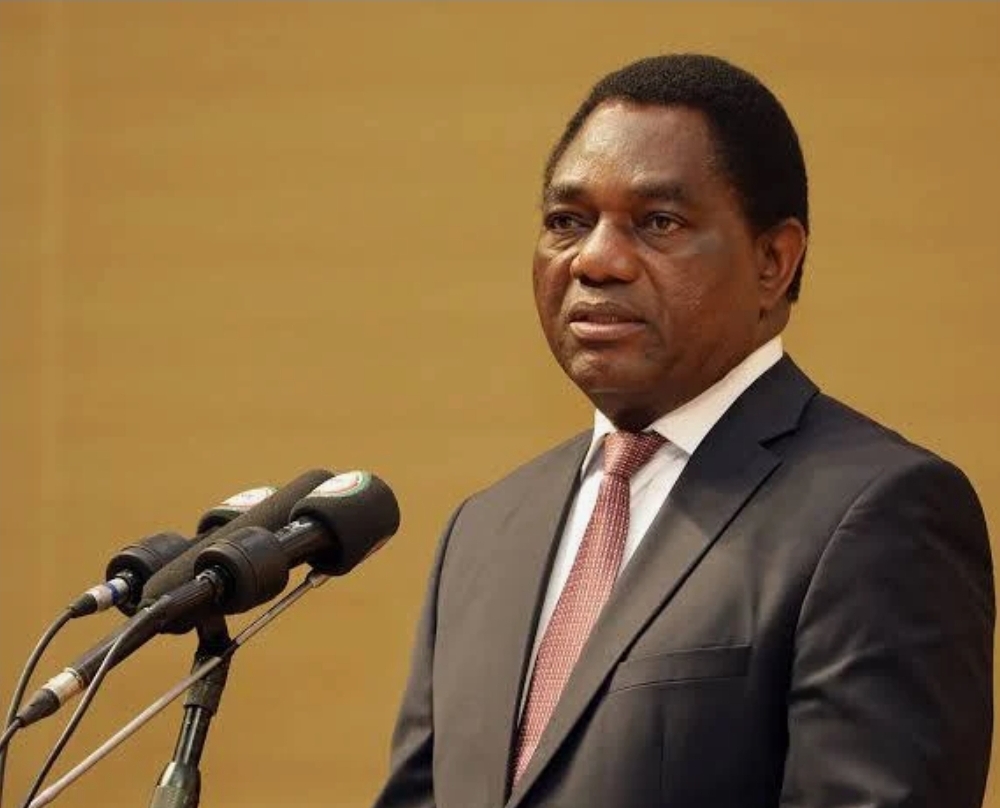
There is something painfully ironic about this moment. President Hakainde Hichilema knows what it means to be an opposition politician confronting the power of the state. He contested the presidency repeatedly, challenged election results and endured restrictions on opposition activity. In 2017, after an incident involving President Edgar Lungu‘s motorcade, he was arrested and charged with treason. He spent about four months in detention before prosecutors discontinued the case.
Four years later, the prisoner became president. In August 2021, Hichilema defeated Lungu decisively with about 59 percent of the vote. His victory was celebrated across Africa as proof that democratic deterioration could still be reversed through the ballot box.
He also inherited an economy in deep trouble. Zambia had defaulted on its sovereign debt and investor confidence had suffered. Under Hichilema, debt restructuring advanced, investment returned, particularly in mining, growth recovered, inflation declined, and the government expanded free education and infrastructure programmes.

Yet the democratic picture has become more complicated.
Although Hichilema’s government repealed criminal defamation, opposition politicians and journalists have continued to face arrests under other laws. His administration has also retained the colonial-era Public Order Act to regulate political gatherings despite earlier promises of reform.
Now the 2026 election has brought disturbing scenes, including attacks on election officials and theft of marked ballots. There is presently no evidence establishing that Hichilema personally organised these incidents. That distinction matters.
But a larger question remains: How does a man who suffered under a defective political system become president without fundamentally defeating the system that once oppressed him?
Perhaps Hichilema defeated the occupant of the machinery, not the machinery itself.
Zambia Has Been Here Before
Frederick Chiluba once represented change too. In 1991, the trade-union leader defeated Kenneth Kaunda, ending decades of rule that had eventually become a one-party system. Chiluba and the Movement for Multiparty Democracy promised pluralism, freedom and democracy.
Initially, political space widened. Then power began doing what power often does. Kaunda was arrested under Chiluba. By 2001, the same president who had championed democratic change was supporting efforts that could have allowed him to seek a third term.
But Zambia’s churches, lawyers, civil society, opposition parties and even members of Chiluba’s own MMD resisted. The project collapsed. Zambia was not protected because Chiluba remained a good man. It was protected because institutions and forces outside the presidency were strong enough to tell him no.
That is the difference between trusting leaders and building institutions.
The African Pattern
Zambia is not alone. Senegal’s Abdoulaye Wade spent decades opposing an entrenched political establishment before finally winning power in 2000. Years later, he himself became the incumbent accused of concentrating presidential authority and seeking another controversial term.
The man who defeated him in 2012 was Macky Sall who initially represented democratic alternation and economic modernisation. Yet his own presidency eventually faced accusations of restricting protests and political opponents. When he postponed the 2024 presidential election, Senegal entered a major constitutional crisis. The Constitutional Council, civil society and opposition resisted, the election eventually took place, and the opposition won. Again, institutions mattered.
Ethiopia offers a more tragic example. When Abiy Ahmed became prime minister in 2018, political prisoners were released, exiled opponents returned and media restrictions eased. His peace agreement with Eritrea earned him the 2019 Nobel Peace Prize.
Then came political crisis and war in Tigray. Political space narrowed again, journalists and opponents faced pressure, and the country descended into devastating conflict.
Abiy’s early reforms were not necessarily fraudulent. They were insufficiently institutionalised to survive the crises that followed.
Uganda’s Yoweri Museveni presents perhaps the most dramatic transformation. He came to power in 1986 as a revolutionary promising to rescue Uganda from dictatorship and political chaos. He famously criticised African leaders who stayed too long in power.
Yet he became one of Africa’s longest-serving presidents by removing presidential term limits in 2005 and the presidential age limit in 2017. Opposition leaders from Kizza Besigye to Bobi Wine have faced arrests, restrictions and security pressure.
The revolutionary fought the system, became president, and eventually became the system.
Paul Kagame presents another variation. Rwanda’s reconstruction after the 1994 genocide has been extraordinary: stronger institutions, improved health indicators, infrastructure, investment, technology and high representation of women.
But political competition remains tightly constrained, while Kagame has remained at the centre of power for decades. Rwanda therefore reveals another temptation: success itself can become an argument for political continuity.
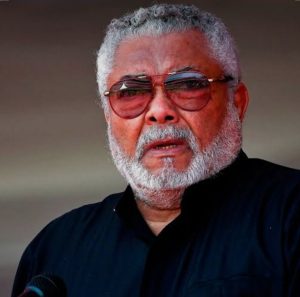
Ghana shows that the cycle is not inevitable. Jerry Rawlings first ruled through military power and authoritarian methods but later presided over a transition to constitutional multiparty politics. After serving two elected terms, he left office. His preferred successor lost the 2000 election, and power changed hands peacefully.
A powerful leader had accepted a system capable of defeating his own party.
The Dangerous Attraction of the Good Leader
These leaders are not politically identical. Hichilema is not Museveni; Sall is not Kagame; Abiy is not Chiluba. But beneath their differences lies a common danger.
African politics remains obsessed with finding the right person: an honest president, a visionary president, an educated president, an incorruptible president.
But what happens when we find that person?
If democracy depends upon the character of whoever occupies State House, we do not yet have a secure democratic system. We have presidential discretion moderated by personality. And personality can change.
A successful president may begin thinking: If my policies rescued the economy, removing me threatens recovery. If investors trust my government, defeating me threatens investment. If my opponents are irresponsible, perhaps restricting them protects stability.
At that point, development itself becomes an argument against democratic uncertainty.
But democracy includes the people’s right to vote out even a successful president.
Transform the Presidency, Not Just the Country
Africa therefore faces a deeper question: Do good leaders create good systems, or must good systems constrain leaders?
A constitution should not be designed around the president we trust. It should be designed around the president we fear might someday come.
Independent courts, electoral commissions, parliaments, media, police and constitutional term limits exist precisely because human beings cannot permanently be trusted with unconstrained power — including good human beings.
Transformational leadership must therefore mean more than building roads, restructuring debt or attracting investment. A transformative president must transform the presidency itself.
He must surrender powers he could personally use responsibly because his successor might abuse them. He must strengthen institutions capable of ruling against him, tolerate journalists who irritate him, protect opponents he dislikes and build a political system in which he himself can lose. That may be democracy’s highest test.
Hichilema’s Opportunity
Hichilema’s story is not finished. He knows what it means to be arrested by a powerful state. He knows what it means for opposition politicians to believe government institutions are being used against them.
That experience still gives him an extraordinary opportunity. His greatest legacy may ultimately not be debt restructuring, mining investment, economic growth, free education or infrastructure. It could be building a political order strong enough to protect the next opposition leader from what he himself experienced.
Africa cannot continue measuring transformation merely by replacing one leader with another.
Real transformation begins when institutions become stronger than individuals; when constitutions matter more than presidents; when courts can tell governments no; when election bodies resist political pressure; when police serve the state rather than the ruling party; and when citizens can remove even a successful leader without being told that national development is at risk.
The transformation Africa needs is therefore not simply from bad leaders to good leaders.
It is from political systems that depend upon good leaders to systems strong enough to survive bad ones. That is why Hichilema’s paradox matters beyond Zambia.
Perhaps we have spent too much time asking: Who is the good leader who will change the system?
The harder question is: What kind of system will prevent even a good leader from becoming larger than the democracy that brought him to power?