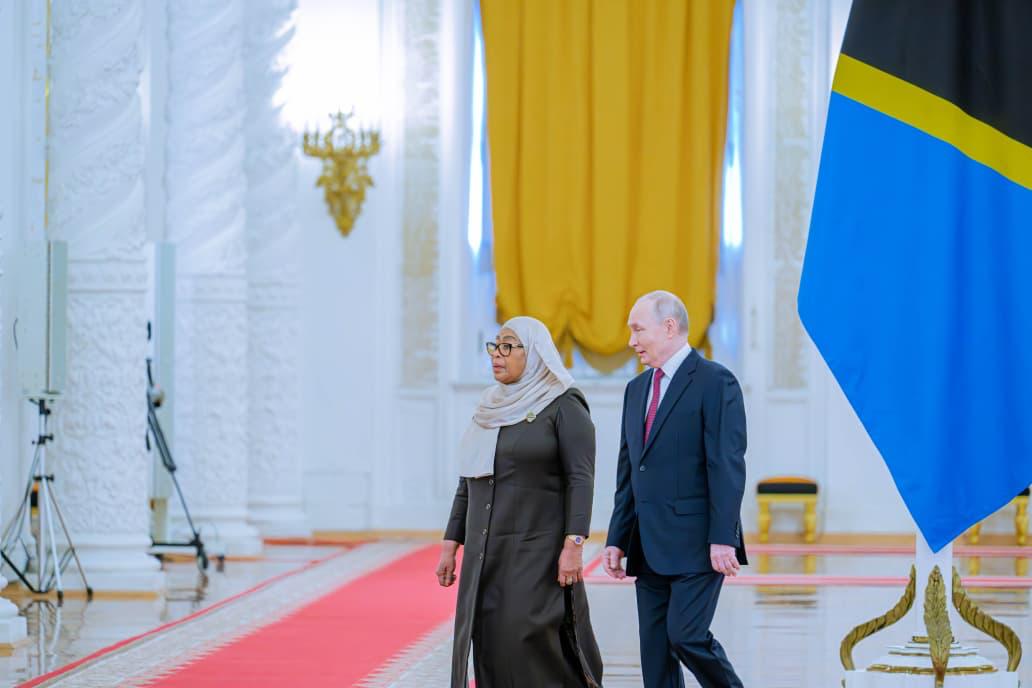
President Samia Suluhu Hassan’s visit to Russia this week is historic for one simple reason: she is only the second Tanzanian president to undertake such a visit since independence, following Mwalimu Julius Nyerere’s trip to the Soviet Union in October 1969. The 57-year gap between the two visits is itself a story about changing geopolitics, shifting alliances, and Tanzania’s evolving place in the world.
Yet this visit is about much more than history. Tanzania is also participating in the St.Petersburg International Economic Forum, which is taking place at a moment when both Tanzania and Russia face significant international pressures and are seeking new diplomatic and economic opportunities.
For Tanzania, the visit reflects a return to a foreign policy tradition that Nyerere himself championed: strategic non-alignment. During the Cold War, Tanzania maintained relations with both East and West while fiercely guarding its sovereignty.
Today, the world is no longer divided between Washington and Moscow. Instead, it is becoming increasingly multipolar, with China, India, the Gulf states, Russia, the European Union, and the United States all competing for influence and partnerships.
Samia’s visit signals that Tanzania intends to engage with all major powers without becoming dependent on any one of them. This is not necessarily a pivot to Russia. Rather, it is a statement that Tanzania seeks strategic autonomy in an increasingly fragmented international order.
The potential benefits are obvious. Russia is actively expanding its engagement in Africa, particularly in energy, mining, agriculture, education, technology, and trade.
Just weeks before President Samia‘s visit to Moscow, Tanzania and Russia signed cooperation agreements spanning twelve key sectors: health, agriculture, energy, tourism, education, science, technology, transport, logistics, language and cultural cooperation, trade and investment, and industrial development and infrastructure. The agreements reflect a broader effort by both countries to deepen economic, technical, and people-to-people ties.
Trade between Tanzania and Russia has also shown steady growth in recent years. According to trade data, Tanzania imported goods worth approximately US$295 million from Russia in 2024, while its exports to Russia were valued at about US$9 million, bringing total bilateral trade to roughly US$304 million.
Key Russian exports to Tanzania include wheat and fertilizers, while Tanzania mainly exports tobacco, coffee, tea, and fruits to the Russian market.
For Tanzania, increased Russian investment could help diversify sources of capital and technology at a time when the country is pursuing ambitious infrastructure and industrialisation goals. Participation in the St. Petersburg International Economic Forum also gives Tanzania access to investors and markets beyond its traditional partners.
Russia, meanwhile, gains a different kind of diplomatic benefit. Since the invasion of Ukraine in 2022, Moscow has faced unprecedented sanctions and diplomatic isolation from much of the West. Engagement with African countries has therefore become an important pillar of Russian foreign policy. The presence of an African head of state such as Samia at Russia’s flagship economic forum helps Moscow demonstrate that it retains influential international partners despite Western efforts to isolate it.
But every diplomatic opportunity carries risks.
For Russia, the challenge remains economic credibility. The country continues to face sanctions, reduced foreign investment, and the long-term consequences of the Ukraine war. Some analysts question whether Moscow can deliver the scale of investment and development financing that African countries increasingly require.
For Tanzania, the risks are more political. The visit comes at a time when President Samia’s government faces scrutiny from international human rights organisations and some Western governments following controversies surrounding the 2025 General Election and restrictions on political freedoms. Critics may interpret the Moscow visit as an attempt to seek diplomatic alternatives amid growing Western pressure.
This perception could complicate Tanzania’s relations with traditional development partners in Europe and North America, particularly if the visit is seen as part of a broader geopolitical shift rather than a pragmatic economic engagement.
Domestically, Samia also faces expectations from Tanzanians who are less interested in diplomatic symbolism than in tangible outcomes. Citizens will judge the success of the visit not by photographs from the Kremlin but by whether it produces jobs, investment, technology transfer, scholarships, expanded markets, and improved livelihoods.
The deeper significance of this visit lies in the parallels between the Tanzania of Nyerere and the Tanzania of Samia. Nyerere navigated the Cold War by refusing to subordinate Tanzania’s interests to any global power. Samia is operating in a different world, but the underlying challenge is remarkably similar: how to maintain national independence while competing powers seek influence.
The lesson from history is clear. Foreign policy succeeds when it advances national development rather than ideological alignment. Tanzania’s engagement with Russia should therefore be judged not by who invites the President to Moscow, Brussels, Beijing, or Washington, but by whether such engagements contribute to the country’s long-term prosperity.
Samia’s Moscow visit may mark the beginning of a new chapter in Tanzania-Russia relations. Whether that chapter becomes a success story or merely a diplomatic headline will depend on what happens after the state banquet, after the speeches, and after the handshakes.
History has opened the door. Implementation will determine whether Tanzania truly benefits from walking through it.