Last year, a friend of mine from the Democratic Republic of Congo (DRC), living in Sweden, was preparing to travel to Uganda. During his previous visits, the DRC was not yet a member of the East African Community (EAC).
At that time, he had always obtained a visa on arrival at the airport. Until last year, he had assumed that was still the standard requirement for his trip to Uganda.
No one had informed him that the regional situation had changed, and that his country’s accession to the EAC had implications for his future travels.
I told him he was now entitled to enter Uganda visa-free as an East African Community citizen. I advised him to confirm with the Ugandan Embassy in Denmark.
Within minutes of sending an email, he received a response together with an official visa waiver document.
That moment saved him about $50 in visa fees, but more importantly, it revealed a deeper problem: Africa often advances in policy faster than it advances in public awareness. Integration exists on paper, but many citizens do not yet know what it means for their everyday mobility.
The waiver clearly stated that being an East African citizen travelling to Uganda, he does not require a visa, regardless of the type of passport held. Whether ordinary, service or diplomatic, the principle is the same: East Africans move freely within their community.
This is a major step forward compared to many other African regions, where visa policies still depend on conditions such as passport type, pre-approval, or short-term entry arrangements.
Across Africa today, only a small number of countries – such as Rwanda, Benin, Seychelles, Kenya, The Gambia and Ghana – have adopted broad visa-free access for African passport holders. Progress is real, but uneven.
My own experience with visa restrictions goes back many years.
In the early 2000s, I travelled regularly from Tanzania to South Africa. Every trip required a visa application, despite the deep historical ties between our countries.
Tanzania played a central role in supporting the liberation struggle in South Africa, hosting and supporting freedom fighters during Apartheid. The relationship was built on solidarity and sacrifice.
Yet ordinary citizens still faced bureaucratic barriers.
Through persistent media debate and public pressure, the issue gained attention. Eventually, in 2006, President Thabo Mbeki of South Africa and President Jakaya Kikwete of Tanzania agreed to remove visa requirements between the two countries.
This proved two important truths: visa regimes are political decisions, and they can be reversed when there is political will and public pressure. It also showed the power of the media in shaping regional policy outcomes.
Today, Africa stands at a similar turning point.
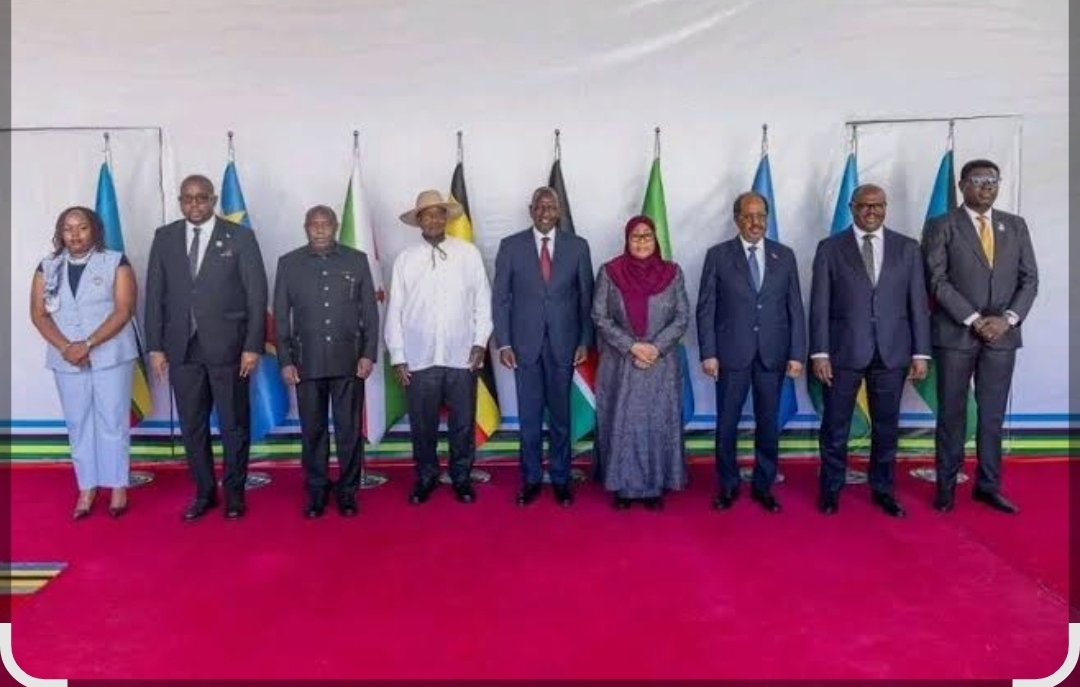
The East African Community demonstrates how far integration can go when political commitment exists. Citizens of Uganda, Kenya, Tanzania, Rwanda, Burundi, South Sudan, the DRC and Somalia can travel across borders under simplified arrangements. But even here, the reality is often poorly communicated.
My friend’s case shows this clearly: he had continued paying for visas on arrival for years simply because no one had explained to him that the rules had changed and that his country’s entry into the EAC had transformed his travel rights.
That information gap alone costs Africans time, money and opportunity.
Africa can learn even more from Europe.
A visitor who enters the Netherlands under the Schengen visa system can travel freely across most European countries without applying for separate visas. One approval opens access to a large part of the continent.
Even more striking is the experience of European Union citizens. A citizen of Poland, for example, does not think twice before travelling to Germany, France or Spain. They simply buy a ticket, pack a bag, and go. No visas. No embassy appointments. No uncertainty.
That level of freedom has strengthened Europe’s economy, tourism, education, and cultural exchange. Africa should borrow this model more seriously.
The African Union’s vision of integration and the African Continental Free Trade Area both depend on one key principle: people must move if trade and development are to move. Goods, services, ideas and skills cannot circulate freely if Africans themselves remain restricted.
Critics often raise concerns about security, illegal migration and cross-border crime. These concerns are valid. But they are not arguments against integration; they are arguments for stronger cooperation, intelligence sharing, and modern border management systems.
The benefits of free movement clearly outweigh the risks. It promotes trade. It boosts tourism. It supports education and research. It strengthens cultural unity. And most importantly, it reconnects Africans with Africa.
What is needed now is stronger political commitment, better communication of existing policies, and sustained advocacy from the media and civil society.
Tanzania, in particular, once stood at the forefront of Africa’s liberation struggles and Pan-African solidarity. It is time for it – and other African countries – to reclaim that leadership by championing one of the most important goals of our time: making Africa open to Africans.
The future of Africa will not be built at visa counters or embassy queues.
It will be built when Africans can move across their continent as freely as Europeans move across theirs. The time has come.