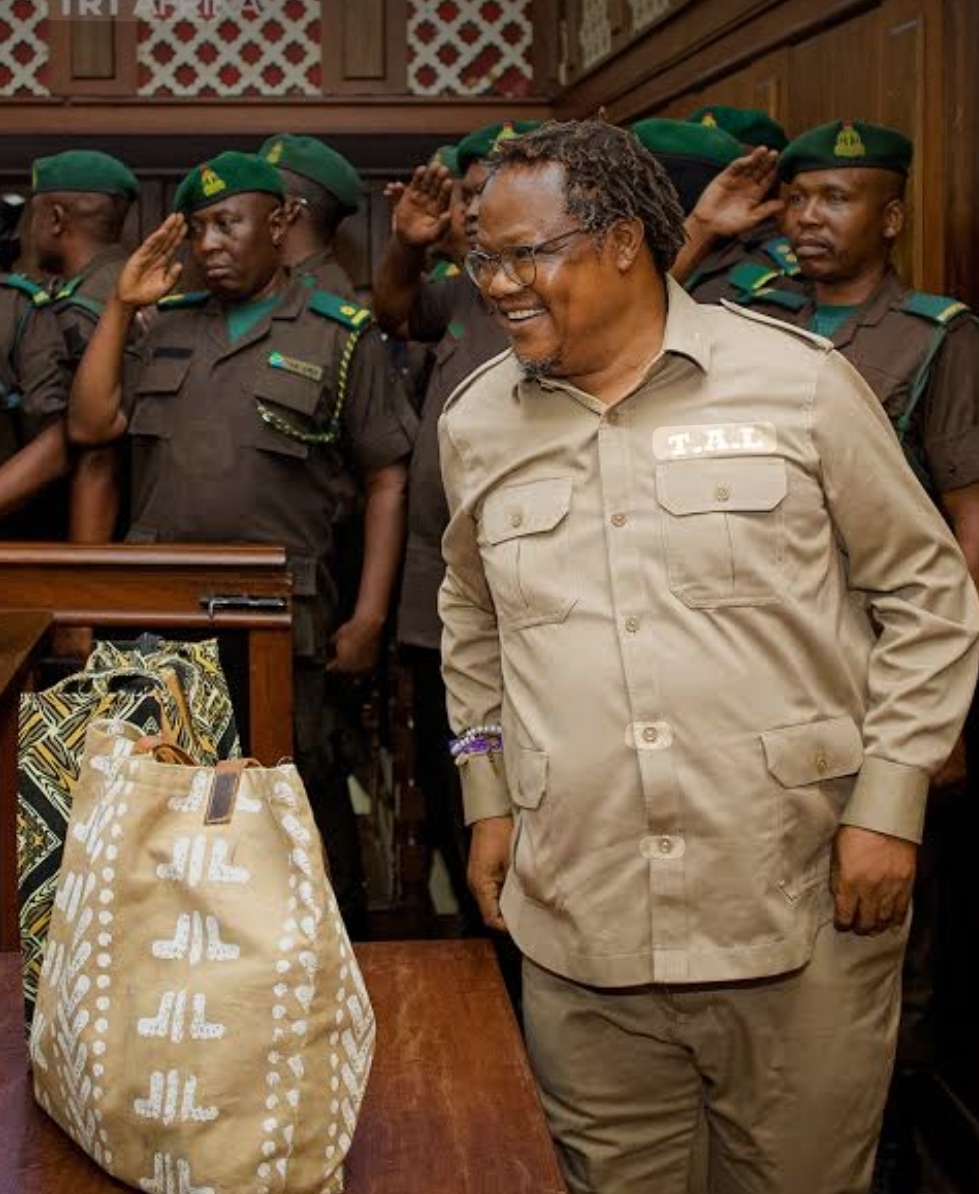
The High Court’s decision to acquit Tundu Lissu of treason but convict him of incitement has opened an important legal debate in Tanzania. At issue is whether the judges acted within the law when they convicted him of a different offence and sentenced him to four years in prison.
Since the judgment of 6 November 2026, lawyers, politicians, journalists and ordinary citizens have engaged in a lively debate. Some believe the court committed a serious legal error. Others argue that Tanzanian law allows judges to convict an accused person of a lesser offence when the evidence fails to establish the original, more serious charge.
Both arguments deserve careful examination. So do certain developments during the trial that may become important when the case reaches the Court of Appeal.
A senior Tanzanian editor who read my earlier analysis raised an interesting question. He explained that he had begun studying the possibility of a lesser conviction about six months before the judgment, anticipating that the treason charge might fail.
His research led him to a simple principle: a court may convict someone of a lesser offence even when that offence was not expressly included in the original charge, provided the law permits it and the evidence establishes its essential ingredients. This is where the legal debate becomes particularly interesting.
Section 319 of Tanzania’s Criminal Procedure Act provides for convictions involving offences other than those originally charged. However, the existence of this provision does not automatically mean that every lesser conviction is lawful.
The central question is whether incitement, under the circumstances of Lissu’s case, legally qualifies as an offence for which the court could convict him after acquitting him of treason.
The distinction matters. Treason and incitement may arise from the same political speech, but they are not necessarily the same offence. Each has its own legal ingredients that the prosecution must establish.
Several Tanzanian lawyers have questioned the application of the law in this case. Peter Madeleka argues that treason does not have a lesser offence of the kind contemplated by the law. Boniface Mwabukusi, President of the Tanganyika Law Society, has questioned the court’s approach and its implications for a fair trial. Rugemeleza Nshala, one of Lissu’s lawyers, has identified numerous possible grounds for appeal.
Gasper Mwanalyela, based in Mwanza, has raised a particularly important question: whether the High Court erred by convicting Lissu of incitement after acquitting him of treason when the substituted offence had not been established as a legally permissible lesser offence arising from the original charge.
However, the matter is more complicated than simply asking whether treason and incitement belong to the same family of offences. The Court of Appeal may, therefore, have to determine whether the judges correctly interpreted the law, whether the evidence supported the alternative conviction, and whether Lissu had sufficient opportunity to defend himself against it.
Another important issue concerns the evidence presented during the trial. Lissu objected to the admission of a video recording containing statements attributed to him. Interestingly, however, during the defence proceedings, he and some of his witnesses acknowledged that he had made the statements in question.
This created a potentially important evidential distinction. Even if the video itself was disputed, admissions made during testimony could independently establish that certain words were spoken.
But proving that Lissu uttered those words is not necessarily the same as proving that he committed incitement. The prosecution still had to establish the legal ingredients of that offence.
Others argue that in previous cases involving similar political statements, Lissu had reportedly been acquitted partly because the prosecution failed to establish the necessary connection between his words and the alleged unlawful conduct. This time, however, the circumstances were different. Some prosecution witnesses reportedly testified that Lissu’s statements had influenced or encouraged them to take action. Such testimony could strengthen the prosecution’s argument, depending on its credibility, relevance and the legal requirements of incitement.
Then there were the events of 29 October 2025. Hundreds of people took to the streets during demonstrations that, in some places, developed violent features. Questions also arose over compliance with legal requirements governing public assemblies and police notification.
The prosecution could argue that these events demonstrated the consequences of the political mobilisation associated with Lissu’s statements. But that argument raises another important legal question: Were the October demonstrations properly introduced, examined and established as evidence during Lissu’s trial?
A court cannot simply rely on public knowledge of subsequent events to establish criminal responsibility. The evidence must be properly presented and tested, and the accused must have an opportunity to challenge it.
Even where unlawful demonstrations occurred, the prosecution would still need to establish the legally required connection between Lissu’s statements and the alleged offence. The conduct of demonstrators cannot automatically be attributed to him.
There is also the question of the four-year prison sentence. If the conviction itself survives appeal, the appellate judges may still examine whether the sentence was lawful, proportionate and justified by the circumstances established during the trial.
The Court of Appeal could uphold the conviction and sentence, uphold the conviction while altering the sentence, or overturn the conviction if it finds a material legal error. The outcome will depend on the applicable law, the trial record and the grounds of appeal.
Beyond Lissu’s personal fate, the case raises a broader question about the relationship between criminal law and political freedom. Political leaders frequently use strong language to mobilise supporters, challenge governments and demand reforms. Democratic societies must distinguish between legitimate political expression and speech that crosses the legal threshold into criminal incitement.
The state has a responsibility to maintain public order. Equally, the courts have a responsibility to ensure that criminal law is not applied so broadly that lawful political opposition becomes dangerous. The legal boundaries must be clear, predictable and applied consistently.
That is why Lissu’s appeal, should it proceed, will be important beyond the immediate parties. It may clarify how Tanzanian courts distinguish treason from incitement, when a conviction for an uncharged offence is permissible, and what safeguards protect an accused person’s right to a fair trial.
Ultimately, this case is not simply about whether Lissu should remain in prison. It is about how far Tanzania’s criminal law allows a court to go when the offence originally charged has not been proved.
The answer may shape the country’s criminal jurisprudence and the boundaries of political expression for years to come.