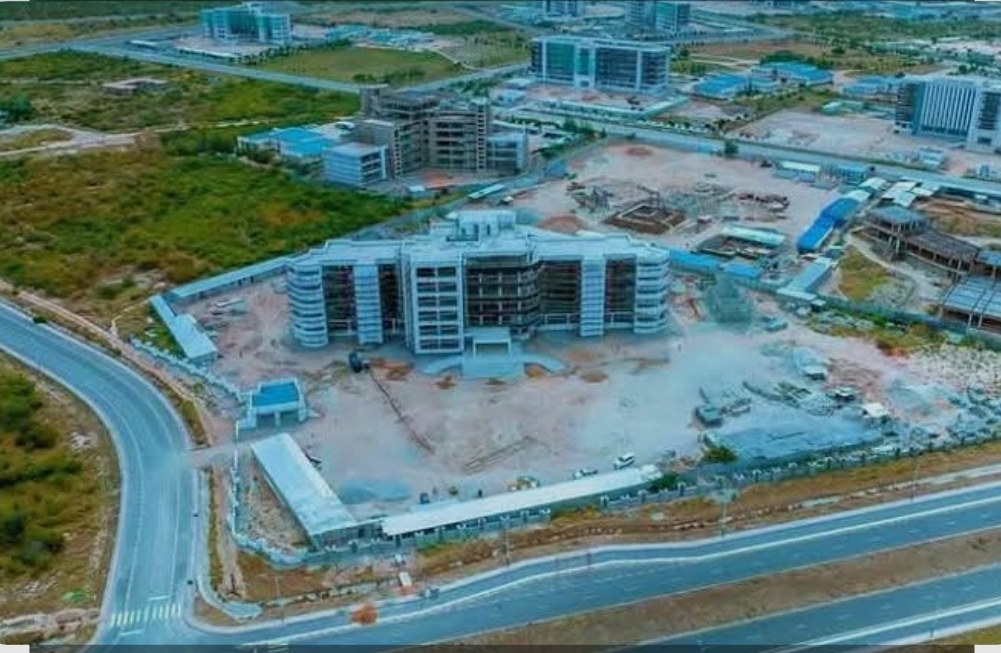
Dodoma did not become Tanzania’s capital in a day. Its current stage took 53 years, six presidents, billions of shillings, countless political decisions and a national ambition that survived economic hardship, changing governments and repeated doubts about whether the project was worth pursuing.
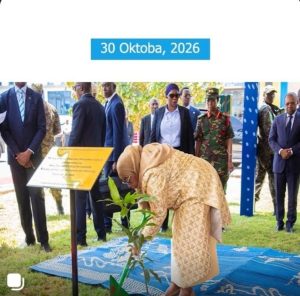
On 30 October 2026, President Samia Suluhu Hassan inaugurated a major government development at Mtumba in Dodoma, marking another milestone in a journey that began in 1973. The occasion revived an old political argument: Who actually built Dodoma?
The question arose in a discussion I had recently with a group of senior journalists. Some credited Julius Nyerere, who conceived the project, and John Magufuli, who accelerated the relocation of government institutions. Others pointed to Samia’s continuing investments. But the more we discussed the matter, the clearer it became that much of Dodoma’s history was missing from the public conversation.
To understand who built Dodoma, we must return to the beginning. The idea of moving Tanzania’s capital away from Dar es Salaam is older than independent Tanzania itself. During German colonial rule, officials considered alternative locations for the country’s administrative headquarters. The question resurfaced under British administration, and in 1959 the Legislative Council discussed the possibility of relocating the capital to Dodoma. Its central geographical position made it attractive, but the financial cost discouraged immediate action. After independence in 1961, the idea did not disappear. One of its important early advocates was Joseph Kizurira Nyerere, a younger brother of President Julius Nyerere. Joseph raised the proposal within the National Executive Committee of the party, Tanganyika National African Union (TANU), and subsequently took it to Parliament. In 1966, while serving as a deputy minister, he introduced a motion proposing that the capital be moved gradually from Dar es Salaam to Dodoma.
His argument was straightforward. Dar es Salaam, situated on the Indian Ocean coast, was far from many parts of the country. Dodoma, near the geographical centre, offered an opportunity to bring national administration closer to the population and encourage more balanced development.
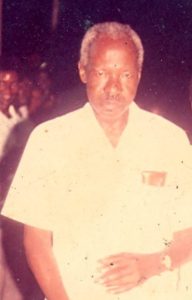
But the proposal encountered strong opposition over its financial implications. Finance Minister Amir Jamal questioned whether the young nation could afford such an expensive undertaking while facing numerous development challenges. The motion did not succeed.
Nevertheless, Joseph Nyerere had helped bring an important national question into formal political debate. His contribution deserves recognition because the history of Dodoma did not begin with the presidential decision of 1973.
The idea gathered momentum again in 1972, this time through the ruling party, TANU. Its Mwanza regional leadership, associated with Lawi Sijaona, proposed moving the party’s national headquarters to Dodoma. The proposal was informed by geographical, political, security and economic considerations. A more centrally located capital, its supporters argued, would strengthen national integration and stimulate development in the country’s interior.
The debate moved through TANU’s decision-making structures. In October 1973, the party’s National Conference endorsed the relocation of the national capital from Dar es Salaam to Dodoma. President Julius Nyerere embraced the decision and committed his government to implementing it. This was the historic turning point. What had previously been discussed as an attractive possibility became an official national development project.
Nyerere’s contribution, however, went far beyond approving the idea. His administration established the institutional machinery required to transform Dodoma into a functioning capital.
The government created the Ministry of Capital Development and the Capital Development Authority (CDA). Chief Adam Sapi Mkwawa was entrusted with responsibilities connected to the transfer of government operations, while Sir Clement George Kahama became the first Director-General of CDA.
Kahama is among the important personalities whose contributions are frequently overlooked when Dodoma’s history is discussed. His responsibility was enormous. He had to help translate a political ambition into practical development: planning the city, coordinating construction, organising infrastructure and preparing the foundations for a national administrative centre.
Under CDA’s leadership, professional planners, including the Canadian firm Project Planning Associates, participated in preparing Dodoma’s master plan. Completed in 1976, the plan envisaged a modern capital with government offices, residential areas, roads, schools, hospitals, commercial centres, public amenities and green spaces.
The vision was ambitious. Dodoma was not supposed to become merely another collection of government buildings. It was intended to grow into a carefully planned city capable of accommodating public institutions and a rapidly expanding population. But there was a serious problem. Tanzania’s economic resources were nowhere near the scale of its ambitions.
The country was struggling with financial constraints, shortages of infrastructure, rising development demands and, later, the economic difficulties associated with the late 1970s and early 1980s. The relocation also faced administrative resistance, inadequate housing and the practical difficulties of moving thousands of public servants and their families.
CDA continued its work, but progress was much slower than originally anticipated. The ambition to complete the relocation within roughly a decade proved unrealistic.
By the time Nyerere retired in 1985, Dodoma had gained important administrative and political functions, but the presidency, most ministries and much of the central government remained in Dar es Salaam. Nyerere had established the political, legal and institutional foundations of the new capital. Completing it would become the responsibility of his successors.
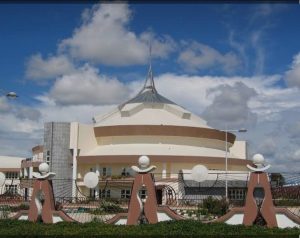
When Ali Hassan Mwinyi assumed the presidency in 1985, he inherited a country facing severe economic challenges. His administration introduced major economic reforms, including measures associated with economic recovery and structural adjustment. Under these circumstances, moving the government to Dodoma could hardly compete with the urgent need to stabilise the economy, improve public services and restore economic growth.
Yet Mwinyi did not abandon the capital project. His administration maintained Dodoma’s official status, preserved its institutional framework and allowed gradual development to continue. CDA remained part of the national planning machinery, even as its ambitions were constrained by limited resources.
Mwinyi’s contribution was therefore principally one of continuity. At a time when the government had compelling reasons to reconsider expensive national projects, he kept Dodoma on the country’s development agenda.
Benjamin Mkapa, who became president in 1995, inherited the same unfinished undertaking. Mkapa’s administration emphasised fiscal discipline, economic reforms, institutional strengthening and infrastructure development. Under his leadership, Dodoma’s parliamentary role became more firmly established. The construction and development of parliamentary facilities helped strengthen the city’s position as the country’s legislative centre.
Yet the executive branch remained largely in Dar es Salaam. Ministers, permanent secretaries and senior government officials continued to conduct most of their work from the coastal city. This created an unusual arrangement. Dodoma was the official capital, but Dar es Salaam remained the principal working centre of government.
The arrangement was expensive and inconvenient in its own way. Parliamentarians and government officials frequently travelled between the two cities, illustrating the difficulties of operating a government whose political institutions were divided geographically. Nevertheless, Mkapa continued strengthening Dodoma’s institutional and physical foundations rather than reversing the relocation policy.
When Jakaya Kikwete assumed office in 2005, Dodoma was already a growing administrative and commercial centre. His presidency added another important dimension to its transformation: education. One of the most significant developments was the establishment of the University of Dodoma in 2007. The university brought thousands of students, lecturers, researchers and workers to the city, generating demand for accommodation, transport, shops, restaurants and other services.
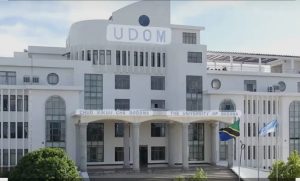
Its contribution extended beyond education. It helped stimulate urban growth and strengthen Dodoma’s economic and social identity. Roads, residential neighbourhoods, commercial activities and public services also continued to expand during Kikwete’s administration. Although the government had not yet completed its relocation, Dodoma was becoming a more substantial city.
There is an interesting political story connected to this period, one that I remember personally. During the 2005 general election, I was involved in reporting CHADEMA’s presidential campaign. The candidate was Freeman Mbowe. CHADEMA was still a relatively small opposition party, but the campaign marked an important stage in its political development.
In 1995, the party had supported Augustine Mrema for the presidency, and in 2000 it had backed Professor Ibrahim Lipumba. The 2005 election was therefore the first time CHADEMA fielded its own presidential candidate. The 2005 campaign attracted considerable national attention, both in its style and political message, and helped establish the foundations of CHADEMA’s subsequent growth into a major opposition force.
At a public rally in Dodoma, Mbowe challenged the wisdom of continuing the expensive capital relocation project. He argued that Tanzania was still struggling to provide adequate food, education and other basic services to its people. Spending enormous public resources on moving government offices, he maintained, was not the best national priority. Mbowe proposed a different future for Dodoma. Under a CHADEMA government, he said, Dar es Salaam would remain the administrative headquarters, while Dodoma would be developed into a major educational city. Universities, colleges, research institutions and other centres of learning would become the foundation of its growth. It was an alternative development philosophy. Instead of concentrating national investment on relocating the government, Mbowe wanted Dodoma to grow through education, research, knowledge and human capital. The proposal did not become government policy because CHADEMA didn’twin the election. But when President Kikwete suddenly initiated the UDOM project – as it was not part of his election manifesto – some CCM members blamed him of copying CHADEMA’S agenda.
It remains an important part of Dodoma’s political history because it demonstrates that the capital project was not universally accepted without question. There were competing visions about how Dodoma could best serve the country. Interestingly, the subsequent expansion of higher education in Dodoma showed the economic value of the educational dimension Mbowe had emphasised, even though the government continued pursuing the capital relocation.
The most dramatic change came under President John Magufuli, who assumed office in November 2015. In 2016, Magufuli announced that the long-delayed relocation of central government operations to Dodoma would be accelerated. Unlike previous administrations, which had largely pursued gradual implementation, he imposed deadlines and demanded visible results.
The Prime Minister’s Office led the relocation, followed by ministries, departments and other government institutions. Senior officials moved to Dodoma, while new offices, housing facilities, roads and supporting infrastructure were developed.
The impact was immediate. Dodoma experienced rapid population growth, increased construction, expanding commercial activities and rising demand for public services. In 2017, the government dissolved the Capital Development Authority, transferring its responsibilities to other administrative and planning authorities. This marked the end of an institution that had played a central role in developing the capital since the 1970s.
Magufuli’s administration also advanced major government infrastructure, including the new State House at Chamwino and the development of government offices at Mtumba. For the first time since the 1973 decision, the transfer of central government operations was being implemented on a large scale.
By the time Magufuli died in March 2021, Dodoma had moved beyond its long-standing identity as a capital largely on paper. It had become the practical centre of much of Tanzania’s national administration.
His contribution was substantial and deserves recognition. But it is equally important to recognise that the rapid relocation was possible because earlier governments had already established the capital’s legal status, planning institutions, parliamentary facilities, roads, educational infrastructure and urban foundations.
Magufuli accelerated a project that had been under development for more than four decades. He did not begin it from nothing.
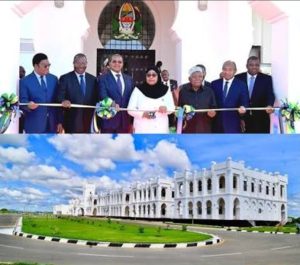
President Samia Suluhu Hassan inherited a capital that had undergone enormous administrative change but still required extensive permanent infrastructure. Her administration continued developing the Government City at Mtumba, including ministry headquarters, roads, utilities and supporting facilities. Investments in housing, transport and urban services have also been part of the broader effort to make Dodoma a more functional national capital.
The inauguration of the Government City on 30 October 2026 marked another important milestone in that process. It represented a further transition from temporary or scattered government accommodation towards a more permanent and coordinated administrative centre.
At the ceremony, Samia acknowledged the contributions of the five presidents who preceded her. That recognition was historically important. It placed Dodoma’s development within the continuity of national leadership rather than presenting it as the achievement of a single administration.
But the ceremony should also invite a wider discussion about what the country has achieved after 53 years. Has relocating the capital made government more accessible to ordinary Tanzanians? Has it improved administrative efficiency? Has it encouraged balanced national development? And has the enormous investment delivered benefits proportionate to its cost?
These questions matter because the success of a national capital cannot be measured by the number or size of government buildings alone. A successful capital must function efficiently, support economic activity, provide adequate services and remain accessible to the citizens it is intended to serve.
So, who really built Dodoma?
The historical answer is much broader than the names most frequently mentioned in political debates. The idea emerged through discussions that preceded independence and continued afterwards. Joseph Kizurira Nyerere helped advance the proposal politically and brought it before Parliament. TANU leaders revived the debate and helped build support for relocation.
President Julius Nyerere gave the project decisive political authority in 1973 and established the institutions responsible for its implementation. Chief Adam Sapi Mkwawa, Sir George Kahama, CDA and generations of planners, engineers, administrators and construction workers helped turn that decision into physical development.
President Ali Hassan Mwinyi kept the project alive through difficult economic times. President Benjamin Mkapa strengthened its institutional foundations, particularly its parliamentary role. President Jakaya Kikwete expanded the city’s educational, economic and urban infrastructure. President John Magufuli dramatically accelerated the relocation of government institutions. President Samia Suluhu Hassan has continued consolidating the capital through permanent government facilities and supporting infrastructure.
These contributions were not equal in scale, and they were not identical in character. Some leaders made foundational decisions. Others maintained continuity, financed development, expanded institutions or accelerated implementation. It would be historically misleading to pretend that all six presidents contributed in exactly the same way. But it would be equally misleading to suggest that only one or two of them built Dodoma.
Nor should we forget the thousands of Tanzanians whose work rarely appears in political speeches: the planners who designed the city, the engineers who developed its infrastructure, the workers who constructed its buildings, the public servants who relocated their families and the ordinary residents whose economic activities helped the city grow.
The story also contains lessons about national planning. An ambition initially expected to be realised within a relatively short period took more than half a century to reach its present stage. Economic hardship, administrative resistance, changing priorities and political decisions repeatedly shaped its progress.
Yet successive governments maintained the central commitment. That continuity is perhaps one of the most remarkable features of Dodoma’s history.
The Government City inaugurated in October 2026 is therefore not simply a monument to the administration that completed its latest phase. It is a visible product of decisions, investments, sacrifices and political choices made over generations.
Dodoma did not begin with Magufuli, nor did its development end with him. It was not built by Nyerere alone, and its continuing transformation cannot be attributed exclusively to Samia. Nyerere gave the dream national authority. His successors preserved it, developed it, accelerated it and brought it closer to completion. No single president built Dodoma. Tanzania built Dodoma, across generations.
That is the history worth remembering. And history deserves to be told fairly, completely and accurately – not selectively to satisfy the politics of the moment.