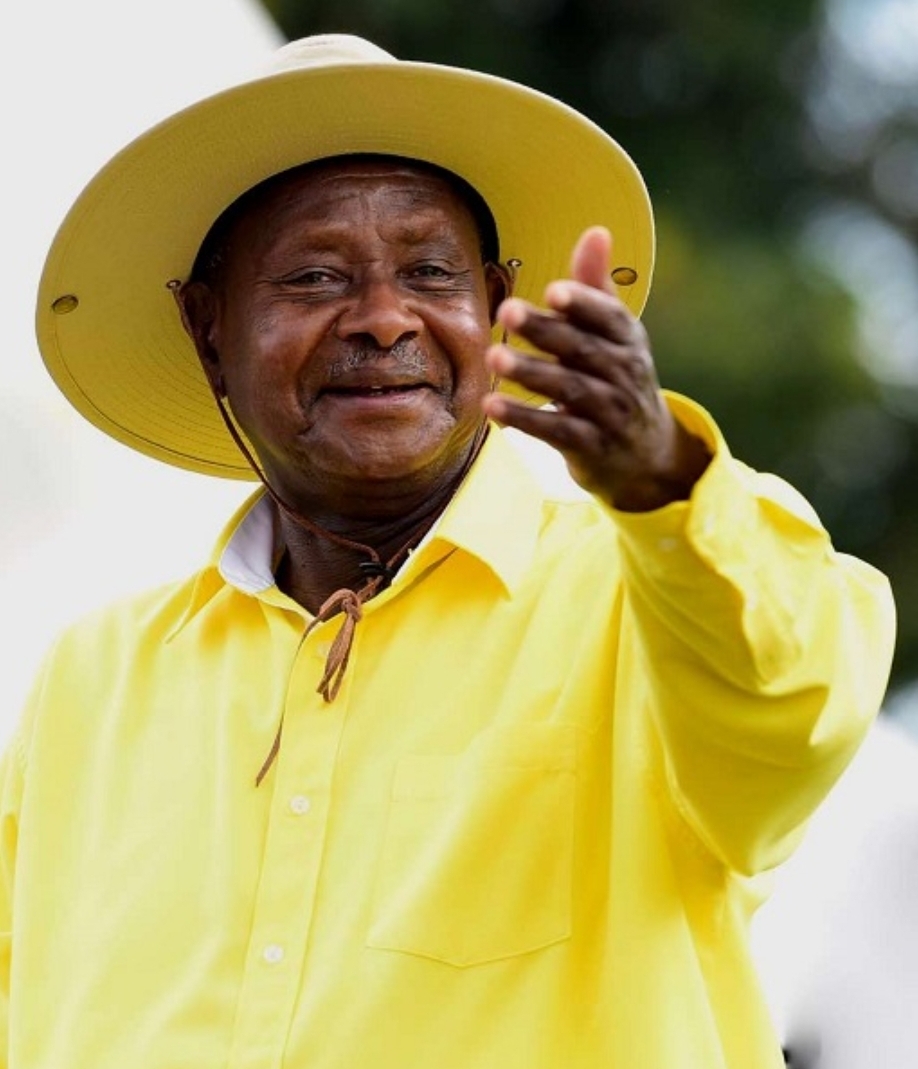
As Ugandans head to the polls on 15 January, one outcome seems certain: the youth may embrace change, or the older generation may seek to protect the status quo.
And incumbent Yoweri Museveni has made it clear: “It’s not about age. You can be old but confused. Kamuzu Banda was old but confused. Idi Amin was young but confused.”
At 81, Museveni stands as the sixth oldest president in Africa, younger only than figures like Cameroon’s Paul Biya (92), Togo’s Jean‑Lucien Savi de Tové (86), Ivory Coast‘s Alassane Ouattara (83), Equatorial Guinea’s Teodoro Obiang Nguema Mbasogo (83), and Zimbabwe’s Emmerson Mnangagwa (83).
Yet, people close to him insist that his sharp memory, disciplined lifestyle, and physical alertness put him ahead of many younger politicians who lack his endurance and focus.
Forty years ago, Uganda was a country in turmoil. Decades of misrule, dictatorship under Idi Amin, Obote’s violent regimes, and civil wars had left the nation fractured, poor, and unsafe. When Museveni came to power in 1986, it was through armed struggle, not election, yet he quickly became the figure who promised stability.

Those who lived through the turbulence of 1963–1986 often credit him for restoring peace, rebuilding institutions, and halting the cycles of violence that had haunted the country for decades.
For these voters, his campaign slogan – “protecting the gains” – resonates. It is a call to safeguard the stability, economic growth, and social improvements achieved in the early years of his rule.
Museveni’s early tenure, roughly from 1986 to the early 2000s, is widely seen as a blessing for Uganda. The country experienced relative peace, macroeconomic stability, and growth. GDP expanded, inflation was controlled, and Uganda became a “donor darling” in the 1990s.
HIV/AIDS rates declined, thanks to open public awareness campaigns that were unprecedented in Africa at the time. Regional security was strengthened, with Uganda playing a stabilizing role in the Great Lakes region and Somalia. In short, Museveni earned international recognition and domestic legitimacy as a pragmatic, reformist leader.

It wasn’t until the mid-2000s that the tide began to turn. Critics argue that Museveni’s long rule increasingly became authoritarian, with the removal of term limits in 2005 and age limits in 2017, effectively entrenching his power.
Reports of corruption became widespread, political opposition was repressed, and civil society faced constant pressure. Human rights violations during elections, including arrests, beatings, and intimidation, further eroded trust, especially among the youth, who make up the majority of Uganda’s population. Museveni’s popularity among younger voters has been declining for 15–20 years, even as older citizens continue to value the stability he provides.
Electoral history shows his persistence. While Museveni took power in 1986 without an election, he first stood for president in 1996. Since then, he has run seven times, including the 2026 vote.
His victories reflect both his political skill and the advantage of incumbency, but also a political environment where opposition and democratic institutions are heavily constrained.
For many, this combination of experience and entrenchment underscores his reputation as a leader capable of “protecting the gains” of peace and stability, even as critics question whether those gains are truly worth preserving.
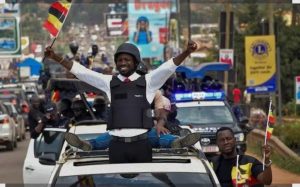
Enter Bobi Wine, born Robert Kyagulanyi Ssentamu in 1982. The former musician turned politician is the face of youth-driven change, leading the National Unity Platform (NUP) and mobilizing large crowds in urban centers.
Wine speaks to issues such as corruption, unemployment, and the lack of political freedom – concerns that resonate deeply with young Ugandans, many of whom have never known a president other than Museveni. He embodies hope, energy, and a challenge to the entrenched establishment, positioning himself as a credible alternative for a generation hungry for change.
Yet, the older generation sees him differently. Many older voters view Bobi Wine as inexperienced and untested, concerned about his ability to handle Uganda’s complex challenges in governance, security, and foreign policy.
For those who remember the turbulence of the 1960s through 1980s, stability is paramount, and Museveni’s long tenure is proof that Uganda can avoid the chaos of the past.
The generational divide is clear: youth demand transformation, while older citizens seek the protection of historical gains.
Museveni has attempted to navigate this divide with political tact. In a recent campaign address, he asked Bobi Wine’s supporters to give him this last chance, suggesting that he could prepare the country for a future in which Wine might eventually lead.
To the ordinary voter, this message carries both reassurance and a reminder of Museveni’s centralization of power: the choice of change remains, to some extent, conditional on his stewardship. Of course, others do not believe his underlying intentions.
As the 15th January election approaches, Uganda faces heightened tension. Already, it has been reported by various media that the government has shut down the Internet two days before the vote, controlling the flow of information and reinforcing the advantages of incumbency.
This underscores how institutional control and political strategy can shape outcomes, beyond mere popularity or campaign messaging.
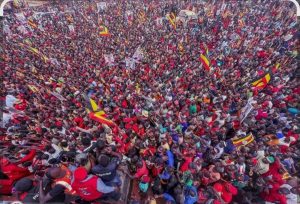
When weighing their strengths and weaknesses:
Museveni draws on decades of experience, historical legitimacy, command over security forces, and credibility among older voters. His rule represents continuity and the promise of stability, especially for those who have lived through Uganda’s volatile past.
Bobi Wine offers youth appeal, charisma, and the promise of reform. Yet he faces political repression, opposition fragmentation, and skepticism from older, rural voters.
Speculatively, the outcome may hinge on whether youth mobilization can overcome entrenched structures supporting Museveni. Regardless of the result, Uganda stands at a crossroads: either continuity under a familiar hand or the uncertainty of youthful change.
Museveni’s legacy is dual-edged: early success and stabilization, followed by decades of contested rule and growing criticism.
His slogan “protecting the gains” resonates for those who remember past instability, but young voters ask: what gains, exactly, are being protected?
The 2026 election will not only determine a winner; it will define the direction of Uganda for generations to come, testing whether the weight of history or the force of youthful aspiration will shape the nation’s future.