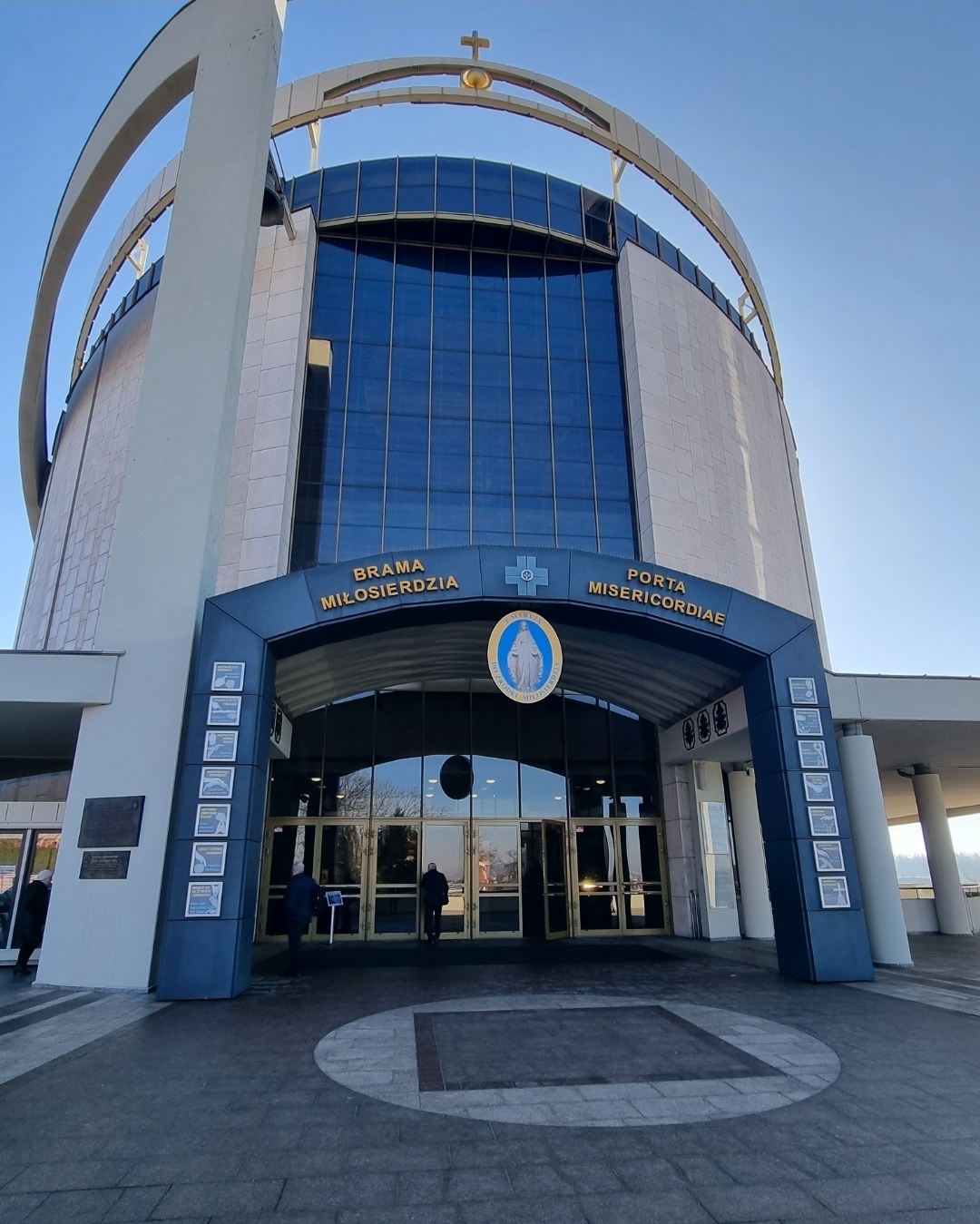
My first journey to Poland this weekend was meant to be a simple visit to dear friends. Instead, it became a profound Lenten pilgrimage – a reunion filled with grace, memory, and spiritual renewal.
Different people observe Lent in different ways. This year, mine was blessed beyond expectation.
A Reunion After Many Years
Fr. Tadeo Dziedzic was my parish priest in Musoma from 1991 to 1993. Under his guidance at Musoma Cathedral, I trained the St. Cecilia Choir, composed many liturgical hymns still sung today, played the organ, and sometimes conducted the choir. He even donated a new organ to strengthen the cathedral’s music ministry – a gift that still resonates in my heart.
It was Fr. Tadeo who introduced me to Fr. Wojciech Koscielniak. From 1994 to 1997, Fr. Wojciech became my parish priest and spiritual mentor at Kiabakari. Together, we helped build Kiabakari Parish, inaugurated in 1997 – a parish that has since grown into Tanzania’s National Shrine for Pilgrimage to the Divine Mercy.
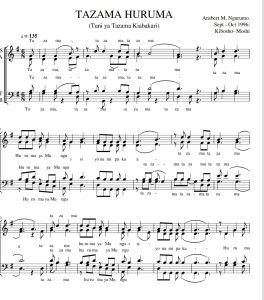
In 1994, Fr. Wojciech introduced me to the Divine Mercy devotion inspired by the diary of Saint Faustina Kowalska. That encounter shaped my spiritual path. Encouraged by him, I composed Divine Mercy hymns based on her writings. My first Divine Mercy song, Njoni tuimbe pamoja, was written during those early days. Together, we translated Divine Mercy books into Kiswahili, helping spread the devotion across Tanzania.
We were more than a priest and a parishioner – we became brothers and lifelong friends.
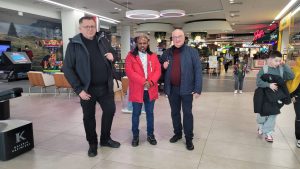
Fr. Tadeo returned to Poland in 1996. For nearly thirty years, we did not meet face to face. My last meeting with Fr. Wojciech had been in 2017. But this weekend, in Kraków, we embraced again. The reunion was emotional, joyful, and deeply moving – filled with laughter, gratitude, and silent tears. It felt as if time had folded in on itself.
At the Heart of Divine Mercy
On Saturday February 28, guided by Fr. Tadeo, I visited the convent of the Sisters of Our Lady of Mercy, where Saint Faustina lived, prayed, and received visions of Jesus in the 1930s. Standing in her small chapel and praying at her tomb, I felt overwhelmed. The devotion that transformed Kiabakari and spread throughout Tanzania began in this very place.
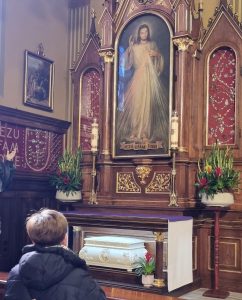
We then entered the great Shrine of Divine Mercy in Kraków – the global headquarters of the Divine Mercy devotion. Recognized among the world’s major religious centres, it welcomes millions of pilgrims every year.
The sanctuary is alive day and night. It is a 24-hour pilgrimage centre where people come continuously for adoration of the Holy Eucharist, confession, Mass, and quiet prayer. Watching pilgrims kneel in silence, whisper prayers, and seek mercy reminded me that faith has no borders. From Tanzania to Poland, the same message resounds: Jesus, I trust in You.
A Moment That Stopped Me
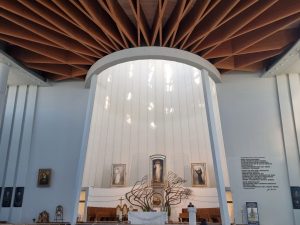
Our pilgrimage continued to the magnificent Sanctuary of Saint John Paul II, dedicated to Pope John Paul II – the exceptional son of Poland who became a global spiritual leader.
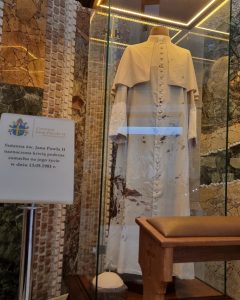
One moment there moved me deeply. I stood before the cassock he wore on 13 May 1981, the day he was shot in St. Peter’s Square – less than three years into his long papacy. The white garment was stained with blood. Seeing it in person was not like reading history in a book. It was raw. It was real. It was the silent witness of suffering, survival, and forgiveness.
That cassock spoke without words – about sacrifice, courage, and unshakable faith.
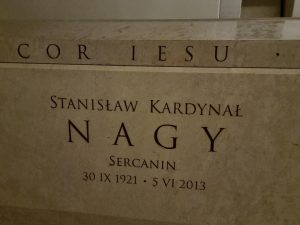
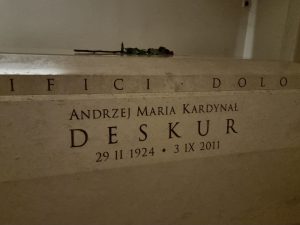
I was also shown the tombs of two of his close friends – priests he had ordained during his time as Archbishop of Kraków and later created cardinals after becoming pope. They are buried in one room, side by side, a quiet testimony of lifelong friendship and shared service to the Church. Standing there, I reflected on the beauty of spiritual companionship – a bond that lasts beyond titles, beyond positions, even beyond death.
The sanctuary complex itself is vast: upper and lower churches, the John Paul II museum with personal artifacts, conference halls, chapels, confessionals, the Fatima Tower overlooking Kraków, pilgrim houses, and open prayer spaces. It is a centre of faith, memory, study, and global pilgrimage.
Cardinal Stanisław Dziwisz once described it as an expression of gratitude to God for an exceptional son of the Polish nation who became the successor of St. Peter and a spiritual leader of the modern world. After my visit, I understood those words more deeply.
A Saturday to Remember
Saturday, 28 February 2026, captured everything about my journey.
After our pilgrimage, Fr. Wojciech hosted nine of us for lunch in the city. Around the table, we shared stories from Tanzania and Poland, remembering Kiabakari, Musoma, and the early days of Divine Mercy in East Africa. Laughter filled the room.
In the evening, he con-celebrated Holy Mass at St. Jadwiga’s Church. As he stood at the altar, I saw not only a priest in Poland, but the same spiritual mentor who had once guided us in Kiabakari. The day ended in prayer – the most beautiful ending possible.
Carrying the Blessing Forward
As I return to Sweden, my heart is full – full of joy, gratitude, renewal, and strength. What began as a friendly visit became a historic reunion. What seemed like a tour became a pilgrimage. What felt like memory became living grace.
From Musoma to Kiabakari. From Tanzania to Kraków. From youthful ministry in the 1990s to this Lenten season of 2026.
As if reconnecting with the past was not enough, Kraków also opened doors to the future. I met wonderful new friends whose kindness and hospitality enriched my stay. In God’s beautiful design, this pilgrimage was not only about memories restored, but also about relationships newly planted.
My first experience of Poland has become the greatest blessing of this year’s Lent – a reminder that faith connects continents, friendship withstands decades, and grace always brings us home.