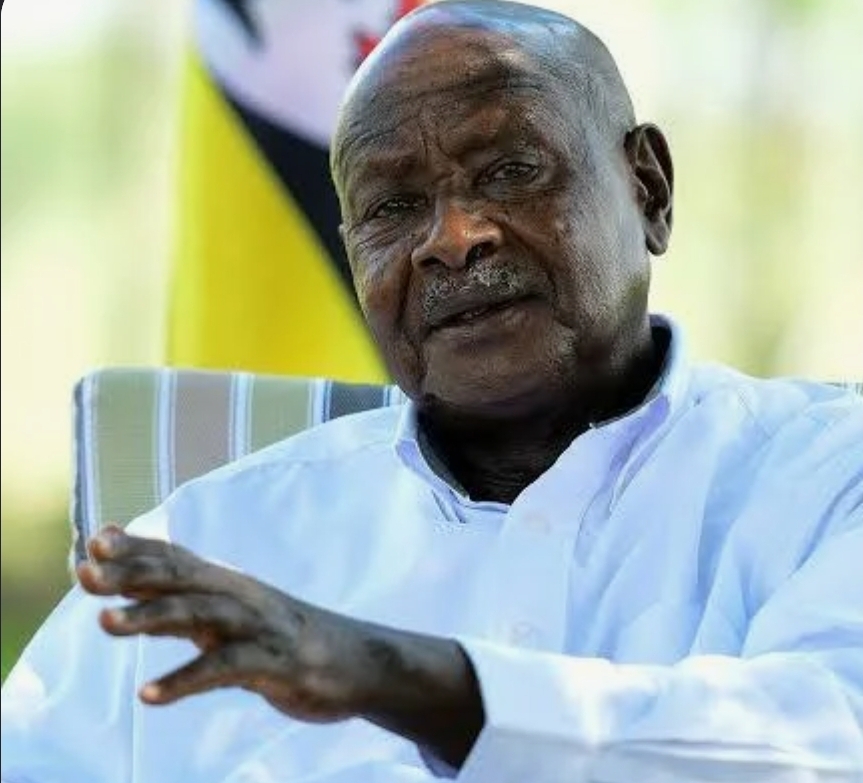
In over 40 years of his rule, Uganda’s President Yoweri Museveni has repeatedly promised or hinted that he would leave power, but he never did. This time, however, he has come up with an initiative that may suggest he is finally preparing to go.
Rather than simply talking about retirement, Museveni has reportedly invited the leadership of his ruling National Resistance Movement (NRM) to examine the suitability of his son, General Muhoozi Kainerugaba, as a possible successor.
This is an important development that deserves serious attention, particularly because of Museveni’s long history of postponed departures.
When Museveni seized power in January 1986, his government initially envisaged a four-year transition. That period was subsequently extended. In 1997, he spoke of other Ugandans capable of leading the country and promised to support them when he retired. In 2001, he was more specific, indicating that he would leave office in 2006. But in 2005, Uganda removed presidential term limits, allowing him to seek another term.
In 2012, Museveni again suggested that he would not remain president beyond the age of 75. However, in 2017, Uganda removed the constitutional presidential age limit. By 2019, he was arguing that the country still faced challenges requiring his leadership. In 2020, he again indicated that he would remain available if Ugandans wanted him.
This history explains why many Ugandans may be reluctant to believe that Museveni is finally considering retirement. They have heard similar suggestions before, only to see him return to the ballot.
But the latest development appears different. This time, Museveni is reportedly taking the succession question to his party’s leadership. Instead of simply announcing his preferred successor, he seems willing to have the suitability of a potential candidate examined.
Reports from the NRM’s recent leadership discussions suggest that some officials questioned Muhoozi’s readiness for the presidency. Others reportedly raised concerns about his public conduct, particularly his controversial social media statements. No formal resolution has been confirmed.
If these reports are accurate, the disagreement itself is encouraging. It suggests that some NRM leaders are prepared to question a proposal associated with a president who has dominated their party and country for four decades.
But there is another important question. Does Museveni genuinely want his son to succeed him, or is he deliberately subjecting Muhoozi to scrutiny so that the party can determine whether he is suitable?
If Museveni had already decided to hand power to his son, would he need to follow such a lengthy and potentially embarrassing process? With his enormous influence over the NRM, he could presumably have worked behind the scenes to secure support before presenting Muhoozi as the preferred candidate.
Perhaps Museveni wants his son to succeed him but also understands that imposing him could create dangerous divisions. Perhaps he wants party leaders to test Muhoozi’s political readiness. Or perhaps he is using his son’s ambitions to open a wider discussion about succession.
Whatever his intentions, the initiative deserves encouragement.
After more than four decades under one leader, Uganda faces a serious challenge. Museveni has built a political system in which his personal authority remains central. An unexpected departure without an accepted succession arrangement could trigger dangerous competition among powerful interests within the government, ruling party and military.
Uganda has constitutional provisions for presidential succession, but those provisions alone cannot guarantee political stability. A peaceful transfer of power also requires political agreement, respect for institutions and acceptance of the outcome.
That is why Museveni’s initiative matters. It could give the NRM an opportunity to prepare for a future without him while he is still available to guide the process.
However, genuine internal democracy will be measured not merely by allowing party officials to express disagreement, but by respecting their judgement. If the NRM concludes that Muhoozi is unsuitable, will Museveni accept that decision? Will other candidates be allowed to compete freely? And will the eventual successor be chosen through a credible process?
These questions are more important than Muhoozi’s family relationship with the president. Uganda does not simply need another Museveni. It needs a peaceful and dependable system through which leaders can enter and leave office without threatening the country’s stability.
For a president who has repeatedly postponed his departure, opening a serious succession discussion would be a welcome change. Perhaps, after 40 years in power, Museveni finally means business.