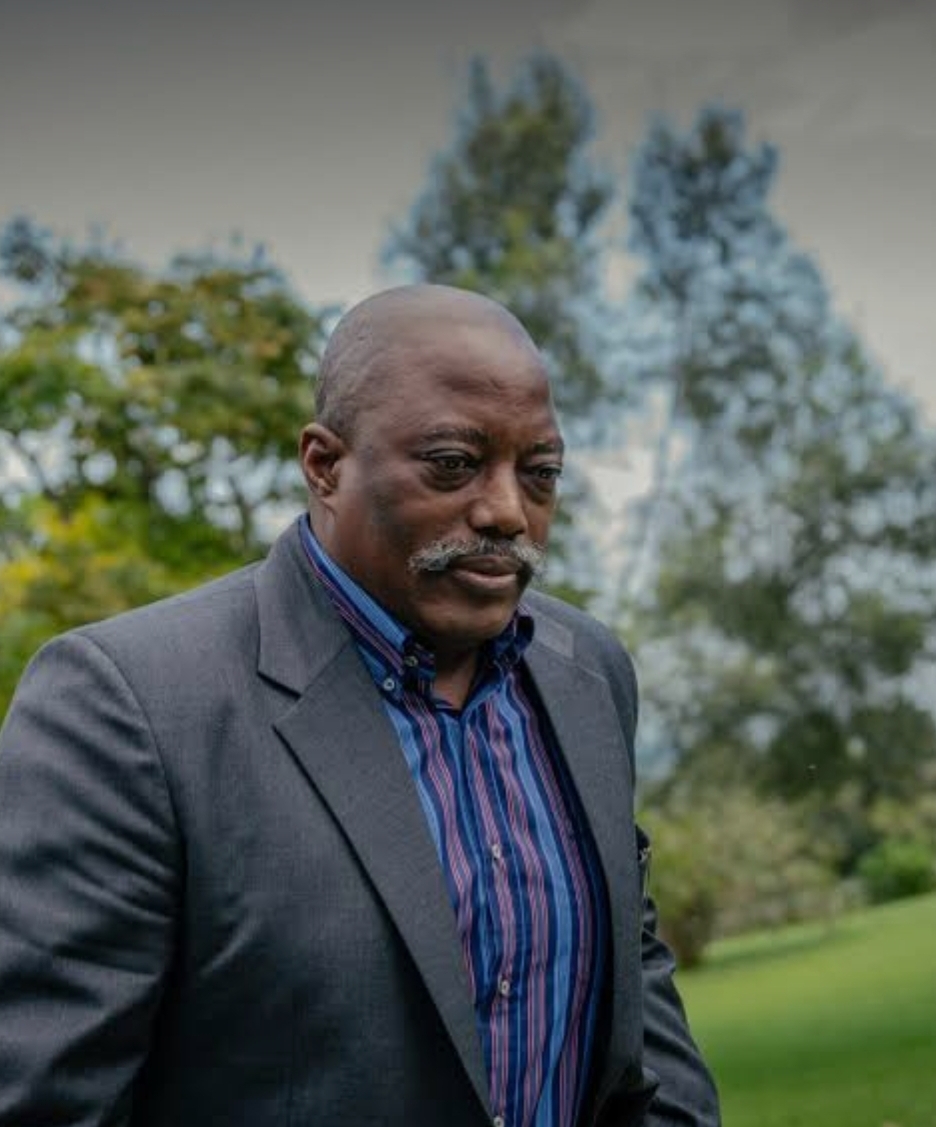
From a young president with deep Tanzanian roots to the leader of a coalition involving armed rebels, Joseph Kabila’s political journey raises difficult questions about the fragility of African political transitions and the East African Community’s responsibility to prevent another regional catastrophe.
When Joseph Kabila became president of the Democratic Republic of Congo in January 2001, just 29, following the assassination of his father, he became a frequent subject of conversation among us in Tanzania.
I was then a reporter with The African newspaper, working alongside someone who had attended school with Joseph and surrounded by people who personally knew the Kabila family during their years of exile in Tanzania.
When his father, Laurent-Désiré Kabila, was assassinated, scores of friends and acquaintances mourned him at his former home in Dar es Salaam. To many Tanzanians within the family’s political and military circles, the Kabilas were almost their own. Developments in Kinshasa therefore felt remarkably personal.
Joseph inherited a country devastated by war, political fragmentation and foreign intervention. Yet the young president gradually demonstrated an ability to navigate complex political and military challenges.
He helped steer Congo through peace negotiations, a transitional government and the 2006 elections, contributing to a measure of national reunification and stability. His subsequent presidency was certainly not without controversy, including allegations of corruption, authoritarianism and disputed elections.
Nevertheless, his early achievements created a positive impression among some of us who had followed his emergence with particular interest.
After 18 years in power, Kabila relinquished the presidency in January 2019, marking Congo’s first peaceful presidential succession since independence.
But behind that historic transition lay a deeply troubling controversy. Official election results declared Félix Tshisekedi victorious, although independent electoral evidence strongly suggested that opposition candidate Martin Fayulu had won.
Allegations emerged that Kabila had facilitated Tshisekedi’s accession in the expectation that his political and economic interests would remain protected. While such an arrangement has never been conclusively established, the subsequent power-sharing relationship lent weight to those suspicions.
The political marriage eventually collapsed. Tshisekedi dismantled Kabila’s parliamentary dominance, consolidated his own authority and increasingly treated his predecessor as a political adversary.
In September 2025, a Congolese military court sentenced Kabila to death in absentia on charges including treason and involvement with the M23 rebellion. Kabila rejected the proceedings as politically motivated. Now, at 55, he has emerged as leader of the Front for the Refoundation of the Nation (FRN), a political coalition involving M23 and its allies, raising the prospect of another armed struggle for power in Kinshasa.
The historical irony is striking. Nearly three decades ago, Laurent Kabila led the rebellion that overthrew Mobutu Sese Seko in 1997, with Joseph participating in the campaign. Today, the son is associated with another armed challenge to a sitting president.
His political experience, military connections and knowledge of Congo’s complex power structures make this development significant.
Yet controlling territory in eastern Congo, as M23 has demonstrated through its capture of Goma and Bukavu, is not the same as securing national legitimacy or governing an enormous and deeply divided country.
But why should Congo be allowed to endure another cycle of rebellion, bloodshed and political upheaval? What pushed the relationship between Kabila and Tshisekedi to such extremes? Could the deterioration have been prevented?
Tshisekedi’s consolidation of power, the marginalisation of Kabila’s political network, unresolved questions of electoral legitimacy and deepening insecurity in the east all contributed to an atmosphere of confrontation.
Yet these tensions cannot be understood solely as a personal rivalry. They reflect a political system in which access to power remains closely associated with personal security, economic interests and political survival. When institutions cannot guarantee a credible political future outside government, losing power can become an existential struggle.
The regional implications are equally disturbing. Congo joined the East African Community in 2022, bringing enormous economic potential alongside longstanding security challenges. Yet eastern Congo remains a battlefield involving armed groups, disputed regional interests and allegations of Rwandan support for M23, which Kigali denies.
The fighting has displaced millions, claimed innocent lives and threatened relations among neighbouring countries, including Rwanda, Uganda and Burundi. Tanzania, too, has historical, economic and security interests in Congo’s stability. A region pursuing economic integration cannot afford to treat such a conflict as somebody else’s domestic problem.
This raises uncomfortable questions about the effectiveness of regional diplomacy. The EAC, Southern African Development Community (SADC) and African Union (AU) have all participated in peace initiatives, while international negotiations have sought to reduce hostilities.
Why, despite these efforts, has the conflict continued to deteriorate?
Part of the difficulty lies in competing national interests, insufficient implementation of agreements and the absence of a sufficiently coordinated regional strategy. Military deployments and diplomatic declarations cannot substitute for sustained political engagement.
The EAC and its partners must work towards credible ceasefire monitoring, respect for territorial sovereignty, meaningful security guarantees and inclusive Congolese dialogue that addresses political grievances without legitimising armed coercion.
For those of us who remember Joseph Kabila’s youthful arrival in power and his family’s close association with Tanzania, his latest political transformation raises more questions than answers.
His experience and connections make him a consequential figure, but another military victory would not necessarily resolve the institutional weaknesses that have repeatedly plunged Congo into conflict. Indeed, the greatest danger is that the struggle to remove one leader merely prepares the ground for the next confrontation.
Ultimately, Congo’s tragedy is not simply that powerful men struggle to acquire or retain authority. It is that successive political settlements have failed to establish institutions strong enough to make the peaceful transfer of power both credible and secure.
Joseph Kabila once helped guide his country away from a devastating war and eventually surrendered the presidency. Whether his new political course will undermine that legacy remains to be seen.
What should concern Africa most is that, three decades after Mobutu’s overthrow, Congo is once again confronting the possibility of changing its leadership through the barrel of a gun, while ordinary citizens continue paying the highest price. A country cannot build a peaceful future if every political transition carries the seeds of its next rebellion.
As Tanzania commemorates Nyerere Day today, October 14, it is difficult not to wonder how Mwalimu Julius Nyerere would have responded to Joseph Kabila’s latest political adventure.
Nyerere knew the Kabila family, understood the liberation struggles that shaped their political lives, and had supported Laurent-Désiré Kabila’s movement against Mobutu Sese Seko.
Yet his commitment to African liberation was never simply about replacing one ruler with another; it was about restoring dignity, sovereignty and hope to oppressed people.
One can reasonably imagine that Nyerere would have viewed Joseph’s predicament with historical understanding but questioned the wisdom of returning Congo to armed confrontation. He would likely have challenged Tshisekedi’s government over political exclusion, contested legitimacy and the failure to build an inclusive political order, while equally questioning Kabila’s association with an insurgency whose activities have inflicted enormous suffering on civilians.
Above all, Nyerere might have turned his attention to the East African Community, an institution whose original ideals he helped shape, and asked why regional leaders have allowed Congo’s political differences to deteriorate into another potentially devastating conflict.
For a statesman who regarded African unity as a responsibility rather than a ceremonial slogan, the tragedy would not merely be that Joseph Kabila is confronting his successor, but that Africa still struggles to resolve disputes over power without sacrificing the very people in whose name its leaders claim to act.