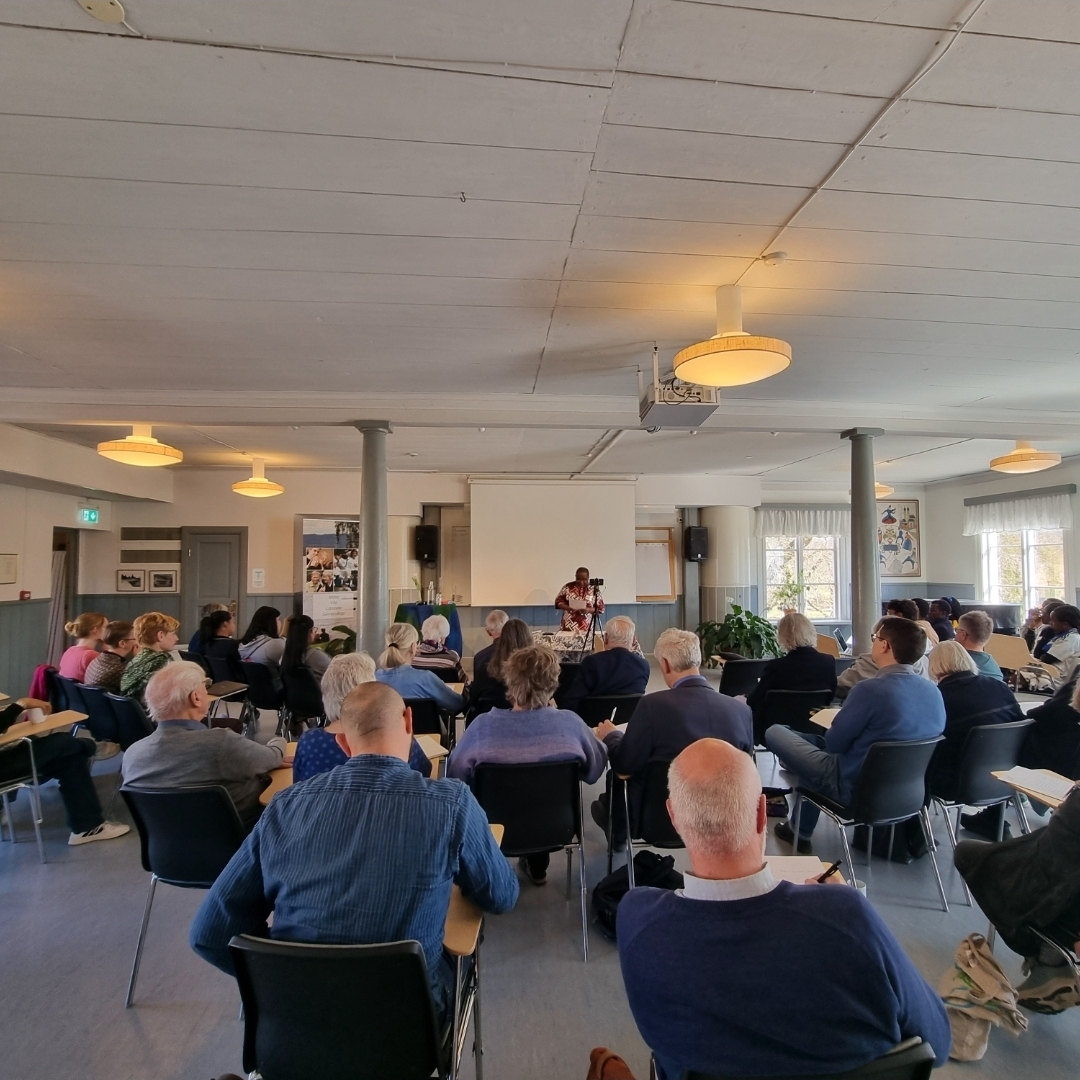
At a Tanzania seminar hosted by the Church of Sweden at Stiftsgården in Rättvik this week, Bishop Benson Bagonza delivered a message that blended urgency, reflection, and a call for global solidarity.
Speaking to an audience comprising “Swedish friends of Tanzania,” his central plea was directed beyond Tanzania’s borders, particularly to Scandinavian nations that have long stood alongside the country.
“Do not abandon us,” he urged, reminding his audience that the relationship between Tanzania and Scandinavia is not new, but deeply rooted in shared history and mutual support.
A Shared History Worth Remembering
Bagonza grounded his appeal in history. When Tanzania gained independence in 1961 under Julius Nyerere, it chose a path that emphasized unity, self-reliance, and African socialism. During the Cold War, this vision attracted strong backing from Scandinavian countries, whose support helped shape education, health systems, and social development.
Tanzania also became a safe haven for liberation movements across southern Africa, earning global respect as a beacon of hope and solidarity. At home, the promotion of Kiswahili and the philosophy of Ujamaa helped unify more than 120 ethnic groups into a relatively stable nation.
It is this legacy, Bagonza suggested, that makes today’s situation all the more painful.
A Gradual Shift Toward Political Strain
Over the years, Tanzania’s political landscape has changed. Since the reintroduction of multiparty politics in 1992, power has largely remained in the hands of the ruling party, CCM. According to Bagonza, this prolonged dominance has weakened democratic institutions and blurred the line between party and state.
He described a system where accountability has diminished, corruption has grown, and political competition has increasingly been constrained.
The 2025 Election and Its Aftermath
Bagonza pointed to the 2025 general election as a defining moment. The period leading up to the vote was marked by arrests, disappearances, and restrictions on opposition activity. Religious leaders and activists who spoke out faced intimidation, while others were forced into exile.
When protests erupted on election day, the state responded with curfews, internet shutdowns, and a forceful crackdown. Though official numbers remain unclear, reports indicate significant casualties. The president’s eventual victory – announced at 98 percent – has been widely contested.
For Bagonza, this outcome created a dangerous paradox: a leader who is legally in power but lacks broad political legitimacy.
A Country at a Crossroads
The bishop warned that Tanzania now stands on fragile ground. Economic pressures, including global energy shocks, have compounded political tensions. Without meaningful change, he cautioned, the country risks deeper instability. Yet his message was not one of despair. It was a call to act.
A Path Toward Democratic Renewal
Bagonza outlined a vision for recovery built on both institutional reform and moral responsibility:
Restoring Democratic Foundations: Reviving the stalled process for a new constitution to limit executive power and strengthen independent institutions.
Protecting Freedoms: Repealing laws that restrict speech, media, and assembly to allow open debate and civic participation.
Addressing Regional Dynamics: Strengthening civil society to counter authoritarian influences from neighboring countries.
Revisiting the Union: Opening honest dialogue about tensions between mainland Tanzania and Zanzibar.
Truth and Reconciliation: Establishing a national process to confront past abuses and rebuild trust.
A National Covenant: Encouraging political, religious, and civic leaders to commit to justice, peace, and accountability.
A Message to Scandinavia: Stay Engaged
At the heart of Bagonza’s speech was a direct appeal to international partners – especially Scandinavian countries.
He acknowledged that while Tanzania must address its internal challenges, global solidarity remains essential. Past partnerships made a tangible difference in people’s lives, he said, and withdrawing support now risks deepening the crisis.
Re-engagement, is not about interference but about standing with a nation striving to reclaim its democratic path.
The Cost of Silence
Bagonza ended with a sobering reflection: development alone cannot substitute for justice. Infrastructure projects – roads, schools, hospitals – must not become tools to silence demands for rights and dignity.
He also challenged both government and opposition actors, noting that commitment to human rights must be consistent, not selective.
Ultimately, he placed responsibility not only on leaders but on citizens, intellectuals, and civil society to demand accountability.
“Tanzania’s future,” he said, “depends on reclaiming freedom, not as something given, but as something exercised.”
His message was clear: Tanzania’s democratic journey is at risk, but it is not beyond repair – if both its people and its partners choose not to look away.