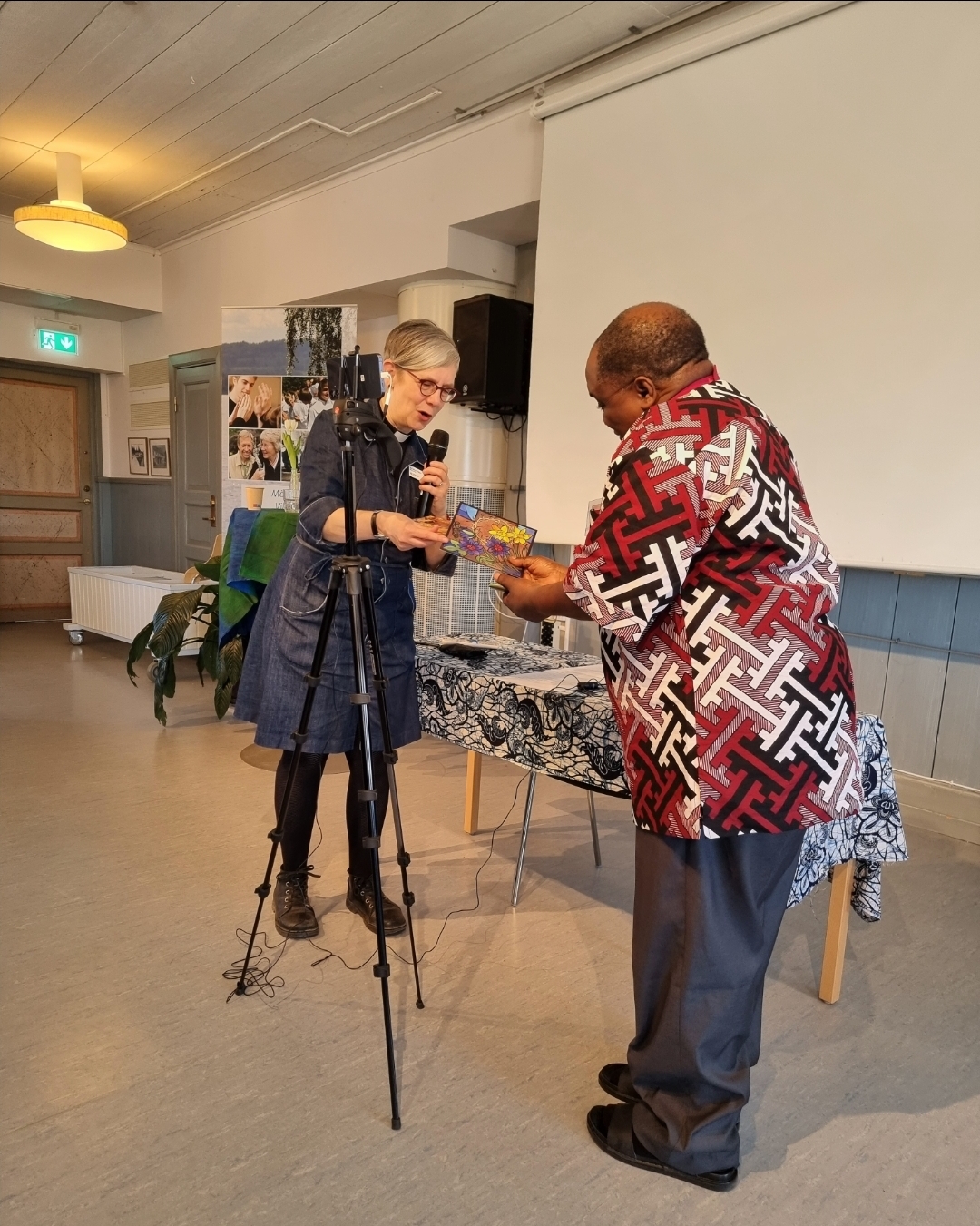
I arrived at Stiftsgården in Rättvik this week with a sense of familiarity – but also curiosity. It was my second time there, after the Global Epiphany Festival in January, and I thought I knew what to expect: reflection, dialogue, and the quiet beauty of a place that invites both. But this time felt different from the very beginning.
When I received the invitation to speak at the seminar “Tanzania 2026: Transforming Disaster into Sustainable Peace,” I accepted it with gratitude.
Still, I did not fully anticipate the depth of the gathering – or the people I would meet. As the days unfolded, I found myself among individuals who have walked with Tanzania for decades.
Some had lived there, worked there, or supported its development across generations. These were not just participants; they were living archives of a shared history between Sweden and Tanzania.
A few familiar faces reminded me of past encounters, but most were new. And yet, something remarkable happened almost instantly: the distance between strangers disappeared.
There was a warmth in the room, a kind of openness that felt unmistakably Tanzanian. Conversations started easily. Laughter came naturally. For those two days, it felt as though we had all quietly agreed to belong to the same place.
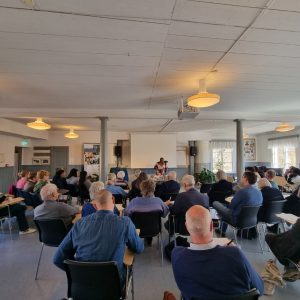
I remember thinking – this is not typical of Sweden. But here we were, sharing stories like old friends.
The seminar itself blended many elements – prayer, singing, thoughtful presentations, and group discussions. It did not feel rigid or overly formal. It felt alive. Each session carried both weight and hope.
When it was my turn to present, I spoke on “Voices Beyond Borders: Media, Diaspora and Peacebuilding in Tanzania.” I began with a simple but pressing question: What are you seeing? Because we live in a world surrounded by voices – news, opinions, reactions – but not all of them lead to action.
That, for me, is where the real challenge lies.
I shared a conviction that has shaped my work: media is not just about information. It is a mirror, yes – but also a force. It can shape opinion, create visibility, and sometimes even mobilise people. But too often, it stops at awareness. And awareness alone does not change lives.
From my experience working with diaspora communities, I have seen how powerful these voices can be. Diaspora media can speak truths that are difficult to express within national boundaries. It can amplify the unheard. It can draw global attention. But I was honest about one thing: most of this still remains noise unless it leads somewhere.
“Without structure, power becomes noise.”
That line stayed with many people in the room. Because it reflects a reality we all recognise. There are many voices, many posts, many reactions -but very little coordinated impact on the ground.
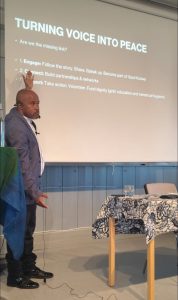
So, I spoke about the missing link: action.
For me, peace is not an abstract concept. It is deeply human. It is practical. It is visible in everyday life. Peace is when a girl stays in school. Peace is when dignity is protected.
I shared a simple but painful reality from Kagera region. Thousands of girls miss school every month because they lack basic sanitary support. That is not just a social issue – it is a failure of peace at the most basic level.
“If a girl is out of school, peace has already failed at household level.”
In that moment, the room grew quieter. Because suddenly, peace was no longer a distant idea – it was something immediate, something measurable.
I explained how we are trying to bridge this gap through our work. Through SK Media, we tell stories. We give voice. But through BIBI CARE, we act. We turn those stories into dignity – into something that allows a girl to return to school, to continue her life with confidence.
To me, that is what diaspora media must become: not just a storyteller, but a delivery system for peace.
The response from participants was deeply moving. Conversations continued long after the session ended. People did not just listen – they connected. Some asked how they could be involved. Others shared their own experiences from Tanzania. And quite beautifully, a number of them chose to become “Friends of BIBI CARE.”
That, for me, was one of the most powerful outcomes of the seminar. It felt like the beginning of something new – a renewed bridge between two societies, built not just on history, but on shared responsibility.
Of course, the seminar was enriched by many voices beyond my own.
Bishop Dr. Benson Bagonza brought both wisdom and warmth. He has a way of speaking that is deeply engaging – serious, yet never heavy. He would make a strong point, then lighten the room with a joke, only to return again with even greater clarity. His presentation on Tanzania’s “bumpy road to recovery” was honest and, at times, sobering.
But it never lost hope. He spoke of challenges, yes – but also of the possibility of a better future, if the right choices are made.
Listening to him felt like listening to someone who carries both the burden and the belief in his country.
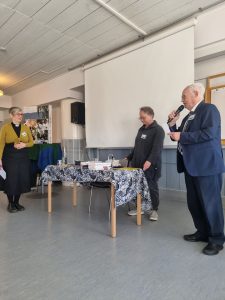
Other presenters added different colours to the experience. There was music that spoke like a form of activism. There were academic reflections that helped us understand the deeper historical and theological connections between Sweden and Tanzania.
There were young people in the room – especially exchange youth from Tanzania and the Philippines – who reminded us that this conversation is not just about the present, but about the future they will inherit.
And throughout it all, there was a shared feeling: that despite the changes in formal development cooperation, the relationship between Sweden and Tanzania is far from over. If anything, it is evolving.
As the seminar came to an end, I found myself reflecting on a simple idea: friendship. Not in a casual sense, but in a deeper, more committed way.
The kind of friendship that listens, responds, and stands with others in difficult times. What I experienced at Stiftsgården was exactly that.
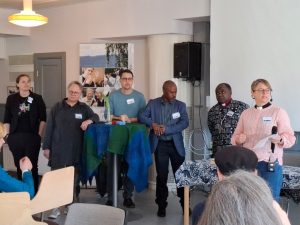
My closing words during the presentation were simple: “Diaspora media does not end with information. It ends when a girl in Kagera stays in school because someone in Sweden listened – and acted.”
As I left Rättvik, I carried that thought with me. Because in the end, this was not just a seminar. It was a reminder that change does not begin with systems – it begins with people who choose to care, and then choose to act.