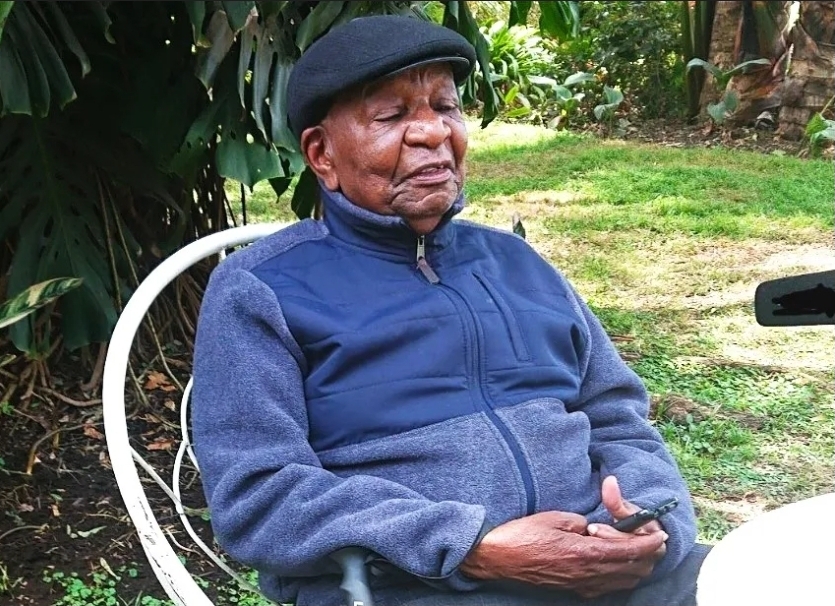
Edwin Mtei, the first Governor of the Bank of Tanzania (BoT) and founder of CHADEMA, has passed away, aged 94. Yet he leaves behind a simple, enduring lesson for all of us.
He taught us that conviction does not shout. It stands – calm, patient, and enduring. He showed that greatness can be quiet, that differences need not become enmity, and that democracy demands courage tempered by kindness.
Despite his national and global stature, Mtei was personally known to me. Our closest encounter came when he entrusted me with editing a Kiswahili edition of his book, From Goatherd to Governor.
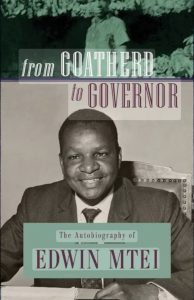
Through its pages, he revealed himself fully: the boy he once was, his academic journey, his formidable economic mind, and his immense contribution to post-independence Tanzania. The book also illuminated his principled and complex relationship with President Julius Nyerere.
Mtei differed profoundly with Mwalimu Nyerere on policy, yet he never lost his loyalty to him. Nyerere, in turn, admired Mtei despite their disagreements. That mutual respect remains one of the finest lessons in Tanzania’s political history.
When his convictions could no longer coexist with the president, Mtei resigned – not in anger or bitterness, but quietly and firmly, guided by principle.
He later made another brave choice: to oppose the single-party system and help found CHADEMA. Conceived as a conservative, right-of-centre alternative to the long-ruling socialist CCM, CHADEMA was a party of restraint, civility, and calculation.
In its early years, it was often described as a party of “civilised people.” In the mid-1990s, even Nyerere expressed admiration for its policies, comparing them favourably to other opposition movements of the time, including NCCR-Mageuzi under the charismatic Augustino Mrema.
That was before it grew into a formidable force, one that the ruling party and its systems have spent more than 15 years trying to dismantle, including through politically motivated charges of treason and terrorism.
By the time I was researching the history of multiparty democracy in Tanzania in 2017, with a special focus on CHADEMA, Mzee Mtei was already too frail to grant interviews. But his book preserved the historical record from the late 1980s through his retirement.
I also spoke with his compatriots, among them Victor Kimesera, who had carefully kept written records of CHADEMA’s early years and shared them with me. That work remains unpublished, partly because history is still unfolding.

Over time, CHADEMA passed from Edwin Mtei to Bob Makani, then to Freeman Mbowe, and now to Tundu Lissu. The party evolved far beyond its humble beginnings, yet the seed Mtei planted endured.
What CHADEMA becomes in the next decades will depend on how it conducts itself – whether it leans toward its founder’s original vision or charts a new ideological path. History will be the judge.
Globally, Edwin Mtei is remembered as a formidable economist. Nationally, many recall him as a politician. But among ordinary Tanzanians, he is remembered above all as the founder of CHADEMA.
He lived to see the party grow for 33 years and passed away just two days before its official 33rd anniversary – a coincidence heavy with sadness, yet rich in meaning. A founder departing as his institution reaches maturity feels like a life completed.
From Edwin Mtei, I learned that democracy requires courage without cruelty, firmness without hatred, and principle without pride. That is the lesson I hope CHADEMA will carry forward as it mourns its founder and reflects on its journey.
May Edwin Mtei rest in peace. And may Tanzania never forget what quiet courage looks like.